


How Uber Kiosks and Global Payments are Set to Modernize World Cup 2026 Travel in the United States
How Uber Kiosks and Global Payments are Set to Modernize World Cup 2026 Travel in the United States
The FIFA World Cup is widely regarded as a massive logistical challenge for host countries, but the 2026 tournament is expected to be met with unprecedented technological solutions. As millions of international spectators prepare to visit North America, Uber is spearheading a significant shift in ground transportation accessibility. Foreign travellers’ typical barriers, such as a lack of local data plans or unfamiliarity with ride-sharing applications, are being gradually removed through a strategic rollout of physical infrastructure and expanded global payment integrations.
Bridging the Digital Divide with Physical Kiosks
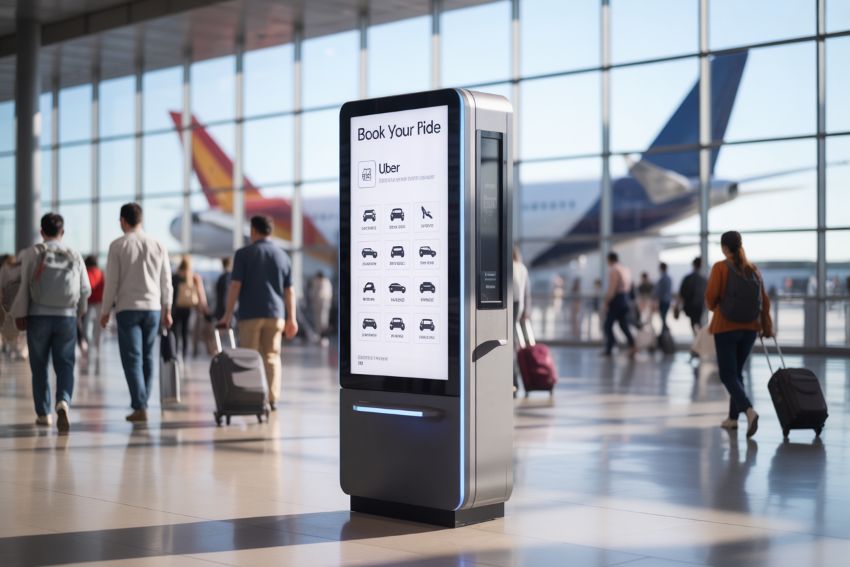
A primary obstacle for international arrivals is often the immediate need for connectivity upon landing. To address this, a network of physical kiosks is being deployed by Uber at key entry points, including major airports, hotels, and maritime ports. The first of these installations was successfully completed in December at LaGuardia Airport in New York City, serving as a blueprint for a nationwide expansion.
These kiosks are designed to function independently of a user’s personal mobile device. Upon interaction with the interface, the passenger is prompted for their destination and preferred vehicle class. Unlike the traditional app-based model, these stations are equipped to process physical credit card payments directly. Once a transaction is finalized, a receipt is generated for the passenger, which is then scanned by the assigned driver to verify the trip. This hardware-centric approach ensures that the inability to access a local cellular network does not preclude a traveller from securing reliable transportation.
Global Partnerships and Enhanced Payment Flexibility
The infrastructure expansion is supported by an intensified collaboration between Uber and Adyen, a prominent global financial technology platform. This partnership was recently broadened to include new service capabilities across the United Arab Emirates, Hong Kong, and the Caribbean, while existing operations in Japan and Mexico have also been scaled. A pivotal component of this alliance is the integration of WeChat Pay, a mobile payment giant boasting over 1.2 billion users.
By enabling WeChat Pay for domestic rides within the United States, a significant friction point for Asian travellers is effectively removed. The goal of this collaboration is the creation of a “frictionless” payment ecosystem. Rather than forcing users to adapt to local financial norms, the payment systems are being co-developed to mirror the existing habits of international visitors. This ensures that the financial transition between different global regions remains invisible to the end-user, allowing for a more focused enjoyment of the sporting events.
Preparing the Host Cities for a Global Influx
The scale of the upcoming World Cup is nearly unparalleled in recent sporting history. With eleven cities across the United States designated as hosts for matches during June and July, the anticipated influx of visitors is estimated to range between 1 million and 6 million people. According to industry reports, this surge could increase international arrivals by nearly one-third compared to standard seasonal averages.
In response to these projections, comprehensive preparations are being undertaken by local municipalities. Significant emphasis is being placed on public safety and the hardening of cybersecurity frameworks. Furthermore, strategic “playbooks” have been developed by organizations such as the Los Angeles County Metropolitan Transportation Authority. These documents are intended to serve as comprehensive guides for elected officials and host committees, outlining the critical transportation practices required to facilitate a world-class experience. The deployment of these strategies is seen as essential for managing the high-density crowds expected in metropolitan hubs.
The Future of International Event Transit
The integration of these kiosks and payment methods signals a larger shift in how global events are managed. It is widely acknowledged that the “last mile” of a traveller’s journey—getting from the airport terminal to their hotel—is frequently the most stressful. By eliminating the need for a smartphone app or a local SIM card, the transit process becomes significantly more inclusive.
As more kiosks are deployed in the coming months, the need for traditional taxi queues or complex public transit maps is expected to decrease. The partnership with Adyen ensures that the technological backbone remains consistent as the World Cup expands into Canada and Mexico. This unified approach to international logistics is being viewed as a new standard for future global gatherings, ensuring that technology serves as a bridge rather than a barrier for today’s globetrotters.
The post How Uber Kiosks and Global Payments are Set to Modernize World Cup 2026 Travel in the United States appeared first on Travel And Tour World.
Source: travelandtourworld.com



Sorry, the comment form is closed at this time.