


Hundreds of Passengers Left Stranded at Multiple US Airports as Southwest Airlines Delays 1,139 Flights and Cancels 34, Travel Disrupted Across Denver, Chicago, Phoenix, Las Vegas, Dallas and National Routes
Hundreds of Passengers Left Stranded at Multiple US Airports as Southwest Airlines Delays 1,139 Flights and Cancels 34, Travel Disrupted Across Denver, Chicago, Phoenix, Las Vegas, Dallas and National Routes
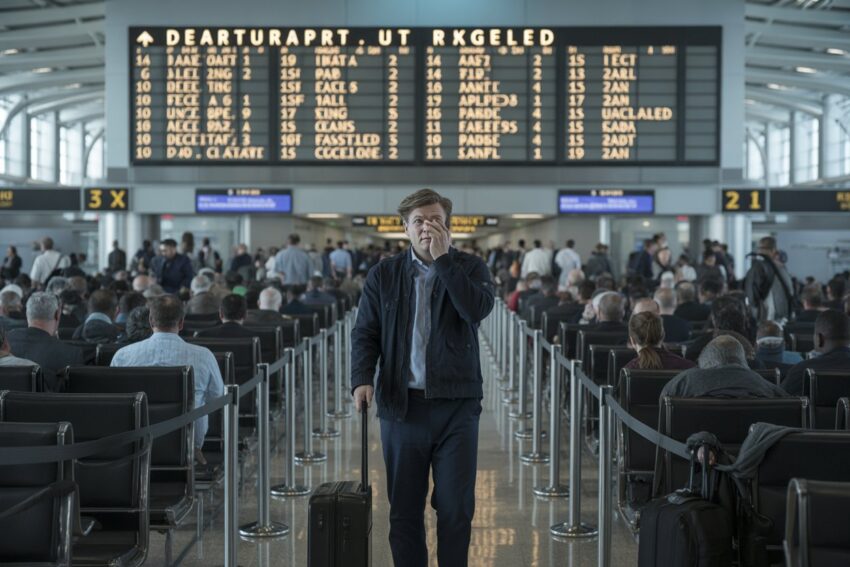
Thousands of travelers across the country faced unexpected travel headaches today as Southwest Airlines recorded 1,139 delays and 34 cancellations, triggering widespread disruption across its domestic route network. What began as routine departures quickly turned into long gate waits, shifting boarding times, and last-minute rebooking announcements for passengers moving through major U.S. airports. For families heading on vacations, business travelers racing to meetings, and students trying to reach home, the delays transformed ordinary journeys into hours of uncertainty.
Scale of the Disruption
The airline logged a total of 1,173 affected flights, making it one of the most significant single-carrier operational slowdowns reported recently. Because Southwest operates an extensive point-to-point network rather than relying solely on traditional hub-and-spoke scheduling, disruptions in one region can quickly spread nationwide as aircraft rotate between cities throughout the day.
Airports frequently appearing in affected route patterns included:
Denver International Airport
Chicago Midway Airport
Baltimore/Washington International Airport
Las Vegas Harry Reid International Airport
Phoenix Sky Harbor Airport
Dallas Love Field
CANCELLED FLIGHT DETAILS
FlightAircraftOriginDestinationDepartureSWA1106B738John Glenn Columbus (KCMH)Baltimore/Washington (KBWI)05:25 AM ESTSWA1254B737John Glenn Columbus (KCMH)Chicago Midway (KMDW)06:45 AM ESTSWA459B38MNashville (KBNA)Baltimore/Washington (KBWI)05:55 AM CSTSWA4028B38MOrlando (KMCO)Baltimore/Washington (KBWI)07:05 AM ESTSWA2365B738Baltimore/Washington (KBWI)Chicago Midway (KMDW)07:50 AM ESTSWA1228B38MSan Francisco (KSFO)Denver (KDEN)06:00 AM PSTSWA3522B737San Jose (KSJC)Denver (KDEN)07:10 AM PSTSWA910B738Denver (KDEN)Phoenix (KPHX)09:45 AM MSTSWA2915B737Las Vegas (KLAS)Denver (KDEN)09:00 AM PSTSWA3144B738Kansas City (KMCI)Denver (KDEN)11:30 AM CSTSWA3118B737Albuquerque (KABQ)Denver (KDEN)10:50 AM MSTSWA3021B738Ontario (KONT)Denver (KDEN)09:55 AM PSTSWA2193B737Denver (KDEN)Las Vegas (KLAS)11:05 AM MSTSWA1396B737Denver (KDEN)Sacramento (KSMF)11:25 AM MSTSWA2550B738Spokane (KGEG)San Jose (KSJC)11:35 AM PSTSWA3170B738Phoenix (KPHX)Denver (KDEN)12:50 PM MSTSWA2518B38MLas Vegas (KLAS)Dallas Love (KDAL)12:05 PM PSTSWA3219B737Burbank (KBUR)Denver (KDEN)12:30 PM PSTSWA1860B737Houston Hobby (KHOU)Denver (KDEN)02:35 PM CSTSWA294B38MAustin (KAUS)Denver (KDEN)02:45 PM CST
These airports act as key transfer and rotation points for aircraft, meaning even minor delays can cascade across multiple routes.
Why Disruptions Spread So Quickly
Aviation analysts explain that airline networks operate like synchronized chains. Each aircraft is scheduled for multiple flights daily, and crews must follow strict duty-time regulations. If one flight runs late, the aircraft assigned to the next flight may not arrive on time, automatically delaying subsequent departures.
When disruption levels exceed a certain threshold, recovery becomes more complex. Airlines must rebalance aircraft positions, reposition crew members, and adjust gate assignments — all while maintaining safety standards and minimizing passenger inconvenience.
Weather systems, air-traffic congestion, and high seasonal travel demand are among the most common factors that combine to produce large delay totals. Even if conditions are clear at one airport, weather elsewhere in the network can still affect schedules.
Passenger Experience on the Ground
Inside terminals, the impact is immediate and visible. Departure boards flicker with updated times, gate areas fill with waiting travelers, and airline staff work continuously to manage rebookings and provide updates. Some passengers may face missed connections, while others might need to rearrange hotel reservations or ground transportation plans.
Travel experts often recommend practical steps during major delay periods:
Monitor flight status frequently
Enable airline alerts
Arrive early at airports
Allow longer connection windows
These precautions can significantly reduce stress when schedules shift unexpectedly.
Operational Context
Southwest Airlines is one of the largest domestic carriers in North America, operating thousands of daily flights. Because of its high flight frequency and tight turnaround scheduling model, even small operational disruptions can appear dramatic when aggregated across the airline’s entire network.
Industry observers note that large delay numbers do not necessarily indicate a systemic failure. Instead, they often reflect the scale of operations. The more flights an airline runs, the more visible any disruption becomes.
Outlook for Travelers
Air travel demand across the United States remains strong, with passenger numbers continuing to rise. Airlines are investing in improved dispatch systems, predictive analytics, and digital scheduling tools designed to reduce delays and enhance operational resilience.
For travelers watching the clock tick past their original departure time, patience can be the hardest part of flying. Yet behind the scenes, teams of dispatchers, pilots, air-traffic controllers, and ground crews are working in coordination to restore schedules and keep aircraft moving safely. In today’s interconnected aviation system, flexibility remains the most valuable travel skill a passenger can carry.
Aviation specialists say disruption waves like this often reveal how tightly interconnected modern airline systems have become. Unlike decades ago, today’s flight schedules are optimized down to minutes, maximizing aircraft utilization and minimizing ground time. While this efficiency allows airlines to operate more flights daily, it also means there is less buffer room when unexpected factors arise. A single late inbound aircraft, a temporary runway slowdown, or an air-traffic flow restriction hundreds of miles away can set off a chain reaction that affects dozens of departures across multiple states.
Operational recovery is a carefully coordinated process. Airline control centers track aircraft movements in real time, rerouting planes, swapping crews, and adjusting departure slots to stabilize the network. Ground teams simultaneously manage passenger needs, from gate updates to baggage transfers. In large-scale delay events, restoring normal schedules can take several hours because aircraft and crew must be repositioned across different cities.
Despite the inconvenience, aviation authorities stress that safety protocols always take priority over punctuality. Every delayed departure represents a decision to maintain operational safety margins rather than rush a flight. For passengers, that perspective can help reframe delays not simply as setbacks, but as evidence of the aviation system functioning as designed — prioritizing safety while working toward schedule recovery.
Referred source: Flightaware
The post Hundreds of Passengers Left Stranded at Multiple US Airports as Southwest Airlines Delays 1,139 Flights and Cancels 34, Travel Disrupted Across Denver, Chicago, Phoenix, Las Vegas, Dallas and National Routes appeared first on Travel And Tour World.
Source: travelandtourworld.com


Sorry, the comment form is closed at this time.