


Hundreds of Passengers Stranded Today at Denver International Airport as 992 Flights Are Delayed and 30 Canceled, Disrupting United Airlines, Southwest, and Other Airlines in Denver, Colorado, New York, Los Angeles, Chicago, and More
Hundreds of Passengers Stranded Today at Denver International Airport as 992 Flights Are Delayed and 30 Canceled, Disrupting United Airlines, Southwest, and Other Airlines in Denver, Colorado, New York, Los Angeles, Chicago, and More
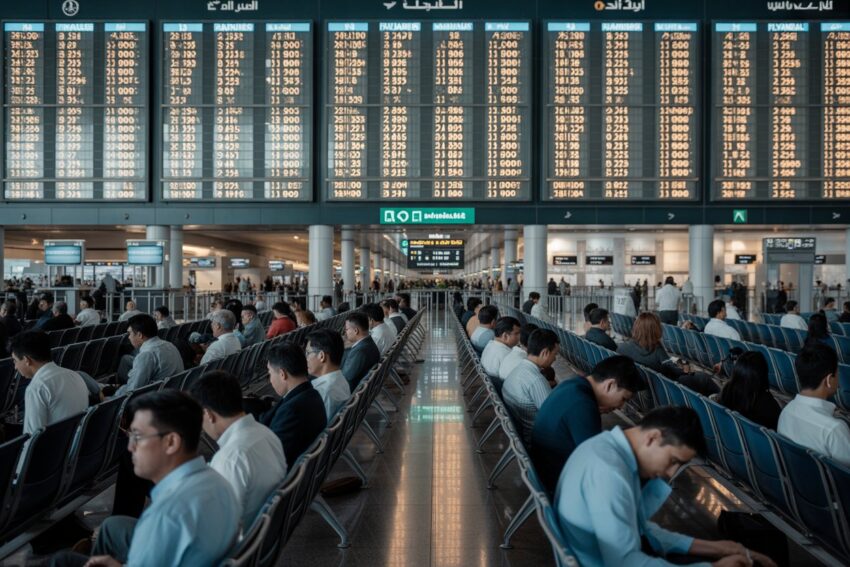
A brutal day at Denver International Airport (DIA) saw travellers’ journeys upended as a staggering 992 flight delays and 30 cancellations unfolded, leaving many families, business travellers and holidaymakers grappling with uncertainty and long waits in terminals. What was meant to be a routine travel day swelled into a scene of bewildered crowds and stretched emotions as passengers sought updates, food and rest while airlines and federal authorities worked to solve the disruption.
Unprecedented Travel Disruption at Denver’s Aviation Hub
Travel chaos erupted at DIA, one of the busiest airports in the United States, when nearly 1,000 flights were delayed and around 30 flights cancelled in a dramatic escalation of travel disruptions. Although the Federal Aviation Administration (FAA) defines a flight delay as a departure or arrival occurring 15 minutes or more past its published time and a cancelled flight as one that never departs at all, the scale of the delays at Denver this week has pushed past anything typical for the region’s busiest aviation hub.
Such a large number of delays and cancellations does not occur by accident and typically involves a convergence of factors — from staffing challenges to weather complications, technical constraints, or regulatory interventions. In Denver’s case, observers suggest that multifaceted pressures on the U.S. air traffic system have intensified travel disruptions in recent months.
FAA Response and Government Aviation Policies
The Federal Aviation Administration (FAA) — the U.S. government authority responsible for regulating and overseeing all aspects of civil aviation — has been monitoring the situation closely. The FAA determines national flight safety standards, manages air traffic control systems, and routinely publishes delays and cancellations statistics for more than 30 major U.S. airports. Although Denver’s current spike in disruptions does not yet have an official government report released, previous FAA advisory context suggests that when delays escalate at this scale, air traffic management challenges or resource shortages are often involved. Federal directives emphasise that safety remains paramount and that controlled delays are preferable to risking congestion in crowded airspace. When similar situations occurred in recent years — such as during government resource constraints or extreme weather events across the U.S. air travel network — the FAA supported staggered scheduling, rerouted flights, and temporary operational adjustments to manage airline and airport response.
Impact on Travellers and Airport Experience
For passengers at DIA, the cascading effect of so many delayed flights can be deeply stressful. Families with connecting flights faced the threat of missing international departures, business travelers juggled meetings and deadlines, while leisure travellers endured long waits in lounges or impromptu airport hospitality areas. Many took to social media to share their experiences of confusion over flight boards, constantly changing departure times, and overcrowded seating areas.
“We were arriving to board, and suddenly our flight was pushed another five hours,” one weary traveller told a local news outlet, echoing the frustrations felt by many. Stranded in an airport tensely packed with travellers, they described intermittent updates and long lines at airline help desks.
Food vendors, cafés and lounges around the departure area saw booming demand as travellers sought respite, snacks and charging stations while they waited for rebooked flights or new schedules.
Airlines and Denver Airport Operations under Pressure
Major carriers operating out of Denver International Airport — including domestic providers and major airlines such as United Airlines, Southwest, Frontier and others — were forced into rapid rescheduling mode. In past U.S. aviation disruptions, airlines have moved to prioritise safety, potential refunds, rebooking and flexible customer support, especially when external factors stall routine operations.
At DIA, airlines worked hand‑in‑hand with airport operations to communicate real‑time changes via apps, email, texts and airport announcements. Passengers were often advised to confirm flight status before venturing to check‑in desks due to rapidly changing schedules.
Although the cancellations were fewer in number (30), their impact was still substantial — especially for regional connections and cross‑country flights relying on tight scheduling.
Historical Context: Why Flight Disruptions Happen
Flight delays and cancellations are an inherent risk in modern aviation. According to aviation studies and transportation statistics, delays can be triggered by congestion, staffing shortages, weather conditions, technical issues and regulatory controls. The FAA tracks all scheduled flights to major U.S. airports and maintains performance data on delays and cancellations to help consumers and carriers alike navigate disruptions. For example, past incidents at Denver have shown how external pressures — including winter storms or seasonal travel peaks — can swell delay and cancellation rates significantly. During major Northeast and nationwide travel disruptions, U.S. hubs including Denver have seen hundreds or even thousands of flights delayed or cancelled in concentrated periods — particularly when weather or regulatory responses converge.
Such historical context helps explain why large U.S. airports like DIA continuously develop contingency plans, capacity buffers and communication systems to address unexpected spikes in operational challenges.
Federal Aviation Safety and Passenger Guidance
In situations involving widespread delays, the FAA reminds travellers that air traffic controllers and transportation staff operate under strict safety protocols designed to protect every flight, passenger and crew member. Regulatory guidance stresses that safety upgrades, staffing decisions and airspace flow management prioritise preventing mid‑air congestion and ensuring secure navigation even if it means holding flights on the ground temporarily.
Passengers are encouraged to:
Check flight status frequently through airline and airport websites
Stay in contact with customer service representatives
Plan for weather or national travel peaks
Allow extra time when travelling through major hubs like DIA
Broader U.S. Travel Implications
Denver International Airport’s disruption is part of a larger pattern in U.S. aviation. Throughout recent periods of high travel demand or operational stress, other airports nationwide have also experienced elevated delays and cancellations. These phenomena reflect complex interactions between staffing demands, equipment logistics, and airspace safety policies across a sprawling national network.
In past years, sweeping winter storms and national travel peaks have resulted in thousands of flights being affected across multiple states — illustrating how interconnected airport operations can be.
Humanised Closing Paragraph
For the travellers caught in Denver’s travel upheaval, what began as ordinary flight plans dissipated into hours of waiting, shifting departure boards and emotional fatigue. Parents juggling tired children, business travellers rescheduling meetings, and first‑time flyers adjusting their itineraries were all reminded just how unpredictable air travel can be — even in one of America’s most advanced airports. While staff worked tirelessly to restore schedules and keep passengers informed, stories of patience, kindness, and resilience emerged amid the chaos. In the end, the shared hope across terminals was simple: that each traveller would soon be on their way, and that DIA’s bustling runways would once again hum with the steady rhythm of safe departures and serene arrivals.
The post Hundreds of Passengers Stranded Today at Denver International Airport as 992 Flights Are Delayed and 30 Canceled, Disrupting United Airlines, Southwest, and Other Airlines in Denver, Colorado, New York, Los Angeles, Chicago, and More appeared first on Travel And Tour World.
Source: travelandtourworld.com


Sorry, the comment form is closed at this time.