


India–Middle East–Europe Aviation Turmoil: Air India And IndiGo Ground UAE, Saudi Arabia, Qatar And Israel Routes As London, Paris, Frankfurt And Vienna Flights Collapse Amid Iran Airspace Crisis
India–Middle East–Europe Aviation Turmoil: Air India And IndiGo Ground UAE, Saudi Arabia, Qatar And Israel Routes As London, Paris, Frankfurt And Vienna Flights Collapse Amid Iran Airspace Crisis
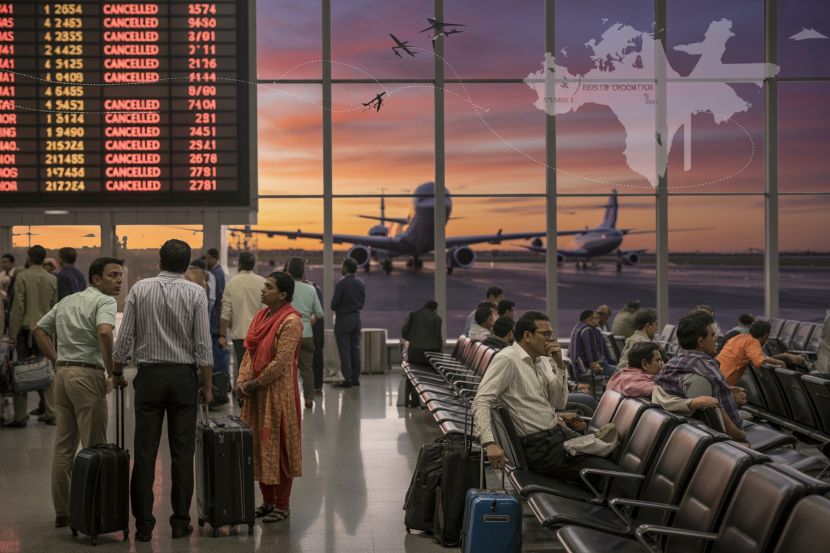
India–Middle East–Europe aviation turmoil intensified this week as Air India and IndiGo grounded services to the United Arab Emirates, Saudi Arabia, Qatar and Israel, with disruptions rippling further into London, Paris, Frankfurt and Vienna. What began as airspace closures linked to escalating hostilities around Iran has now snowballed into one of the most significant operational setbacks for Indian international travel in early 2026. The suspension of Gulf corridors — critical arteries for business, tourism and diaspora travel — has forced airlines to cancel hundreds of flights and rethink transcontinental routings. As Europe-bound services from Delhi and Mumbai are also withdrawn due to operational constraints, the disruption is no longer regional; it is global. For travelers planning spring holidays, business trips, or fiscal year-end corporate travel, the India–Middle East–Europe aviation turmoil is reshaping itineraries overnight.
Gulf Airspace Shutdown Triggers Widespread Suspensions
The immediate catalyst behind the disruption is the continued closure of extensive sections of Middle Eastern airspace following renewed tensions centered around Iran. The restricted air corridors have made traditional westbound routes from India toward Europe and North America unviable without significant diversions.
Air India suspended all services to United Arab Emirates, Saudi Arabia, Qatar and Israel through 23:59 IST on 2 March 2026. These Gulf routes represent some of the airline’s most heavily trafficked international sectors, particularly for labor traffic, business travel and tourism flows between India and the Middle East.
At the same time, nonstop services from Delhi and Mumbai to major European gateways including London, Paris, Frankfurt and Vienna were withdrawn. Even certain onward connections to Toronto were affected. The issue is not simply rerouting — extended flight paths around the Red Sea and alternative corridors significantly lengthen flight times. In some cases, revised schedules push cockpit and cabin crew beyond regulated duty-hour limits, making operations legally impossible without crew swaps or technical stops.
IndiGo Cancels 162 Middle-East Flights As Long-Haul Network Shrinks
Low-cost carrier IndiGo, which typically operates over 65 daily round trips to Gulf destinations, also announced large-scale cancellations. On 2 March alone, the airline scrapped 162 Middle-East services, alongside long-haul flights to London, Amsterdam and Manchester.
For narrow-body aircraft commonly used on Gulf sectors, rerouting poses additional technical challenges. Longer flight paths require additional fuel, and in some cases, refueling stops — complicating scheduling and aircraft rotation cycles.
The impact stretches beyond point-to-point passengers. Transit travelers heading to Europe, North America and parts of Africa via Gulf hubs now face missed connections and rebooking delays.
Europe Feels The Shockwaves Of A Regional Crisis
Although the crisis originated in Middle Eastern airspace, its aftereffects are now visible across Europe. The Gulf corridor is one of the busiest aviation highways linking Asia to Europe. When it closes, airlines must either take substantially longer routes or suspend services altogether.
For tourism-dependent European cities such as London and Paris, disruptions from India affect both inbound leisure travelers and high-spending business passengers. Spring travel demand from India to Europe typically begins rising in March, particularly for school holidays and early summer bookings.
The sudden reduction in available seats is likely to push up fares on unaffected routes, especially on airlines that operate via alternative corridors.
Corporate Travel Faces Fiscal-Year-End Turbulence
The timing of the disruption could hardly be worse. India’s fiscal year closes on 31 March, traditionally triggering a surge in short-notice business travel by finance teams, auditors and multinational project managers.
Many corporations have reportedly activated contingency routing plans, diverting travelers through secondary hubs such as Muscat, Nairobi and Tbilisi. These alternate paths, however, often require additional transit documentation or visas.
Travel managers are advising employees to build 48-hour buffers into schedules to avoid missed meetings or compliance risks.
Tourism And Diaspora Traffic: A High-Stakes Disruption
The Gulf region is not only a business corridor — it is a lifeline for India’s tourism and expatriate communities. Cities such as Dubai, Abu Dhabi, Doha and Riyadh serve as both final destinations and global connecting hubs.
With flights suspended:
Family reunions are being delayed
Pilgrimage and religious travel plans are affected
Short-haul leisure trips to the UAE are being postponed
European vacations are facing rescheduling
India remains one of the largest outbound travel markets to the Gulf and a fast-growing source market for Europe. The ripple effects could be felt across hotel bookings, tour operators and cruise itineraries operating from Mediterranean ports.
Practical Survival Guide For Travelers Navigating The Crisis
Strategic Pre-Departure Checks To Avoid Airport Chaos
Travelers should verify flight status through airline apps before leaving for the airport. Automated notifications are being updated frequently, but conditions remain fluid.
Documentation Readiness For Unexpected Reroutes
Passengers rerouted through alternate countries must ensure:
Transit visas (if required)
Valid passports with sufficient validity
Updated travel insurance documentation
Boarding passes and cancellation emails retained for claims
Domestic connections within India are operating, but minimum connection times at major hubs have reportedly been extended by approximately one hour to absorb cascading delays.
The Broader Aviation Landscape: Why Airspace Closures Matter
Airspace restrictions have historically reshaped aviation patterns. When major corridors close, fuel burn increases, operational costs rise and aircraft utilization falls. Airlines must reassign aircraft, revise crew pairings and renegotiate airport slots.
The Gulf corridor is strategically positioned between Asia and Europe. Disruptions here compress capacity across global networks. Even airlines not directly operating to conflict zones may feel secondary effects through congestion in alternative flight paths.
Travel analysts note that extended closures could impact ticket pricing, cargo operations and summer travel planning.
Insurance, Refunds And Passenger Rights: What To Expect
Passengers affected by cancellations may be eligible for:
Refunds or credit vouchers
Free rebooking on alternative dates
Travel insurance claims under trip interruption clauses
However, compensation rules differ by jurisdiction. Flights originating from India may not fall under European Union passenger compensation frameworks, even if destined for Europe.
Travelers are strongly advised to document all communication and retain proof of expenses incurred due to delays.
A Turning Point For Spring Travel Planning
As the India–Middle East–Europe aviation turmoil unfolds, airlines are reassessing network resilience strategies. Whether operations normalize quickly depends largely on geopolitical developments and the reopening of restricted airspace.
For now, travelers heading to United Arab Emirates, Saudi Arabia, Qatar, Israel, London, Paris, Frankfurt, Vienna, Amsterdam, Manchester and Toronto should prepare for schedule changes, higher fares and limited seat availability.
Flexibility is no longer optional — it is essential.
What This Means For The Global Travel Ecosystem
This episode underscores how interconnected aviation has become. A conflict affecting one airspace region can disrupt business meetings in Mumbai, tourism in Paris and family reunions in Dubai simultaneously.
As airlines navigate safety, regulation and operational viability, travelers must adapt with contingency planning, insurance coverage and schedule buffers.
The coming weeks will determine whether this is a short-lived disruption or a precursor to a more prolonged reshaping of Asia–Europe travel patterns.
The post India–Middle East–Europe Aviation Turmoil: Air India And IndiGo Ground UAE, Saudi Arabia, Qatar And Israel Routes As London, Paris, Frankfurt And Vienna Flights Collapse Amid Iran Airspace Crisis appeared first on Travel And Tour World.
Source: travelandtourworld.com


Sorry, the comment form is closed at this time.