


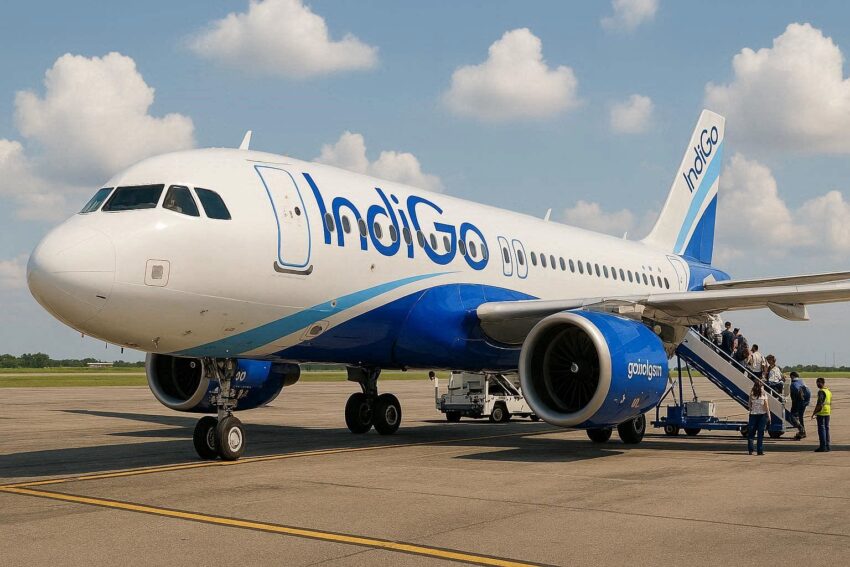
India, Saudi Arabia, China, Kuwait, United Kingdom and Denmark: IndiGo Expands A321neo Presence Across Key International Corridors
India, Saudi Arabia, China, Kuwait, United Kingdom and Denmark: IndiGo Expands A321neo Presence Across Key International Corridors
India’s largest airline is preparing for a significant international network recalibration as the Northern Summer 2026 season approaches. In a move that underscores evolving demand patterns between India, Saudi Arabia, China, Kuwait, the United Kingdom, and Denmark, IndiGo Airlines (6E) is set to enhance capacity on selected short- and medium-haul routes while refining its long-haul European footprint. Greater deployment of the Airbus A321neo is being positioned as a strategic tool to strengthen connectivity between major Indian hubs and high-traffic destinations across West Asia and East Asia.
At the same time, select services linking Delhi and Mumbai with key cities in the United Kingdom and Northern Europe are being streamlined to reflect seasonal demand and operational considerations. Through these calculated adjustments, network efficiency is being prioritized while maintaining frequency stability on core routes. The developments are reflective of a broader shift toward markets demonstrating sustained passenger volumes, particularly those driven by business travel, labor mobility, and diaspora demand between India and Gulf nations.
Capacity Upgrade Across High-Demand Asian and Middle Eastern Routes
Beginning 29 March 2026, larger Airbus A321neo aircraft will be introduced on several international routes previously operated by the A320neo fleet. The adjustment is being implemented without increasing flight frequency, ensuring that daily schedules remain intact while more seats are offered per departure.
The following routes have been confirmed for A321neo deployment:
Delhi to Guangzhou, operating daily
Delhi to Riyadh, operating daily
Kochi to Kuwait City, operating daily
Mumbai to Riyadh, operating daily
By replacing the smaller A320neo with the higher-capacity A321neo, seat availability will be expanded on sectors linking Delhi, Guangzhou, Riyadh, Kochi, Kuwait City, and Mumbai. This strategic enhancement is expected to improve load management and operational efficiency, particularly on corridors characterized by consistent business and expatriate traffic.
Strong labor flows between India and Saudi Arabia, as well as sustained trade and business engagement between India and China, have supported demand growth on these sectors. Meanwhile, routes connecting Kochi and Kuwait City continue to serve a substantial expatriate population, reinforcing the importance of stable and higher-capacity operations.
Strategic Emphasis on Gulf and East Asia Connectivity
The Middle East remains a cornerstone of India’s outbound international market. Destinations such as Riyadh and Kuwait City are key gateways for employment-linked travel and corporate movement. The deployment of the A321neo on routes connecting Delhi and Mumbai with Riyadh reflects a targeted focus on maximizing revenue per departure while maintaining schedule reliability.
Similarly, the Delhi–Guangzhou route serves growing trade and commercial ties between India and China. Capacity enhancement on this corridor signals confidence in continued bilateral travel demand, particularly in sectors such as manufacturing, electronics, and supply chain logistics.
Rather than increasing flight frequency, greater seat density is being utilized as a more efficient growth strategy. Operational costs per seat are expected to be optimized, while airport slot constraints at busy hubs are effectively managed through aircraft upgauging rather than additional rotations.
Adjustments to European Long-Haul Services
While expansion is being pursued in Asia and the Gulf region, modifications have been introduced on selected European routes beginning February 2026.
The following changes have been confirmed:
Delhi to London Heathrow reduced from five weekly flights to four weekly flights effective 9 February 2026
Delhi to Manchester reduced from five weekly to four weekly flights starting 7 February 2026, and further reduced to three weekly flights from 19 February 2026
Mumbai to Copenhagen service, previously operating three weekly flights, to be discontinued from 15 February 2026
These revisions affect connectivity between India and the United Kingdom and Denmark, specifically involving London Heathrow, Manchester, and Copenhagen. The adjustments are being interpreted as part of a broader seasonal capacity alignment process.
Long-haul operations typically involve higher operating costs and increased sensitivity to seasonal travel fluctuations. By recalibrating frequencies and discontinuing underperforming services, network balance is being maintained while preserving operational sustainability.
Fleet Optimization and Operational Efficiency
The expanding A321neo fleet has increasingly been positioned as a central component of IndiGo’s international strategy. The aircraft offers greater passenger capacity compared to the A320neo while maintaining fuel efficiency and range suitability for medium-haul international sectors.
Through this fleet strategy, capacity growth can be achieved without the complexities associated with adding new flight frequencies. Slot-constrained airports such as Delhi and Mumbai benefit from this approach, as passenger throughput is increased without additional runway or terminal pressure.
Operational efficiency is further supported by fleet commonality within the Airbus A320 family. Crew training, maintenance logistics, and scheduling integration are streamlined when aircraft variants share cockpit and systems similarities. As a result, cost control measures are reinforced even as international capacity is expanded.
Market Dynamics Influencing Network Decisions
International travel trends between India and Gulf nations have remained resilient, supported by labor mobility, family travel, and business exchanges. Saudi Arabia and Kuwait continue to represent high-volume traffic markets, particularly from southern and northern Indian cities.
In contrast, European routes are often more susceptible to seasonal demand shifts and macroeconomic influences. Adjustments on services to London Heathrow, Manchester, and Copenhagen suggest that route performance is being continuously evaluated in alignment with financial sustainability objectives.
Rather than broad expansion across all international sectors, a selective growth model is being applied. Markets demonstrating consistent passenger loads are being strengthened, while marginal routes are being refined.
Competitive Positioning in Key International Corridors
By increasing seat capacity on established Gulf and Asian routes, IndiGo’s competitive positioning is being reinforced against regional and international carriers operating similar sectors. Maintaining daily service frequency while offering more seats enhances both flexibility and revenue potential.
Furthermore, the deployment of larger aircraft without frequency increases allows fare competitiveness to be preserved. Cost per seat reductions achieved through aircraft upgauging may enable attractive pricing strategies, especially in price-sensitive labor markets.
The balanced approach between growth and optimization reflects an emphasis on sustainable expansion rather than rapid but uneven network proliferation.
Outlook for Summer 2026 and Beyond
The Northern Summer 2026 network adjustments indicate a decisive orientation toward strengthening short- and medium-haul international connectivity from India to the Gulf and East Asia. Increased reliance on the A321neo fleet underscores a long-term commitment to efficiency-driven capacity expansion.
Further adjustments may be introduced as booking patterns evolve closer to the operating season. However, the overarching trend suggests that growth will continue to be concentrated in corridors linking India with Saudi Arabia, Kuwait, and China, while European services will remain subject to careful performance evaluation.
Through this recalibrated strategy, IndiGo Airlines is positioning itself to align capacity deployment with market realities, ensuring operational discipline while preserving its leadership in India’s international aviation landscape.
The post India, Saudi Arabia, China, Kuwait, United Kingdom and Denmark: IndiGo Expands A321neo Presence Across Key International Corridors appeared first on Travel And Tour World.
Source: travelandtourworld.com



Sorry, the comment form is closed at this time.