


IndiGo Extends Massive Flight Cancellations to Tbilisi, Almaty, Baku, and Tashkent Until March 28, 2026 Amid Rising US-Iran Tensions What You Need to Know!
IndiGo Extends Massive Flight Cancellations to Tbilisi, Almaty, Baku, and Tashkent Until March 28, 2026 Amid Rising US-Iran Tensions What You Need to Know!
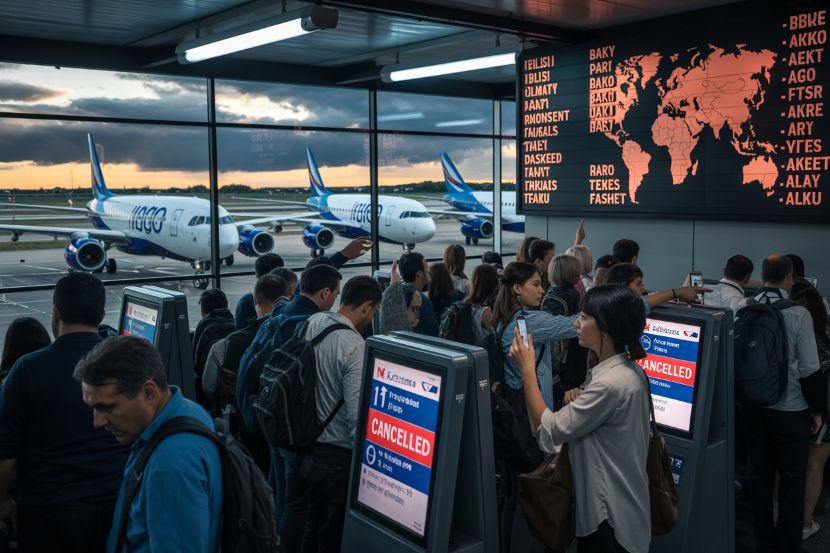
In light of escalating tensions between the United States and Iran, IndiGo, India’s largest low-cost airline, has issued a second travel advisory for February 2026. The airline has extended the cancellation of international flights to four key destinations: Tbilisi, Almaty, Baku, and Tashkent. These disruptions are set to last until March 28, 2026, impacting travellers looking to visit or return from Georgia, Kazakhstan, Azerbaijan, and Uzbekistan. As geopolitical tensions continue to rise, passengers are urged to stay informed through official channels for updates on affected flights.
Rising Tensions Spur Airline Adjustments
The US-Iran conflict has cast a shadow over air travel, especially in regions that lie close to Iranian airspace. This disruption comes just weeks after the initial announcement in early February 2026, where IndiGo made the difficult decision to cancel flights due to increasing security risks in the broader Middle Eastern and Central Asian airspace. With the heightened risk of military engagement in the region, several international airlines, including IndiGo, have opted to avoid flying through Iranian airspace, leading to flight path adjustments or cancellations.
For IndiGo, which primarily operates Airbus A320neo and A321neo aircraft across long-haul routes, rerouting flights to avoid Iranian airspace has become a logistical challenge. The airline’s Tbilisi, Almaty, Baku, and Tashkent routes, which typically traverse or are affected by Iranian airspace, now face extended cancellations due to the regional instability. These cancellations are a result of airspace safety concerns that impact flight schedules and the overall safety of crew and passengers.
The airline released a statement on its official channels, urging passengers who are booked on affected flights to consider alternate travel plans or request refunds.
The Flight Cancellations and Routes Affected
IndiGo had previously canceled flights until February 28, but now has extended that period through March 28, 2026. The four cities affected by this decision are:
Tbilisi, the capital of Georgia, a key transit point for flights travelling to the Middle East and Europe.
Almaty, the largest city in Kazakhstan, a hub for Central Asian aviation.
Baku, the capital of Azerbaijan, known for its strategic location connecting the Caucasus and Europe.
Tashkent, the capital of Uzbekistan, a growing destination for international business and tourism.
These cities are not only vital air travel hubs for the Central Asian region but also important tourist destinations for both leisure and business travellers. With the ongoing geopolitical uncertainty, air travel to these cities has been severely disrupted, leading to significant impacts on tourism and international trade.
IndiGo’s official communication emphasized passenger safety as the foremost priority. The airline stated that airspace avoidance measures had been necessary to ensure safe travel routes for both crew and passengers. The airline’s spokesperson clarified that, while Iranian airspace restrictions were the main reason for these cancellations, IndiGo remains committed to working with aviation authorities to monitor and adjust to any changing flight safety conditions.
Passengers affected by these cancellations have been given multiple options, including the possibility to rebook flights or request full refunds. IndiGo has also assured passengers that they will continue to update their customers through official communications and real-time flight tracking systems.
While the cancellations have caused some inconvenience, the airline’s proactive stance on safety measures and customer care aims to minimize any long-term disruptions
Impacts on Central Asian and European Air Traffic
The US-Iran tensions are not just affecting IndiGo’s flight operations but also have broader implications for aviation in Central Asia and Europe. Air traffic controllers and aviation bodies have repeatedly warned of increased risks in Iranian airspace, which has become a flashpoint due to military activities and potential civilian flight hazards.
Several other international airlines, including Emirates, Qatar Airways, and Turkish Airlines, have also adjusted their flight paths or suspended routes that pass through Iranian airspace. As tensions mount, air traffic monitoring and international collaboration become essential to maintaining aviation safety across a large expanse of Asia and the Middle East.
In the aftermath of several notable air incidents in the past, such as the Ukrainian Airlines downing in 2020, there is a growing demand for aviation industry stakeholders to ensure transparency, collaboration, and passenger safety when assessing and responding to geopolitical risks. These actions have heightened the importance of faster response times to airspace threats, with multiple countries implementing temporary flight bans and safety measures.
The Bigger Picture: How Regional Stability Impacts Global Aviation
The ongoing US-Iran tensions are a microcosm of a broader geopolitical trend where aviation operations are increasingly influenced by international diplomatic developments. As political instability escalates in volatile regions, airlines face significant challenges in maintaining flight safety and delivering uninterrupted service to passengers.
While IndiGo has led the charge in prioritizing flight safety, this disruption to international travel in February and March 2026 is likely only the beginning of a larger ripple effect. Airlines across the globe will need to collaborate more closely with governments, aviation authorities, and international organizations to mitigate the risks posed by regional conflicts.
Conclusion: IndiGo’s Efforts to Maintain Safety Amid Geopolitical Tensions
IndiGo has acted swiftly to ensure that it upholds safety standards and minimizes risks to passengers amid the ongoing US–Iran tensions. With flights to and from Tbilisi, Almaty, Baku, and Tashkent impacted until March 28, 2026, the airline’s quick response reflects a broader trend in global aviation — the growing need to adapt swiftly to geopolitical uncertainties. As the situation evolves, IndiGo is committed to keeping passengers informed through official channels and ensuring that alternative travel arrangements are made available.
Travelers who have been impacted by this extension of cancellations should monitor IndiGo’s travel advisory updates and take the necessary steps to adjust their plans accordingly. The airline continues to demonstrate a commitment to safe and reliable air travel, a quality that is now more crucial than ever in the face of volatile geopolitical dynamics.
The post IndiGo Extends Massive Flight Cancellations to Tbilisi, Almaty, Baku, and Tashkent Until March 28, 2026 Amid Rising US-Iran Tensions What You Need to Know! appeared first on Travel And Tour World.
Source: travelandtourworld.com



Sorry, the comment form is closed at this time.