


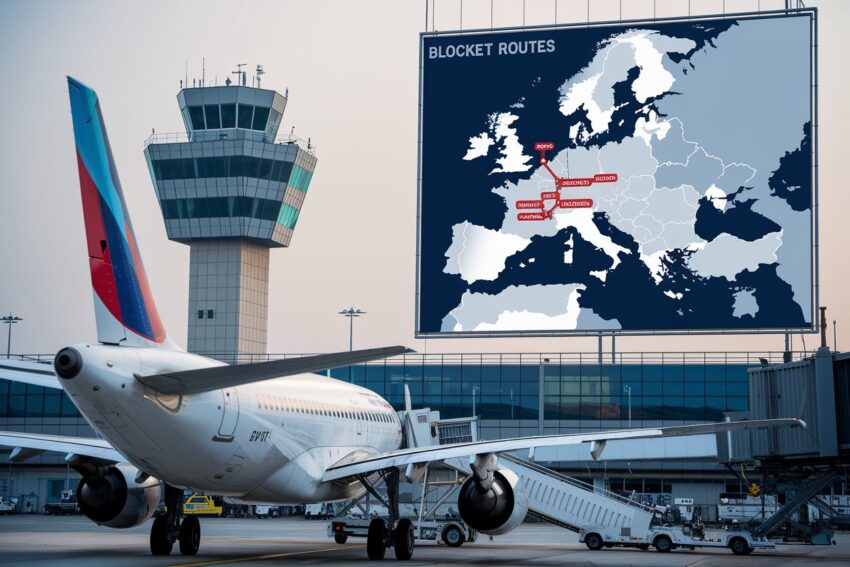
Iran-Israel War Forces IndiGo to Ground Europe Flights Amid EASA Restrictions and Pakistan Airspace Ban – Major Travel Chaos Unfolds
Iran-Israel War Forces IndiGo to Ground Europe Flights Amid EASA Restrictions and Pakistan Airspace Ban – Major Travel Chaos Unfolds
India’s largest budget carrier IndiGo has been forced to suspend and cancel major Europe services as the Iran–Israel war intensifies and airspace closures across the Middle East bring international aviation to its knees. Travellers bound for London, Amsterdam, Manchester and other European cities now face unpredictability, cancellations and rerouted flights after widespread shutdowns of key corridors affecting global connectivity. In a rare crisis for civil aviation, airspace from the Gulf to Israel has been closed repeatedly following coordinated military strikes in the Middle East, triggering mass cancellations of flights to Europe and the Middle East from Indian airlines. The situation has also disrupted hubs such as Dubai, Doha and Abu Dhabi, stranding passengers and forcing carriers to adjust operations under pressure
Middle East Airspace Shut Down, Cascading Impact on International Routes
The conflict in the Middle East has seen multiple air traffic control centres impose restrictions on civilian aircraft to mitigate risks from military escalation. Airspaces over the United Arab Emirates, Saudi Arabia, Qatar and Kuwait were among those affected, leading to hundreds of cancelled flights and effectively severing the busiest east‑west air route connecting Asia with Europe and North America. Officials from airlines and aviation regulators emphasize that safety is the top priority. With so much of India‑Europe traffic passing through West Asia corridors, closures leave airlines with limited alternatives, creating operational strain and heightened costs.
IndiGo’s Europe Service Suspensions Extend Beyond the Middle East
Unlike domestic Indian flight operations, the long‑haul segments are particularly vulnerable. IndiGo has cancelled dozens of flights beyond the Middle East, including services to London, Amsterdam and Manchester. The closures stem from the need to reroute flights around conflict zones, which dramatically increases flying time and crew duty limits. Normally, India‑to‑Europe flights transit over the Persian Gulf region to minimise distance and fuel usage. But with much of that airspace unavailable, alternate routings via the Red Sea or further east add hours of flying time. In some cases, the extension pushes aircraft beyond regulatory crew limits, making operations infeasible.
Why India’s Carriers Are Especially Exposed
The onset of this crisis has highlighted structural vulnerabilities in Indian international flight networks. Indian carriers, including IndiGo and Air India, do not currently use Pakistani airspace for routes to Europe and North America — a practice available to many foreign carriers that could have offered shorter alternative paths. Instead, Indian airlines have traditionally relied on West Asian corridors to reach European skies. Analysts note that this lack of overflight access increases travel distances dramatically when West Asia routes are disrupted. Added to the complexity is that the Pakistan Airports Authority has stressed its airspace remains operational and open, although some routes in Karachi and Lahore sectors are under temporary advisories.
Widespread Regional Flight Cancellations Spark Travel Chaos
The turmoil is not limited to IndiGo. Major Middle Eastern airlines such as Emirates, Etihad and Qatar Airways have suspended or significantly reduced their scheduled services until at least early March, citing safety concerns and airspace closures. Governments have issued travel advisories urging citizens to postpone travel plans or prepare for delays. In India alone, over 350 flights were cancelled in a single day, with Europe‑bound flights among the hardest hit. Airports from Delhi to Mumbai and beyond have reported significant disruptions, with airlines offering rebooking options and waivers to affected passengers.
Passengers Face Uncertainty and Emotional Strain
For travellers, the crisis has meant sudden schedule changes, unexpected layovers and long waits at major airports. Many international routes are facing prolonged cancellations. Thousands of Indian expatriates and tourists travelling between India and Europe or the Middle East remain stranded as airlines continue to adjust flight plans in real time.
One frequent flyer described the experience as “chaos,” highlighting how flight boards abruptly switched from departure listings to cancellation notices, leaving families and business travellers scrambling for alternatives.
Government and Regulatory Response
India’s Ministry of Civil Aviation (MoCA) has been actively reviewing national preparedness in response to the rapidly evolving Middle East conflict. Officials have coordinated with airlines and advisories have been issued to travellers to stay informed of their flight status before heading to airports.
The Directorate General of Civil Aviation (DGCA) also continues to monitor the situation, weighing airspace safety information from international aviation bodies and conflict zone alerts. Any changes in airspace availability will be communicated through updated notices to airlines and passengers.
Industry Experts Warn of Long‑Term Disruptions
Aviation analysts say that while some normalcy may return if tensions ease, the current crisis has exposed structural gaps in routing flexibility for carriers like IndiGo and Air India. Long‑term solutions could involve negotiating overflight rights with a wider array of countries or diversifying route options to minimise reliance on any single corridor.
But for now, the world’s skies are in flux — with thousands of flights adjusted daily as carriers adapt to one of the most severe disruptions to global aviation in recent memory.
Travel Tips for Stranded and Scheduled Passengers
Check airline websites regularly: Timetables are changing daily.
Use airline apps for instant updates: Most carriers now send real‑time notifications.
Refund or rebook options: Many carriers are offering flexible waivers due to disruptions.
Plan alternate routes: Consider connecting through Europe’s eastern hubs if possible.
Stay informed of government advisories: National travel advisories change rapidly amid geopolitical events.
The post Iran-Israel War Forces IndiGo to Ground Europe Flights Amid EASA Restrictions and Pakistan Airspace Ban – Major Travel Chaos Unfolds appeared first on Travel And Tour World.
Source: travelandtourworld.com



Sorry, the comment form is closed at this time.