


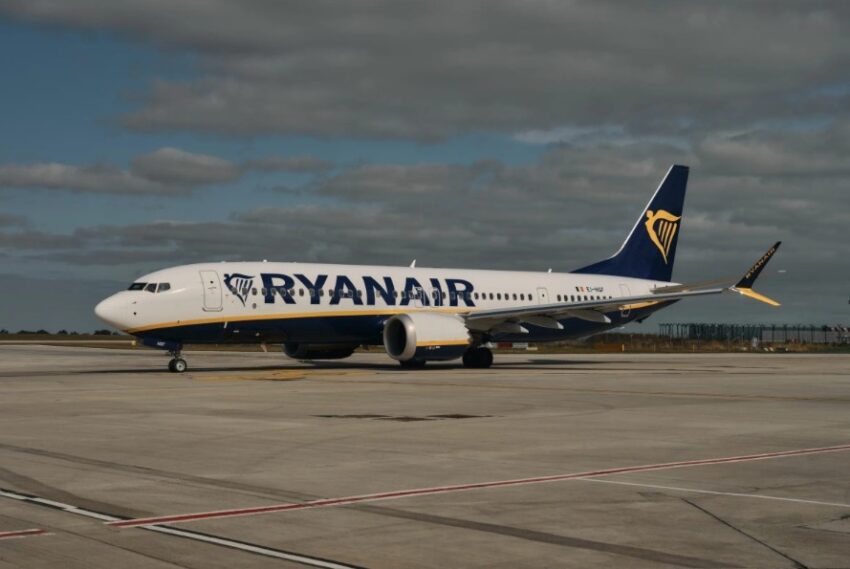
Ireland Joins Poland, Spain, Germany, Hungary, and More as Ryanair’s Longest Nonstop Routes in 2026, Powered by the Boeing 737 MAX, Redefine Affordable Travel to Popular Vacation Spots
Ireland Joins Poland, Spain, Germany, Hungary, and More as Ryanair’s Longest Nonstop Routes in 2026, Powered by the Boeing 737 MAX, Redefine Affordable Travel to Popular Vacation Spots
In 2026, Ireland joins Poland, Spain, Germany, Hungary, and more as Ryanair expands its longest nonstop routes, powered by the Boeing 737 MAX. This strategic move is set to redefine affordable travel to popular vacation spots across Europe and beyond. The 737 MAX’s fuel efficiency, increased seating capacity, and reduced emissions enable Ryanair to maintain its ultra-low-cost model while offering longer routes to high-demand leisure destinations. This expansion not only enhances Ryanair’s network but also strengthens its position as Europe’s leading low-cost carrier, providing travelers with more accessible, cost-effective options for their holiday travels.
Ryanair has built a strong reputation for offering ultra-low-cost air travel across Europe, with the Boeing 737 MAX playing a crucial role in its operations. In 2026, the 737 MAX is at the core of Ryanair’s fleet, supporting its dense short-haul network and expanding leisure routes. The aircraft’s higher seating capacity, improved fuel efficiency, and reduced emissions are essential in enabling Ryanair to keep fares low while maintaining profitability. Standardizing the fleet on the 737 MAX helps the airline optimize aircraft utilization, maintain high-frequency schedules, and operate with cost efficiency.
Although Ryanair primarily focuses on short- and medium-haul routes, the airline also uses the 737 MAX for longer leisure routes, connecting major European cities to popular holiday destinations like the Canary Islands, Cyprus, and Mediterranean hubs. These routes benefit from the 737 MAX’s fuel-efficient design and its ability to carry more passengers without compromising operational performance. In 2026, these slightly longer sectors are a small but strategically important part of Ryanair’s network, showing the versatility of the MAX in catering to both Ryanair’s cost-leadership strategy and growth.
The Boeing 737 MAX is the latest iteration of the 737 family, designed to improve fuel efficiency, range, and passenger comfort compared to older 737 models. The MAX is equipped with advanced LEAP-1B engines, redesigned winglets, and aerodynamic modifications, reducing fuel consumption by up to 14% per seat. The 737 MAX family includes various models, such as the MAX 7, MAX 8, MAX 9, and MAX 10, offering airlines the flexibility to tailor their fleet to meet specific route needs and seating demands.
Despite the 737 MAX facing global scrutiny after two fatal accidents in 2018 and 2019, the aircraft has since undergone rigorous recertification. The upgrades, particularly to the flight control software and pilot training protocols, have restored confidence in the aircraft. The MAX now operates safely across the globe, with thousands of daily flights, contributing to operational efficiency and consistent reliability for carriers like Ryanair.
Ryanair primarily operates the 737 MAX 8-200, a high-density version of the MAX 8 designed for low-cost carriers. This variant allows Ryanair to carry up to 200 passengers, maintaining the same fuel-efficient performance as the standard MAX 8. The 737 MAX 8-200 is ideal for short domestic routes, high-frequency leisure markets, and longer single-aisle sectors of up to 3,500 nautical miles. The modern cabin, quieter engines, and updated flight decks enhance the passenger experience while improving operational efficiency for the airline.
In 2026, Ryanair continues to operate an extensive network of short- and medium-haul flights across Europe. However, its longest nonstop routes stand out, connecting European cities like Kraków (KRK), Budapest (BUD), and Berlin (BER) to leisure destinations in the Canary Islands, Cyprus, and other popular vacation spots. These longer routes demonstrate Ryanair’s ability to efficiently manage holiday traffic using the MAX, while still operating within the aircraft’s efficient operating range. These routes, while not traditionally long-haul, represent a significant portion of Ryanair’s business model, demonstrating the MAX’s flexibility in catering to both city pairs and leisure destinations.
Ryanair’s longest routes reflect the airline’s strategy of connecting secondary markets and leisure destinations efficiently. For example, flights to the Canary Islands tap into the high-volume holiday traffic from mainland Europe. These routes are integral to Ryanair’s network, showcasing the MAX’s capacity to provide operational flexibility and schedule density for both leisure and business travel.
As of early 2026, Ryanair’s fleet includes a combination of Boeing 737-8200 “Gamechanger” aircraft, older 737 Next-Generation jets, and a small number of Airbus A320s operated by its subsidiary. The 737-8200, which forms the backbone of Ryanair’s fleet, offers higher seating density, improved fuel efficiency, and reduced noise emissions compared to older models. Ryanair has committed $22 billion to purchasing 210 new 737-8200 aircraft, aimed at increasing capacity while reducing fuel consumption by 16% and noise by 40%. Additionally, Ryanair has placed an order for 300 737 MAX 10 aircraft, further expanding its fleet in the coming years.
Ryanair’s fleet strategy focuses on efficiency, simplicity, and high utilization. By standardizing its fleet on the 737 MAX family, the airline reduces complexity in training, maintenance, and spare parts, allowing it to operate thousands of flights across Europe and beyond. This approach ensures that Ryanair maintains low operating costs while keeping fares competitive. The ongoing expansion of its MAX fleet allows Ryanair to replace older jets, grow its route network, and respond quickly to seasonal demand.
The 737 MAX has become one of the most widely used aircraft globally, operated by major airlines like Southwest Airlines, American Airlines, United Airlines, and Ryanair. Known for its fuel efficiency, extended range, and modern design, the MAX is suited for both high-frequency short-haul routes and longer single-aisle sectors. Its versatility allows airlines to expand their networks, open new city pairs, and maintain operational reliability, reshaping the economics of narrowbody operations.
Boeing’s plan to open a fourth 737 MAX assembly line in Everett, Washington, by mid-2026 is an indication of the growing global demand for the aircraft. This expansion will increase production capacity and help Boeing meet the increasing demand for the 737 MAX in the coming years.
In 2026, Ireland joins Poland, Spain, Germany, Hungary, and more as Ryanair’s longest nonstop routes, powered by the Boeing 737 MAX, enabling affordable travel to popular vacation spots through improved fuel efficiency, higher seating capacity, and reduced emissions, all while maintaining Ryanair’s ultra-low-cost model.
Ryanair’s use of the 737 MAX 8-200 highlights how a modern, fuel-efficient narrowbody aircraft can support an ultra-low-cost carrier’s vast network, including longer nonstop routes to leisure destinations. By standardizing its fleet on the MAX family, Ryanair benefits from lower operating costs, higher seat capacity, and improved reliability. As the airline continues to expand its MAX fleet, it is well-positioned to respond quickly to new opportunities and solidify its position as Europe’s leading low-cost carrier.
The post Ireland Joins Poland, Spain, Germany, Hungary, and More as Ryanair’s Longest Nonstop Routes in 2026, Powered by the Boeing 737 MAX, Redefine Affordable Travel to Popular Vacation Spots appeared first on Travel And Tour World.
Source: travelandtourworld.com



Sorry, the comment form is closed at this time.