


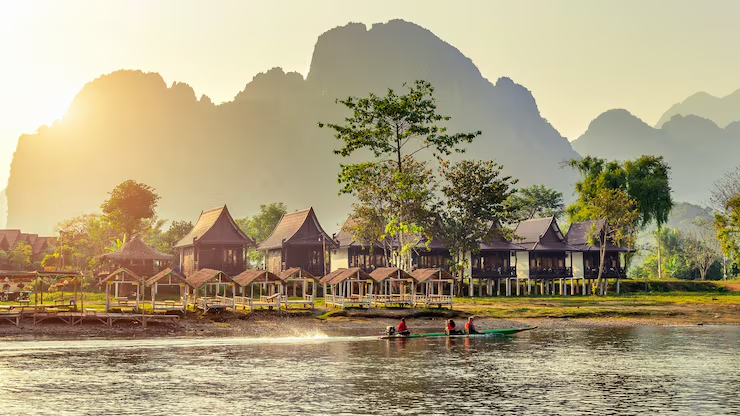
Is Laos the Next Big Thing in Southeast Asian Tourism? Discover How Eco-Tourism and Culture Are Fueling Its Rise!
Is Laos the Next Big Thing in Southeast Asian Tourism? Discover How Eco-Tourism and Culture Are Fueling Its Rise!
In the competitive Southeast Asian tourism landscape, Laos is carefully crafting its identity, positioning itself as a leading destination for eco-tourism and cultural heritage. The country’s commitment to sustainable tourism and the preservation of its natural beauty and rich history are key elements in this strategy. Laos is making strides to grow its tourism sector while ensuring it remains true to its roots, preserving its unique cultural offerings for generations to come.
During the ASEAN Tourism Forum 2026 in Cebu, Phouthone Dalalom, the Deputy Director General of the Tourism Marketing Department at the Ministry of Information, Culture and Tourism, shared Laos’ priorities and strategies for tourism development. The government’s approach focuses on striking a balance between growth and sustainability, with an eye toward achieving long-term success by 2030. As global travel dynamics shift, Laos is doubling down on its eco-friendly and culturally rich offerings to attract discerning travelers seeking authentic and sustainable experiences.
Cultural Heritage and Natural Wonders at the Heart of Laos Tourism
Laos is home to a wealth of natural wonders and cultural treasures that continue to capture the imaginations of travelers from around the world. The country is home to three UNESCO World Heritage sites, including the stunning Luang Prabang, the ancient Wat Phu temple complex, and the Plain of Jars. These sites, steeped in history, offer visitors a chance to explore the legacy of the Lao people and their connection to the land.
Beyond these famous sites, Laos is also known for its intangible cultural heritage. Traditional khene music, the soulful sounds of the indigenous reed mouth organ, and the intricate local craft traditions remain an integral part of the nation’s identity. The recent designation of Hin Nam No National Park as a UNESCO natural heritage site, in partnership with Vietnam, further highlights Laos’ growing reputation as an eco-tourism hub. These natural and cultural assets are at the core of the country’s tourism offering, drawing eco-conscious travelers and culture enthusiasts alike.
In addition to the UNESCO sites, Laos recently added two new locations to its national cultural heritage list: the That Phon Stupa and Heuan Hin in Savannakhet province. These ancient temples add another layer to Laos’ rich cultural fabric, reinforcing the country’s dedication to preserving its history while sharing it with the world.
Tourism Development: The Slow Yet Steady Progress of Laos
While Laos continues to build its reputation as an eco-friendly and culturally rich destination, some aspects of its tourism development have been slower than anticipated. One notable example is the country’s visa policy, which remains relatively restrictive. While Laos offers e-visas that can be processed quickly, the free visa-on-arrival option is still limited to just 17 countries, including some surprising choices like Luxembourg and Mongolia. Tour operators and tourism experts have repeatedly called for broader access to free visas, particularly from Laos’ key inbound markets, but the government has been slow to respond to these requests.
Despite these challenges, Laos has made significant strides in marketing its tourism offerings. The Tourism Marketing Department has concentrated much of its efforts on China and Thailand, two of the country’s largest source markets. In 2024, Laos launched the Visit Laos Year campaign, though it did not gain significant attention globally. In response, Laos is planning to roll out the Visit Laos-China Year 2027, which hopes to capture more global exposure, particularly from Chinese tourists, who represent a growing segment of international travelers.
In 2025, Laos welcomed 4.58 million international visitors, marking an 11% increase from the previous year. The top five source markets were Thailand, China, Vietnam, Korea, and Russia, demonstrating Laos’ appeal to its immediate neighbors and growing interest from international markets.
Sustainable Growth Through Strategic Investments
Laos’ tourism strategy is focused on sustainable, eco-friendly development, and the government is keen to integrate green tourism standards into the country’s tourism offerings. For example, the country’s commitment to green hotel certification and community-based tourism initiatives plays a significant role in its marketing strategy. However, while the country has made impressive strides in sustainability, there have been limited new attractions or products developed in recent years.
The opening of the high-speed rail connecting Vientiane, Luang Prabang, and China has been a game-changer for Laos, offering a direct link to neighboring countries and easing travel within the region. Additionally, the opening of more cross-border checkpoints with Thailand has boosted accessibility for international tourists. However, Laos’ lack of direct long-haul flights remains a challenge, limiting the country’s ability to tap into distant international markets.
The most notable new development is the Nam Ngum Reservoir project, a US$5.3 million investment funded by the Asian Development Bank (ADB). Completed in mid-2025, the project involved the construction of a 6.3-kilometer concrete road linking the reservoir to Highway No. 10. This development also included the construction of scenic viewpoints, shops, public markets, and a small marina that provides boat tours of the reservoir. This is a significant step in diversifying Laos’ tourism offerings, particularly for domestic tourists and those seeking adventure and nature-based experiences.
Looking Ahead: Opportunities for Tourism in Laos
Looking toward the future, Laos faces the challenge of maintaining its niche positioning in eco-tourism while adapting to the demands of an increasingly globalized tourism market. By focusing on sustainable practices and community-based initiatives, Laos has the potential to solidify its place as a leader in responsible tourism in Southeast Asia. With growing international awareness of the country’s cultural richness and ecological wonders, the opportunities for tourism growth are vast.
For Laos to fully realize its tourism potential, it will need to continue developing its infrastructure, attract investment in new attractions, and streamline its visa policies to make it easier for international visitors to access the country. The partnership with neighboring countries, such as Vietnam, through the Hin Nam No National Park and cross-border initiatives, will play a key role in regional tourism growth.
In conclusion, Laos is at a critical juncture in its tourism development. While progress may be slower than desired, the country’s dedication to sustainability, heritage preservation, and eco-tourism will undoubtedly continue to shape its identity in the coming years. With careful planning, targeted marketing, and international collaboration, Laos can carve out a stronger, more prominent role in the Southeast Asian tourism sector.
The post Is Laos the Next Big Thing in Southeast Asian Tourism? Discover How Eco-Tourism and Culture Are Fueling Its Rise! appeared first on Travel And Tour World.
Source: travelandtourworld.com



Sorry, the comment form is closed at this time.