


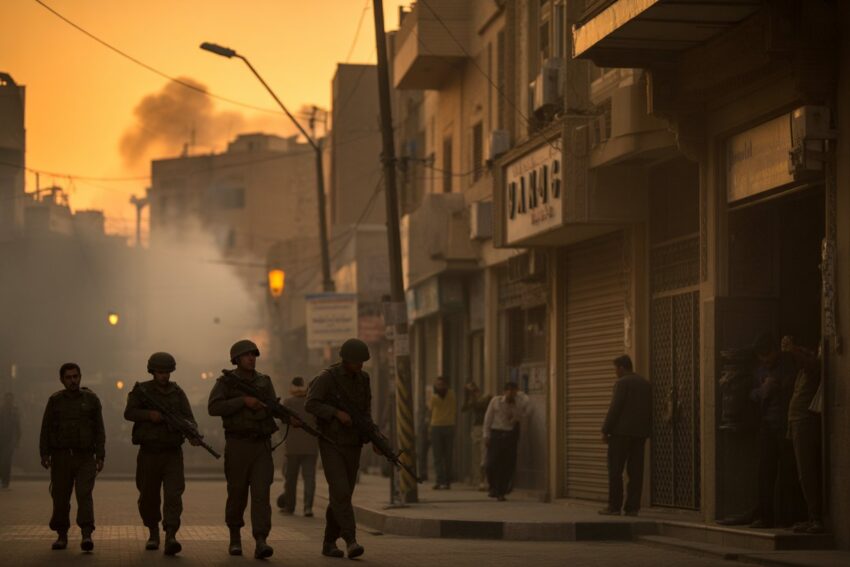
Israel Escalates Iran-US Conflict With Massive Coordinated Strikes on Tehran as Retaliatory Missiles Soar Sending Shockwaves Across the Middle East and Disrupting Travel
Israel Escalates Iran-US Conflict With Massive Coordinated Strikes on Tehran as Retaliatory Missiles Soar Sending Shockwaves Across the Middle East and Disrupting Travel
The Iran US conflict took a sharp turn this weekend as the United States and Israel conducted coordinated military strikes on multiple Iranian targets. According to official sources, the operations focused on sites tied to Iran’s missile and nuclear programs. U.S. and Israeli leaders framed the strikes as a necessary step to neutralize what they identified as immediate threats, while Iran retaliated with missile attacks, signaling the conflict’s rapid escalation.
The U.S. began major combat operations under President Donald Trump’s orders.
Israel joined the offensive, citing an existential threat from Iran.
Iran responded with retaliatory missiles, heightening tensions in the region.
Background: Diplomacy Fails to Prevent Escalation
Before the strikes, officials from both sides had attempted diplomatic negotiations to resolve disagreements over Iran’s nuclear program and missile development. These talks, however, did not produce an agreement meeting U.S. security demands, leaving military action as the next step under the current Official defense policy.
Israel referred to its role in the joint operation as Operation Roaring Lion, emphasizing the preemptive targeting of strategic military infrastructure.
Observers noted that the escalation comes after months of tension, including Iran’s crackdown on domestic protests.
The situation underscores the fragile nature of diplomacy when perceived threats remain unresolved.
U.S. Government Perspective
The U.S. framed its military action as a defensive response to imminent threats from Iran. Official communications highlighted that the goal was to neutralize missile capabilities and prevent attacks on U.S. and allied interests.
In a public statement, President Trump emphasized that the operation would dismantle Iran’s missile industry and critical military assets.
The administration offered conditional safety to Iranian forces who chose to surrender, warning of severe consequences otherwise.
The U.S. Department of Defense confirmed this as one of the largest military engagements in the Middle East in recent decades.
This operation aligns with long-standing US government statement policy focused on national security and allied protection.
Israel’s Standpoint
Israel’s leaders stressed that the operation was essential to safeguard the country against serious threats.
Prime Minister Netanyahu described the strikes as a necessary step to counter an “existential threat” from Iran.
Israel targeted key military sites to limit Iran’s operational capabilities.
Officials emphasized civilian safety and infrastructure protection as part of broader Middle East security measures.
Israel’s participation underscores the country’s commitment to maintaining regional deterrence and preparedness.
Iranian Government Response
Iran swiftly condemned the strikes, citing national sovereignty and international law. Tehran described the attacks as unlawful acts of aggression and vowed a strong counter-response.
The Iranian Ministry of Foreign Affairs framed its actions as a legitimate defensive measure under the United Nations Charter.
Iranian authorities reported missile impacts in Tehran’s Keshvardoost and Pasteur districts.
Officials promised to defend their territory decisively, consistent with the official Iranian government response.
These statements highlight how quickly diplomacy gave way to military action and the risks of further escalation.
Regional Impact and Civilian Precautions
The strikes reverberated throughout the Middle East, affecting neighboring countries and civilian populations.
Iran, Iraq, and Israel closed their airspace to commercial flights.
U.S. embassies in Gulf states urged citizens to take shelter.
Air raid sirens sounded in Jerusalem, Bahrain, and Amman, with local authorities implementing defensive measures.
Emergency services in Tehran were deployed to monitor casualties and damage.
These steps reflect both Official defense policy and broader regional strategies to protect civilians while managing Middle East security risks.
International and Legal Considerations
The escalation has drawn attention to international law and the rules of military engagement. U.S. and Israeli officials described the strikes as defensive actions, while Iran cited legal justification for its retaliation.
Both sides emphasized their right to self-defense.
The UN Charter provides a framework for legitimate military responses, though interpretations differ.
Diplomatic voices worldwide have urged de-escalation to prevent broader conflict.
This scenario highlights the fine line between national security and international legal obligations during high-stakes conflicts.
Conclusion
The Iran US conflict has moved from tense negotiations to active military operations, with both sides framing their actions as essential to national defense. U.S. and Israeli authorities describe the strikes as critical measures to neutralize threats, while Iran pledges decisive retaliation. As developments continue, official statements underscore the importance of Official defense policy, Middle East security, and adherence to international norms. The situation remains fluid, with every move closely monitored by governments and civilians alike.
The post Israel Escalates Iran-US Conflict With Massive Coordinated Strikes on Tehran as Retaliatory Missiles Soar Sending Shockwaves Across the Middle East and Disrupting Travel appeared first on Travel And Tour World.
Source: travelandtourworld.com



Sorry, the comment form is closed at this time.