


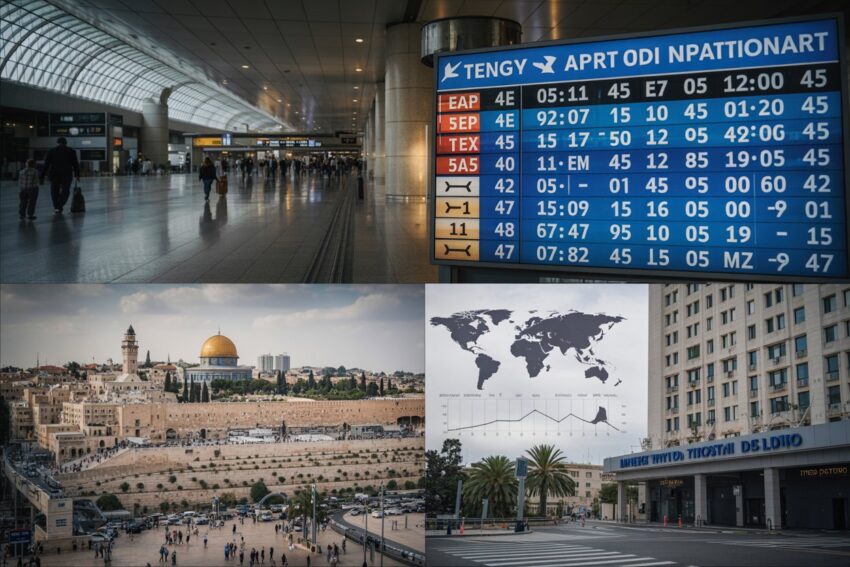
Israel Tourism Impact of Ongoing Conflict: A Sector Under Severe Strain
Israel Tourism Impact of Ongoing Conflict: A Sector Under Severe Strain
Israel Tourism Impact of Ongoing Conflict: Flight Disruptions, eighty percent Arrival Declines, and Long-Term Recovery Challenges
The impact of ongoing conflict has become one of the clearest examples of how geopolitical instability can rapidly disrupt a previously resilient destination.
Once welcoming nearly 4.5–5 million international visitors annually, Israel has experienced a dramatic downturn in arrivals, aviation connectivity, hotel occupancy, and high-yield business travel due to continued conflict with Hamas and broader regional tensions.
For global tourism stakeholders, Israel now serves as a critical case study in how conflict reshapes travel flows, aviation economics, and destination branding.
Sharp Drop in International Arrivals
The most immediate and visible impact has been the collapse in inbound tourism.
International arrivals declined by as much as 70–80% during peak travel seasons compared with pre-conflict levels. Before escalation, Israel’s tourism model was diversified across:
Religious pilgrimage (Jerusalem, Nazareth, Bethlehem corridors)
Cultural and heritage tourism
Mediterranean leisure tourism in Tel Aviv
Business and conference travel
The downturn has affected all segments simultaneously.
Airlines and tour operators reduced or suspended routes to Ben Gurion Airport, Israel’s primary international gateway. With air access constrained, tourism demand fell even further.
Hotels in key urban centers reported double-digit occupancy declines, particularly in areas perceived to be within missile range or near high-profile targets.
Air Travel Disruptions and Aviation Instability
Civil aviation disruptions intensified the tourism slowdown.
During periods of heightened missile threats, multiple international carriers temporarily halted flights to Israeli airspace. Insurance costs and security risk assessments forced airlines to:
Suspend operations
Reduce flight frequencies
Redeploy aircraft to more stable markets
Passengers already en route faced diversions or rebooking requirements, creating logistical disruptions and eroding traveler confidence.
Because Israel relies heavily on direct international air connectivity — rather than land-based regional tourism — aviation interruptions had an outsized economic impact.
MICE and Business Travel Collapse
The MICE segment (Meetings, Incentives, Conferences, Exhibitions) — typically a high-spending tourism category — was severely affected.
Several conferences and corporate gatherings were canceled or relocated to regional alternatives, such as:
Dubai
Athens
Istanbul
Business travel is particularly sensitive to risk perception. Corporate travel policies often automatically restrict travel to destinations under official advisories.
This shift had ripple effects on:
Convention centers
Upscale hotels
Event production companies
Airlines operating premium cabins
The loss of MICE revenue is especially damaging because these travelers typically generate higher per-capita spending than leisure tourists.
Travel Advisories and Perception Challenges
Government-issued travel advisories played a critical role in suppressing demand.
Foreign ministries across North America, Europe, and Asia issued warnings discouraging non-essential travel to Israel. These advisories influence:
Travel insurance eligibility
Cruise itinerary planning
Group pilgrimage tours
Corporate approvals
Even regions geographically distant from active hostilities experienced cancellations due to nationwide advisories.
Tourism is deeply perception-driven. Once a destination is widely labeled as high-risk, recovery often lags behind actual security improvements.
Psychological and Brand Damage
Beyond logistics and economics, the conflict has altered destination perception.
Travel sentiment surveys indicate elevated traveler anxiety about visiting the region. When media coverage centers on missile threats and instability, the emotional barrier to booking increases.
Historical recovery patterns suggest:
Diaspora and essential travel return first
Religious pilgrimage resumes cautiously
Business travel follows gradually
Leisure tourism recovers last
Rebuilding confidence requires more than ceasefires — it requires sustained stability and visible normalization of daily life.
Economic Ripple Effects
Tourism is a significant employer within Israel’s service sector. The downturn has affected:
Hospitality workers
Tour guides and transport providers
Small businesses near pilgrimage sites
Restaurants and retail outlets
Domestic tourism activity has offered limited cushioning, but it cannot compensate for lost international visitor spending, which typically yields higher economic multipliers.
Longer-term concerns include postponed hotel investments, slowed infrastructure projects, and weakened investor confidence in tourism expansion.
Long-Term Recovery Outlook
The Israeli tourism impact of the ongoing conflict highlights how quickly a stable tourism performer can face structural disruption.
Recovery will depend on:
Sustained de-escalation
Restoration of full international flight operations
Downgrading of travel advisories
Strategic global marketing campaigns
Historically, tourism recovery often trails political stabilization by months or even years. Restoring global confidence is as much about perception management as security reality.
A Defining Tourism Case Study
Israel’s tourism contraction illustrates the broader vulnerability of global travel to geopolitical shocks.
With international arrivals down by up to 80%, aviation disruptions ongoing, and high-yield MICE travel relocated to competing hubs, the sector faces a prolonged rebuilding phase.
For global tourism analysts and policymakers, Israel represents a critical example of how conflict impacts not only immediate travel flows but also long-term destination branding, airline economics, and investor sentiment.
The path to recovery will require stability, connectivity, and — most importantly — the gradual return of traveler confidence.
The post Israel Tourism Impact of Ongoing Conflict: A Sector Under Severe Strain appeared first on Travel And Tour World.
Source: travelandtourworld.com


Sorry, the comment form is closed at this time.