


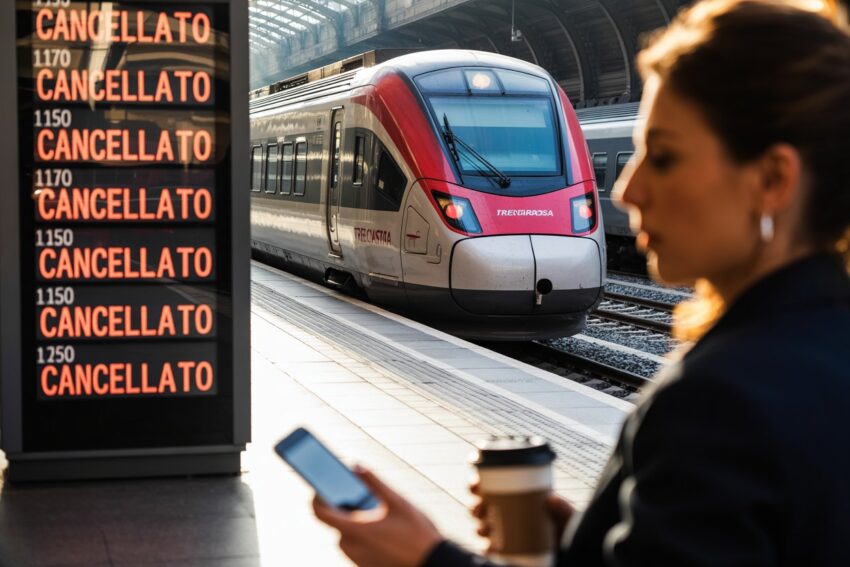
Italy Travel Chaos: Massive Train and Airport Strikes to Disrupt Thousands this February
Italy Travel Chaos: Massive Train and Airport Strikes to Disrupt Thousands this February
Italy is a land that invites you to fall in love—with its sun-drenched piazzas, its ancient ruins, and its unparalleled culinary heritage. But this February, travelers hoping for a smooth “Dolce Vita” experience may find themselves facing a more modern Italian tradition: the sciopero (strike).
As of mid-February 2026, a series of coordinated industrial actions across the transport sector are set to disrupt the plans of thousands of domestic and international travelers. From the high-speed rail lines connecting Milan and Rome to the bustling terminals of Fiumicino and Malpensa, the message is clear: check your itinerary, know your rights, and pack a healthy dose of patience.
The Calendar of Disruption
The strikes are not a single event but a staggered series of walkouts organized by various unions representing rail workers, airport ground staff, and airline personnel.
Rail Woes: The most significant impact is expected on the national rail network. Staff from Trenitalia and the private operator Italo have announced a 24-hour walkout scheduled for the final week of February. In Italy, rail strikes typically run from 9:00 PM on a Sunday to 9:00 PM on a Monday, hitting the Monday morning commute particularly hard. While Italian law mandates “guaranteed minimum services” during peak hours (usually 6:00 AM–9:00 AM and 6:00 PM–9:00 PM), regional and intercity services outside these windows are likely to be cancelled or severely delayed.
Airport and Sky High Tension: It’s not just the tracks that are affected. Ground handling staff at several major Italian airports, including Venice, Florence, and Pisa, have flagged 24-hour protests. Furthermore, staff at ITA Airways are negotiating over contract renewals, with “lightning strikes” or short-duration walkouts possible throughout the month. If you are flying into or out of Italy this February, the risk of baggage delays and flight cancellations is significantly higher than usual.
Why is This Happening?
To understand the strikes, one must look at the human element behind the machinery. The unions—including CUB Trasporti and USB—are citing “untenable” working conditions, stagnant wages in the face of inflation, and a demand for increased safety protocols.
For the workers, the strike is a last-resort tool to ensure their voices are heard by a government and corporate sector they feel has moved too slowly on post-pandemic labor reforms. For the traveler, however, it feels like a logistical nightmare. Bridging the gap between these two perspectives requires empathy, but also pragmatic planning.
A Human Guide to Surviving the Strike
If you find yourself caught in the middle of these disruptions, don’t panic. The key to navigating an Italian strike is staying one step ahead of the crowd.
1. The “Guaranteed” Window Italy is unique in that it legally protects certain travel windows even during a total strike. If you must travel by train, aim for the 6:00 AM to 9:00 AM slot. These trains must run by law to ensure workers can get to their jobs. However, expect these carriages to be incredibly crowded. If you have heavy luggage or are traveling with small children, this might be a stressful environment.
2. Leverage the Apps In the digital age, information is your best defense. Download the Trenitalia and Italo apps and enable push notifications. Often, cancellations are uploaded to the system hours before they appear on the station monitors. For flights, use apps like FlightRadar24 or your airline’s official app to track the incoming aircraft. If the plane isn’t in the air, your flight likely won’t be leaving on time.
3. Know Your Rights (EU 261) Because Italy is part of the EU, travelers are protected by Regulation (EC) No 261/2004. If your flight is cancelled due to an internal strike (airline staff), you are entitled to a full refund or a re-routing. If the delay exceeds a certain number of hours, the airline must provide vouchers for food and, if necessary, overnight accommodation. Note: Strikes by third-party airport staff (like air traffic control or baggage handlers) are often classified as “extraordinary circumstances,” meaning you might not be entitled to cash compensation, but the airline still has a “duty of care” to feed and house you.
The Silver Lining: Exploring the “Slow” Way
While a strike can ruin a tight itinerary, it can also be an invitation to slow down. If your train from Florence to Rome is cancelled, perhaps it’s an opportunity to spend an extra night in a Tuscan village you would have otherwise zipped past.
Local buses (autobus) and trams are often operated by different municipal unions and may still be running even when the national trains are stalled. Rental car agencies will be busy, so if you plan to drive, book your vehicle the moment you hear rumors of a strike.
Final Advice for February Travelers
The U.S. and UK Embassies in Italy frequently update their travel advisories during these periods. Their advice remains consistent: Do not head to the airport or station without confirming your departure. Italy remains a jewel of the Mediterranean, and a few days of industrial action shouldn’t deter you from visiting. By staying informed, flexible, and patient, you can ensure that your Italian adventure is remembered for the beauty of the Colosseum rather than the bench of a train station.
Keep your documents handy, your phone charged, and remember: in Italy, there is always another espresso waiting around the corner while you wait for the next train.
The post Italy Travel Chaos: Massive Train and Airport Strikes to Disrupt Thousands this February appeared first on Travel And Tour World.
Source: travelandtourworld.com



Sorry, the comment form is closed at this time.