


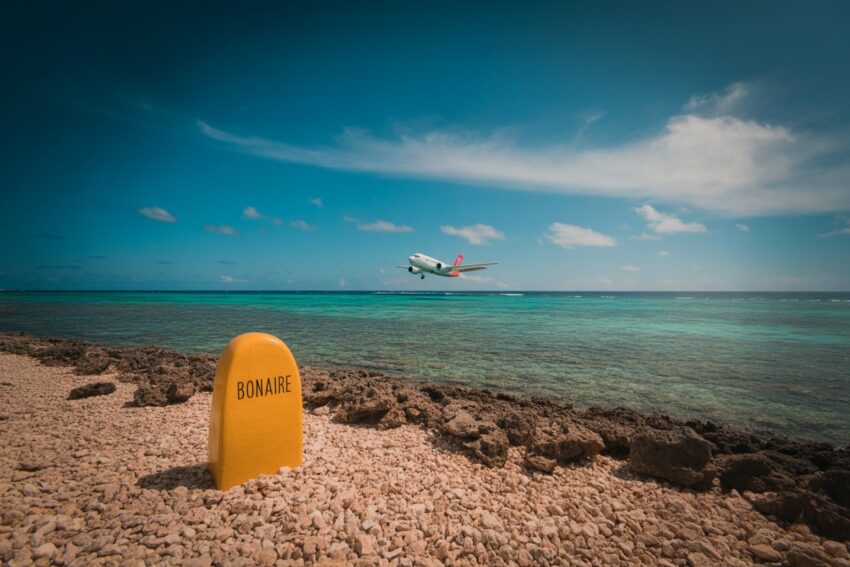
JetBlue’s Exit Leaves Bonaire Tourism Flat: Analyzing the January 2026 Arrivals
JetBlue’s Exit Leaves Bonaire Tourism Flat: Analyzing the January 2026 Arrivals
For years, the Dutch Caribbean island of Bonaire has been the “quiet overachiever” of the region. Known globally as a diver’s paradise and a sanctuary for sustainable tourism, it usually enjoys a steady upward trajectory in visitor numbers. However, the dawn of 2026 brought a sobering reality check. According to the latest preliminary data from Tourism Corporation Bonaire (TCB), the island recorded a performance that can best be described as “perfectly flat.”
In January 2026, Bonaire welcomed 18,606 stayover visitors. While technically an increase over the 18,598 arrivals seen in January 2025, the growth represents a microscopic 0.04 percent—a difference of exactly eight people. In the high-stakes world of Caribbean tourism, where winter is the “golden season,” a flatline often signals a significant shift in market dynamics.
The Elephant in the Sky: JetBlue’s Departure
The primary catalyst for this stagnation isn’t a lack of interest in Bonaire’s turquoise waters, but rather a change in how people get there. On January 3, 2026, JetBlue officially ended its nonstop service between New York’s John F. Kennedy International Airport (JFK) and Bonaire’s Flamingo International Airport.
For the New York metropolitan area—a massive source market for high-spending travelers—this was a blow. JetBlue provided a year-round, low-cost-entry link that catered to both spontaneous vacationers and dedicated divers. By pulling out at the very start of the peak winter season, a significant portion of “seat capacity” vanished. While other carriers like United (via Newark and Houston), Delta (via Atlanta), and American Airlines (via Miami) continue to serve the island, the loss of a direct New York competitor has narrowed the funnel for Northeast travelers.
The Dutch Anchor
Despite the turbulence in U.S. airlift, Bonaire’s tourism floor remains solid, thanks largely to its historical and cultural ties to Europe. The Netherlands continues to be the island’s lifeline, accounting for 9,004 arrivals in January—nearly 48.4 percent of all visitors.
Dutch travelers aren’t just visiting; they are staying longer and diversifying their lodging. While 46.4 percent choose traditional hotels, a significant number are opting for apartments and villas, deeply embedding themselves in the local economy. The age demographic from the Netherlands also shows more balance than the U.S. market, with a healthy representation of travelers aged 25 to 34 alongside the traditional 55+ retirement crowd.
The U.S. Market: Divers and Loyalists
The United States remains the second-largest source market, contributing 5,000 visitors (26.9 percent) in January. What is fascinating about the American traveler in Bonaire is their singular focus. While “vacation” is the broad reason for travel for 52.4 percent of Americans, a staggering 35.9 percent visit specifically for diving.
Bonaire is one of the few places in the world where the tourism product is so specialized that it creates “recession-proof” loyalty. Divers are often willing to endure longer layovers or higher ticket prices to access the island’s pristine reefs. This loyalty is likely what prevented January’s numbers from dipping into the negative following the JetBlue exit.
However, the data also reveals an aging U.S. demographic. Over 57 percent of American visitors are aged 55 or older. For long-term growth, the challenge for Bonaire will be attracting the “next generation” of divers and eco-travelers to fill the gap left by changing airline routes.
Where are they staying?
The shift in accommodation preferences is another highlight of the 2026 report. While hotels remain the top choice (used by about 48.7 percent of Americans), there is a growing trend toward “alternative” stays.
Villas: 16.2%
Apartments: 8.5%
Personal Property: 6.4%
This suggests a “residential tourism” model is strengthening. Travelers aren’t just visiting Bonaire; they are living in it, often returning to the same villas or even purchasing their own property. This creates a stable economic base, but it doesn’t necessarily drive the “new growth” that government officials and resort developers look for.
A Look Toward the Horizon
Bonaire finds itself at a crossroads. The January data proves the island has immense “staying power”—to lose a major airline route and still maintain year-over-year numbers is a testament to the island’s brand strength.
However, “flat” is rarely the goal. To ignite growth in 2026, the island will likely need to:
Negotiate New Airlift: Replacing the JFK capacity is vital to regaining momentum in the U.S. Northeast.
Target Younger Markets: TCB may need to pivot marketing efforts toward younger “adventure” travelers and digital nomads to balance the 55+ demographic.
Leverage Regional Links: With Curaçao providing 7.7 percent of arrivals, inter-island “hop” tourism remains an untapped opportunity for multi-destination Caribbean vacations.
In conclusion, Bonaire’s January 2026 performance is a story of resilience. The island didn’t sink after JetBlue’s departure; it treaded water. For a destination that prides itself on the slow, preserved beauty of its natural environment, perhaps “flat” isn’t a failure—it’s just a chance to take a breath before the next dive.
The post JetBlue’s Exit Leaves Bonaire Tourism Flat: Analyzing the January 2026 Arrivals appeared first on Travel And Tour World.
Source: travelandtourworld.com



Sorry, the comment form is closed at this time.