


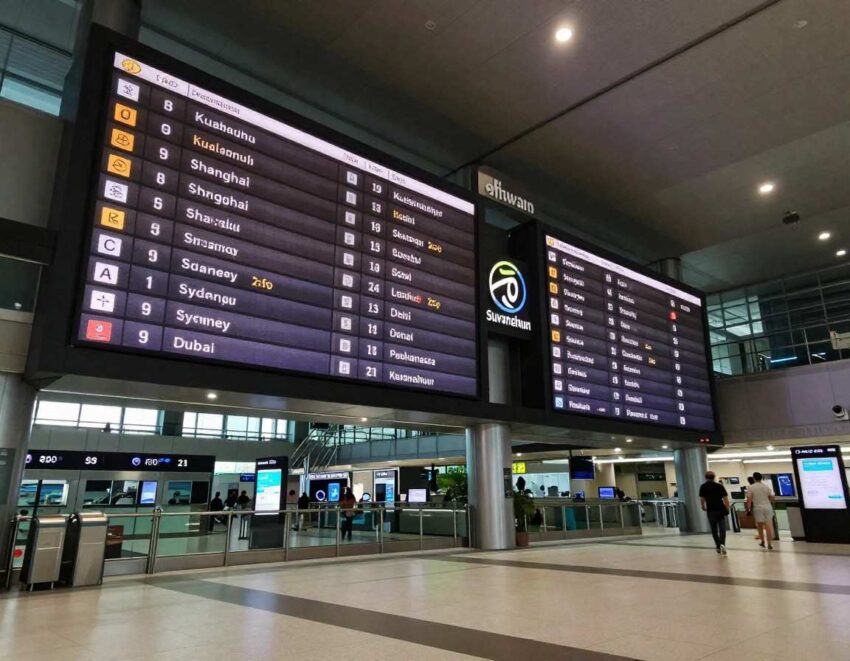
Kuwait Airways, Emirates, Qatar Airways, British Airways, Lufthansa, Turkish Airlines and Air India Halt Flights in Kuwait as Security Fears Escalate — Hilton, Marriott and Hyatt Brace for Gulf Tourism Shock
Kuwait Airways, Emirates, Qatar Airways, British Airways, Lufthansa, Turkish Airlines and Air India Halt Flights in Kuwait as Security Fears Escalate — Hilton, Marriott and Hyatt Brace for Gulf Tourism Shock
Kuwait Airways, Emirates and Qatar Airways have moved swiftly to reassess operations in the Gulf after Kuwait suspended all arrivals and departures at Kuwait International Airport amid escalating regional security concerns, triggering a wave of schedule disruptions that is rippling across Europe, South Asia and the Middle East. The decision followed heightened airspace risk and precautionary aviation safety measures, reflecting how quickly geopolitical tensions can reshape global travel corridors that normally handle millions of passengers each month. Kuwait International Airport alone processed more than 15 million travelers in 2023, making even a short operational pause significant for airlines, hotels and transit passengers. International carriers including British Airways, Lufthansa, Turkish Airlines and Air India have reviewed routing and capacity across affected airspace, while major hotel groups such as Hilton, Marriott and Hyatt prepare for booking volatility as business and regional leisure trips face sudden uncertainty. For travelers, the situation underscores a stark reality: the Gulf remains one of the world’s most strategically important aviation crossroads, and when flights halt in Kuwait, the effects extend far beyond a single runway, reshaping itineraries, occupancy rates and travel plans across multiple continents almost overnight.
Kuwait Airways, Emirates, Qatar Airways, British Airways, Lufthansa, Turkish Airlines and Air India Halt Flights in Kuwait as Security Fears Escalate — Hilton, Marriott and Hyatt Brace for Gulf Tourism Shock
Kuwait’s aviation sector has entered an unexpected pause. Kuwait Airways has suspended all arrivals and departures at Kuwait International Airport following escalating regional security concerns. The decision came after heightened airspace risks and confirmed drone-related incidents near the airport zone. Authorities prioritized passenger safety. Flights stopped. Schedules froze. Travelers were told to wait for updates.
The suspension has ripple effects far beyond Kuwait’s borders. International carriers including Emirates, Qatar Airways, British Airways, Lufthansa, Turkish Airlines and Air India have adjusted, rerouted, or temporarily suspended select Gulf operations as regional airspace conditions remain fluid. The result is immediate disruption for leisure travelers, business passengers and transit flyers across the Middle East.
Kuwait International Airport handled approximately 15.6 million passengers in 2023 according to official civil aviation data. In peak months, throughput exceeds one million travelers. When operations pause at that scale, tens of thousands are affected within hours. Backlogs grow quickly. Hotels see cancellations. Tour operators adjust itineraries. Corporate travel managers activate contingency plans.
This is not only an aviation story. It is a travel story.
Kuwait Airways, Emirates, Qatar Airways, British Airways, Lufthansa, Turkish Airlines and Air India Suspend Kuwait Routes as Regional Airspace Tightens
Kuwait Airways confirmed it suspended all arrivals and departures at Kuwait International Airport due to evolving regional developments. Passenger safety was cited as the primary reason. The Directorate General of Civil Aviation coordinated with security authorities to review airspace conditions before any phased reopening.
Major international airlines responded cautiously. Emirates and Qatar Airways adjusted flight paths in parts of the Gulf. British Airways and Lufthansa reviewed regional schedules. Turkish Airlines and Air India assessed operational risk exposure for routes connecting Europe, South Asia and the Middle East.
Airspace disruptions create complex operational challenges. Aircraft must be repositioned. Crews may exceed duty limits. Connecting passengers miss onward flights. Cargo loads get delayed. Even a short closure triggers cascading schedule changes for 24 to 72 hours.
For travelers, this means uncertainty. Even flights not directly bound for Kuwait can experience rerouting or departure delays due to congestion in neighboring airspace. The Middle East functions as a global aviation crossroads. When one node pauses, surrounding hubs absorb the shock.
Hilton, Marriott and Hyatt Hotels Across Kuwait and the Gulf Respond to Sudden Booking Volatility
The hospitality sector reacts immediately to aviation disruption. Kuwait’s hotel market includes international brands such as Hilton, Marriott, Hyatt, Radisson Blu and Four Seasons. Many properties depend heavily on regional corporate travel and short-stay Gulf visitors.
When flights halt, bookings freeze. Corporate stays get postponed. Leisure trips cancel. Event planners reconsider conferences. Yet hotels also prepare for extended stays from stranded travelers.
Hotel occupancy in Kuwait has historically been tied to regional mobility patterns. GCC travelers, particularly from Saudi Arabia, represent a major share of short-term inbound visits. Recent official arrival data shows millions of entries from neighboring Gulf countries in recent years, with Saudi Arabia leading by a wide margin. Bahrain, the United Arab Emirates and Qatar also contribute steady visitor flows.
If air travel remains paused, cross-border business meetings decline. If operations resume quickly, demand rebounds fast due to short-haul flight times and flexible rebooking patterns.
Luxury brands adjust pricing strategies during uncertainty. Flexible cancellation policies become critical. Loyalty program members often receive priority assistance and re-accommodation support.
How the Suspension Impacts Kuwait’s Travel Economy in Real Numbers
Kuwait International Airport processed over 15 million passengers in 2023. Monthly volumes regularly exceed one million travelers during peak seasons. That equals roughly 35,000 to 40,000 passengers per day.
A full suspension affects:
Airline ticket revenue
Airport retail and duty-free income
Hotel occupancy rates
Ground transport services
Tour operators and MICE planners
Cargo logistics operations
Short interruptions can cost airlines millions in lost revenue and irregular operation expenses. Aircraft parked on the ground generate no income. Rebooking and refund processing adds financial strain.
Tourism in Kuwait is not driven by mass leisure tourism in the same way as Dubai or Doha. Instead, it is built around business travel, visiting friends and relatives, and regional short breaks. That makes aviation continuity essential.
Travel Angle: What Tourists Should Know Before Planning a Trip to Kuwait
Travelers planning trips to Kuwait should monitor airline notifications carefully. Always check flight status directly with the operating carrier before leaving for the airport. Do not rely solely on third-party booking sites.
If your flight connects through another Gulf hub, confirm that both segments remain operational. Airspace closures in one country can influence routing in another.
Travel insurance is crucial. Choose policies that cover trip interruption and cancellation due to unforeseen regional events.
If you are already in Kuwait, contact your airline immediately to confirm rebooking options. Most carriers prioritize passengers with imminent departure dates.
Keep digital and printed copies of your boarding pass and passport. Save airline customer service numbers. Use official mobile apps for real-time alerts.
Flight Network Implications for Global Travelers
Kuwait connects Europe, South Asia and the Middle East. Routes linking London, Frankfurt, Istanbul, Mumbai and Delhi frequently rely on Gulf corridor airspace. When disruptions occur, airlines may:
Reroute aircraft over longer corridors
Add fuel stops
Consolidate passenger loads
Delay departures to manage air traffic flow
Travelers from India may experience knock-on delays if aircraft rotations involve Gulf stopovers. European passengers transiting through the region may face extended journey times.
Cargo shipments also slow. Kuwait plays a role in regional freight logistics. Delays in cargo operations impact supply chains for perishable goods and time-sensitive shipments.
Regional Impact: Saudi Arabia, UAE, Bahrain, Qatar and Beyond
Saudi Arabia remains Kuwait’s largest source market for visitor arrivals. Millions of entries were recorded in recent pre-disruption years. Bahrain, UAE and Qatar also rank among top regional contributors.
When flights halt, weekend travel from these markets drops instantly. Business trips get postponed. Hospitality revenue declines temporarily.
However, proximity works in Kuwait’s favor. Once operations resume, demand can recover quickly due to short travel distances and cultural ties.
International travelers from Europe and South Asia may take longer to rebook if flight capacity tightens.
Airlines Face Operational and Financial Pressures
For Kuwait Airways, suspending operations protects passengers but affects short-term revenue. Aircraft utilization decreases. Crew schedules require adjustment. Reaccommodation costs increase.
International airlines evaluate risk carefully. Some maintain limited operations while monitoring developments. Others temporarily suspend specific routes.
Fuel prices, insurance premiums and overflight fees can rise during regional tension. Airlines factor these into operational planning.
Network resilience becomes critical. Carriers with diversified route systems adapt more quickly than single-market operators.
Hospitality Industry Strategy During Aviation Disruption
Hilton, Marriott and Hyatt properties in Kuwait and the Gulf implement crisis management protocols. Flexible rebooking policies are extended. Guest communication increases. Loyalty programs assist stranded travelers.
Hotels near Kuwait International Airport often accommodate passengers affected by cancellations. This can offset some occupancy loss from inbound tourism decline.
Conference and exhibition bookings are closely monitored. If travel restrictions extend, event postponements could impact quarterly revenue.
Luxury hospitality brands focus on reassurance. Safety communication becomes part of marketing messaging.
Tourist-Friendly Guidance for Navigating the Situation
Remain calm. Aviation suspensions during security reviews are precautionary. Monitor official airline updates daily.
If you have a non-refundable booking, contact the hotel directly. Many properties provide goodwill adjustments during extraordinary circumstances.
Arrive early at airports once operations resume. Expect longer security screening times.
Consider alternative routing if urgent travel is necessary. Some travelers may reroute via unaffected hubs in neighboring countries depending on airline advice.
Keep emergency contact information accessible. Register with your embassy if staying for an extended period.
Long-Term Outlook for Kuwait’s Travel Sector
Kuwait’s aviation infrastructure includes expansion projects and terminal upgrades aimed at increasing capacity and enhancing passenger experience. The airport’s strategic location supports connectivity between Europe and Asia.
Historically, Gulf aviation rebounds strongly after short-term disruptions. Demand elasticity in regional travel markets allows recovery once safety confidence returns.
Kuwait’s tourism strategy increasingly integrates business events, cultural attractions and retail experiences. Aviation stability remains foundational to that growth.
Why This Matters for Global Travelers
The Gulf region functions as a central aviation bridge. Disruptions in Kuwait influence broader travel flows.
For travelers, the key lessons are flexibility and preparedness. Choose airlines with robust customer service networks. Opt for refundable rates when possible. Monitor regional developments before departure.
Kuwait remains a vital destination for business and regional travel. Safety reviews and temporary suspensions reflect precautionary measures, not permanent closures.
As airlines resume operations, seat availability may be limited initially. Early rebooking increases your chances of securing preferred flights.
Final Word for E-Travel Readers
Kuwait Airways’ suspension of arrivals and departures signals a decisive safety-first approach amid escalating security concerns. International airlines have responded cautiously. Hotels across Kuwait and the Gulf are adapting swiftly.
For travelers, informed planning is essential. Monitor official airline channels. Maintain flexible itineraries. Use travel insurance wisely. Stay connected with your accommodation provider.
Aviation disruptions reshape travel plans, but they rarely erase demand permanently. Kuwait’s connectivity, regional ties and strategic location position it for recovery once operations normalize.
Until then, stay alert. Travel smart. And plan with flexibility.
The post Kuwait Airways, Emirates, Qatar Airways, British Airways, Lufthansa, Turkish Airlines and Air India Halt Flights in Kuwait as Security Fears Escalate — Hilton, Marriott and Hyatt Brace for Gulf Tourism Shock appeared first on Travel And Tour World.
Source: travelandtourworld.com



Sorry, the comment form is closed at this time.