


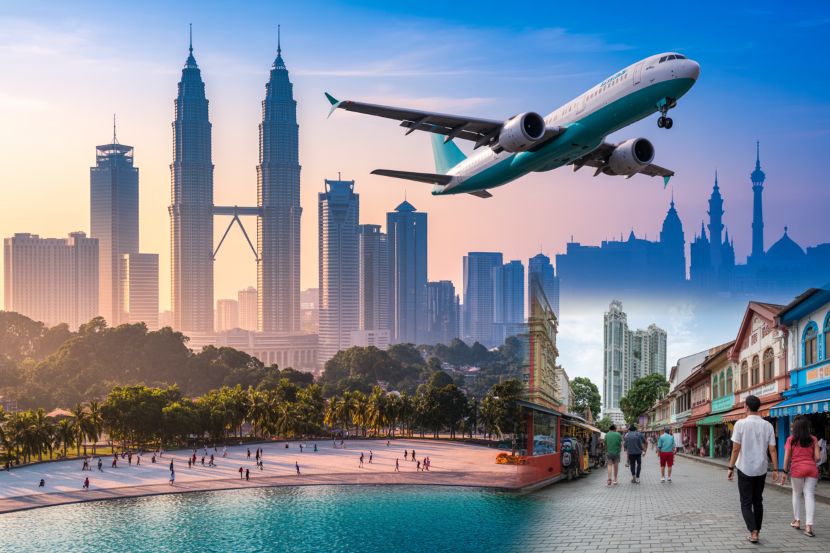
Langkawi Beaches, Kuala Lumpur Skylines and Sarawak Adventures Move Closer to Delhi and India’s Rising Tier 2 Markets Under Malaysia’s 2026 Visitor Expansion Vision — Insights Every Traveler Should Know
Langkawi Beaches, Kuala Lumpur Skylines and Sarawak Adventures Move Closer to Delhi and India’s Rising Tier 2 Markets Under Malaysia’s 2026 Visitor Expansion Vision — Insights Every Traveler Should Know
Malaysia is sharpening its focus on India with a target of 2.1 million Indian visitors, positioning cities such as Delhi, Mumbai, and Bengaluru—alongside fast-growing Tier 2 and Tier 3 markets—as the backbone of its next tourism surge. As part of its 2026 roadmap, Tourism Malaysia is aligning air connectivity, destination marketing, and trade partnerships to capture a larger share of India’s rapidly expanding outbound travel market.
The strategy behind Malaysia Sets Sights On 2.1 Million Indian Visitors As Delhi, Mumbai, Bengaluru And Tier 2 Cities Power New Air Links Ahead Of 2026 Tourism Drive is not merely about increasing numbers. It is about reshaping accessibility, strengthening brand recall, and ensuring that Malaysia stands out in a competitive Asian tourism landscape that includes Thailand, Singapore, and the United Arab Emirates. With India emerging as one of the world’s fastest-growing outbound markets, Malaysia’s recalibrated focus reflects both opportunity and urgency.
Why India Matters More Than Ever In Malaysia’s Tourism Blueprint
India has consistently ranked among Malaysia’s top source markets. According to official Malaysian tourism data, Indian arrivals have rebounded strongly following the pandemic years, supported by streamlined visa processes and improved connectivity. Malaysia’s visa facilitation measures—including temporary visa-free entry initiatives for Indian nationals—have also contributed to heightened interest.
For Malaysia, the goal of 2.1 million Indian arrivals represents both a recovery benchmark and a growth milestone. India’s outbound tourism market continues to expand due to rising disposable incomes, greater passport penetration, and increasing appetite for short-haul international leisure trips. Destinations within four to five hours of flight time—like Kuala Lumpur and Langkawi—are especially attractive to Indian travelers seeking quick getaways.
Expanding Air Connectivity Beyond Metro India
The Tier 2 And Tier 3 Opportunity
A significant component of Malaysia’s strategy lies in broadening aviation links beyond traditional metro gateways. While Delhi, Mumbai, Chennai, and Bengaluru remain key departure points, attention is shifting toward Tier 2 and Tier 3 cities where outbound travel demand is accelerating.
Airlines evaluate new routes based on commercial feasibility, passenger demand, and long-term returns. To support route development, Tourism Malaysia is working to stimulate demand through promotional campaigns and trade collaboration. Greater connectivity from emerging cities in India could unlock fresh streams of leisure, MICE (Meetings, Incentives, Conferences, and Exhibitions), and family travel segments.
Malaysian carriers such as Malaysia Airlines and AirAsia, along with Indian operators including IndiGo and Air India, already connect multiple Indian cities to Kuala Lumpur. Industry observers believe that additional direct services—particularly from secondary cities—could significantly boost passenger volumes.
Travel Tip: Why Direct Flights Matter
For Indian travelers, direct flights reduce total travel time and eliminate complex transit formalities. Nonstop connectivity often makes weekend or short-break trips more viable. With Malaysia positioned as a family-friendly and visa-accessible destination, improved connectivity could influence spontaneous travel decisions.
Strengthening Brand Recall In A Competitive Asian Landscape
Making Malaysia Top Of Mind For Indian Travelers
Tourism Malaysia is intensifying its presence in India through multi-channel promotions. From digital campaigns to participation in lifestyle and sporting events, the aim is to ensure that Malaysia remains visible in the consideration set of Indian travelers planning international holidays.
Competing destinations such as Thailand, Singapore, and Dubai in the United Arab Emirates have invested heavily in the Indian market. Malaysia’s strategy seeks to differentiate itself by promoting a blend of urban sophistication, rainforest adventures, island escapes, and cultural diversity.
What Makes Malaysia Stand Out For Indian Tourists?
Kuala Lumpur’s skyline and shopping districts
Langkawi’s beaches and geoparks
Penang’s UNESCO-listed George Town heritage precinct
Rainforest experiences in Borneo (Sabah and Sarawak)
Theme parks such as Genting Highlands
For Indian families, Malaysia’s halal-friendly ecosystem, vegetarian food availability, and cultural familiarity add further appeal.
Deepening Trade Partnerships To Create Compelling Travel Products
Empowering Indian Travel Agents And Tour Operators
A strong tourism flow depends not only on consumer awareness but also on robust trade engagement. Tourism Malaysia is increasing collaboration with Indian tour operators through seminars, training sessions, and familiarisation trips. These initiatives enhance product knowledge and encourage the development of innovative Malaysia-centric packages.
Well-informed travel agents can design competitive itineraries that bundle flights, hotels, theme parks, cruises, and regional excursions. For honeymooners, Malaysia offers island resorts; for corporate groups, Kuala Lumpur provides world-class convention infrastructure; for adventure seekers, East Malaysia delivers biodiversity-rich experiences.
Travel Insight: Custom Packages Drive Demand
In India, package tours remain popular, especially among first-time international travelers. Attractive bundled pricing, simplified logistics, and guided itineraries reduce travel anxiety and increase conversion rates. Enhanced agent training ensures Malaysia’s offerings are accurately positioned and competitively priced.
The 2026 Vision: Beyond Numbers To Sustainable Growth
While the headline target of 2.1 million visitors captures attention, the broader vision extends to sustainable tourism growth. Malaysia has been promoting eco-tourism, cultural preservation, and community-based tourism initiatives. Protected areas such as Kinabalu Park in Sabah and the rainforests of Sarawak attract environmentally conscious travelers.
Additionally, Malaysia’s infrastructure—including Kuala Lumpur International Airport (KLIA), high-quality highways, and integrated rail systems—supports seamless domestic travel. This connectivity allows Indian visitors to combine urban exploration with nature-based escapes within a single itinerary.
Industry stakeholders note that consistent marketing, strong air connectivity, and product diversification will be essential to maintain momentum through 2026 and beyond.
Smart Planning Guide For Indian Travelers Eyeing Malaysia
When To Visit
Malaysia’s tropical climate makes it a year-round destination. However:
West Coast (Kuala Lumpur, Langkawi, Penang): Best from December to April
East Coast Islands: Ideal from March to October
Budget Planning
Malaysia offers a wide range of accommodation options—from luxury international hotel chains to boutique heritage stays and budget-friendly apartments.
Cultural Comfort
English is widely spoken, making navigation easier for Indian travelers. Indian cuisine is readily available, especially in Kuala Lumpur and Penang.
A Strategic Crossroads For Malaysia And India
Malaysia’s recalibrated India strategy reflects a deeper recognition of India’s economic and demographic transformation. With India projected to remain one of the fastest-growing major economies, outbound travel is expected to rise steadily over the coming years.
By synchronising connectivity expansion, brand promotion, and trade collaboration, Malaysia is not only pursuing a numeric milestone but also reinforcing its identity as a versatile and accessible Southeast Asian destination.
If air links from Tier 2 and Tier 3 Indian cities materialise at scale, the tourism corridor between India and Malaysia could become one of the region’s most dynamic travel partnerships—reshaping leisure, business, and experiential travel flows across Asia.
The post Langkawi Beaches, Kuala Lumpur Skylines and Sarawak Adventures Move Closer to Delhi and India’s Rising Tier 2 Markets Under Malaysia’s 2026 Visitor Expansion Vision — Insights Every Traveler Should Know appeared first on Travel And Tour World.
Source: travelandtourworld.com



Sorry, the comment form is closed at this time.