


Lebanon, Jordan Seek Solutions as Syria’s Truck Ban Disrupts Trade at Masnaa Border Crossing: What New Updates You Need to Know
Lebanon, Jordan Seek Solutions as Syria’s Truck Ban Disrupts Trade at Masnaa Border Crossing: What New Updates You Need to Know
Syria has recently enacted a new policy that has caused significant trade delays. Under this policy, foreign trucks that are transporting goods to a destination within Syria are required to stop at the border to unload their cargo. This is the case, even if the truck is only passing through Syria on their way to a different country. However, trucks that are solely passing through Syria are allowed to continue without any stopping.
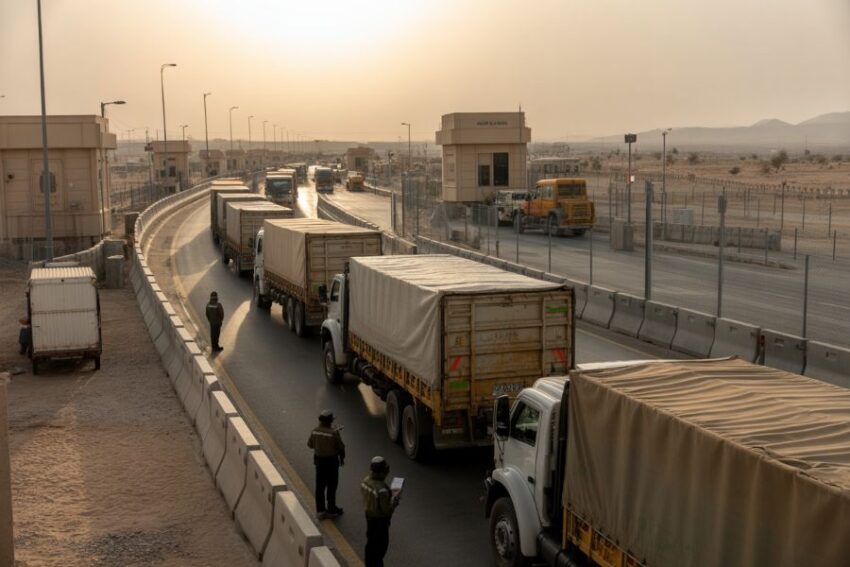
The Masnaa border has a large number of trucks that are unable to cross the border into Syria. These trucks represent an answer to the problem created by the border closing, which has affected the agricultural and logistics industry in Lebanon the most. While this is a part of the restrictions Syria has imposed to control the movement of shipments in and out of the country, the decision has triggered a number of protests from multiple Lebanese unions and associations.
Impact on Lebanese and Jordanian Trucking Operations
Every day around 500 trucks leave Lebanon to cross the border into Syria to export agricultural products. These border restrictions will have a negative impact on the Lebanese transport sector and the overall economy of Lebanon. The transport industry in Lebanon is under a great deal of pressure to find solutions to the problem created by the border closing. The border restrictions are likely to create problems in the movement of agricultural products in Lebanon, which will cause trade problems and create a great deal of concern.
Syria Truck Ban Impacting Jordan Trade
Syria’s new border regulations are impacting Jordan’s trade with Syria as well. Approximately 250 Jordanian trucks cross the border every day to bring goods into Syria. However, trucks are being forbidden to continue their trade routes into Syria. Given the situation, Jordanian trucks are unloading at the Nassib border crossing, where there is some confusion about the unloading procedure.
Building Diplomatic Relations to End the Crisis
Since the new regulations were set in place, Lebanon and Jordan have attempted to negotiate with Syria. If a deal is brokered, it is anticipated that there will be exemptions for the trucks that travel across the Lebanese-Jordanian border. It is important that Syria negotiates with the Jordanian and Lebanese governments to create open trade with the Syrian border.
Syria plans to monitor cross-border activities to gain greater control over its nearby ports and the flow of trade traffic. This is going to create new problems for Lebanon and Jordan. They now have to rely on diplomacy with Syria to control the problems and get trade moving again.
Working Things Out with Syria
Details of the talks with Syria have not been made public. However, officials in Lebanon and Jordan are still hopeful that new arrangements will be made for the free movement of trucks. They hope to meet with Syrian leaders to resolve matters and address the urgent worries of the agricultural unions of Lebanon regarding the adverse impact the trade block will have on the agricultural sector. Lebanon considers Syria to be one of its most important trading partners. Hence, it will be most affected economically by the trade blockade. Farmers and transporters will be the most affected, especially those who rely on Syria.
Long-Term Impacts on Cross-Border Trade
Ongoing collaboration between Lebanon and Jordan highlights the economic and logistical complexity of border restrictions at Syria’s borders. With no clear expectations for the restrictions to be lifted, border crossings have only grown more complicated as trucks sit and wait for their turn to move.
The border crossings’ complexity also begs the question of what the future of cross-border commerce looks like. Trade between Syria, Lebanon, and Jordan has always been vital to the region’s economy. If cross-border commerce is limited, sectors such as agriculture, manufacturing, and services will suffer. With this in mind, Syria’s border control and trade policy will likely be a catalyst for more balanced and open trade within the region.
Conclusion: Lebanon and Jordan Expect Positive Result from Negotiations
Lebanon and Jordan expect further negotiations to alleviate the suffering of impacted truckers and businesses due to the closure of the borders. Although the situation at the Masnaa and Nassib crossings may worsen, a quick resolution will be important to preserve trade relations in the Middle East. Both agrarian enterprises and transportation sectors in Lebanon and Jordan hope for a resolution that will restore the transit of goods across borders and the normal functioning of the enterprises.
The post Lebanon, Jordan Seek Solutions as Syria’s Truck Ban Disrupts Trade at Masnaa Border Crossing: What New Updates You Need to Know appeared first on Travel And Tour World.
Source: travelandtourworld.com



Sorry, the comment form is closed at this time.