


Lotus Tower: Colombo’s Modern Icon Rising Above Sri Lanka’s Skyline
Lotus Tower: Colombo’s Modern Icon Rising Above Sri Lanka’s Skyline
A Landmark That Defines a New Colombo
Colombo is a city where history and modern ambition stand side by side. Colonial-era buildings, busy markets, and Buddhist temples exist alongside luxury hotels, expanding highways, and rising skyscrapers. Among these symbols of modern development, the Lotus Tower stands out as the most striking.
Officially known as the Colombo Lotus Tower, this impressive structure is not only a major telecommunication hub but also one of Sri Lanka’s most recognizable attractions. With its futuristic design inspired by the lotus flower, the tower has become a defining feature of Colombo’s skyline and a growing point of interest for both local and international tourists.
For travelers, visiting the Lotus Tower offers more than a photo opportunity. It provides panoramic views of the city, insight into Sri Lanka’s contemporary development, and a chance to experience Colombo from a unique perspective high above its streets.
History and Geographical Location of Lotus Tower
The Story Behind Sri Lanka’s Tallest Tower
The Lotus Tower in Sri Lanka represents a significant milestone in the country’s modern infrastructure. Designed as a multi-purpose communication and observation tower, it was developed to enhance broadcasting and telecommunication capabilities while also serving as a tourism and entertainment destination.
The tower’s design is inspired by the lotus flower, which holds cultural and spiritual symbolism across Sri Lanka and much of Asia. The lotus is widely associated with purity, growth, and renewal, making it a fitting representation of the nation’s aspirations for progress and modernization.
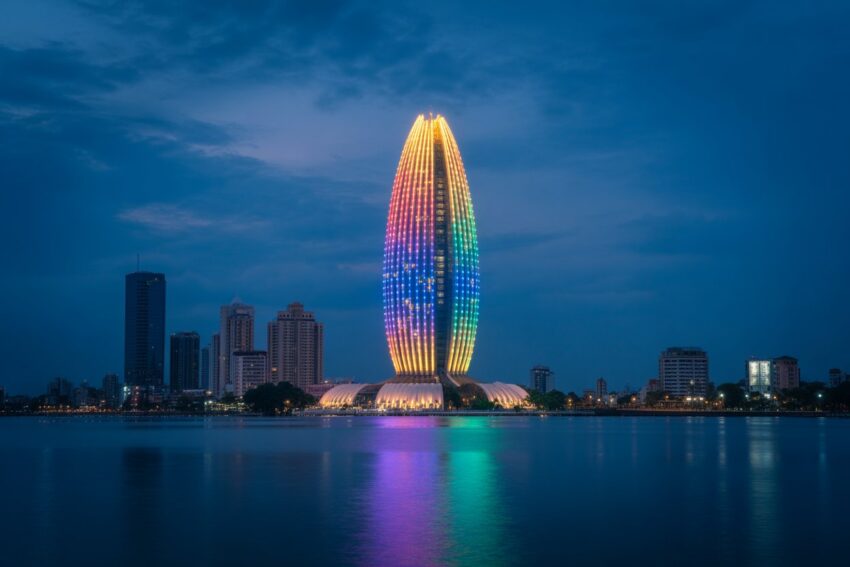
Over time, the Lotus Tower has evolved into one of Colombo’s most photographed landmarks, gaining attention not only for its height but also for its illuminated exterior that changes color at night.
Geographical Location in Sri Lanka
The Lotus Tower is located in Colombo, Sri Lanka’s commercial capital, near the Beira Lake area. Its central placement makes it visible from many parts of the city, especially from major roads and waterfront viewpoints.
Because it is positioned close to key commercial districts and government institutions, the tower is easy to include in most Colombo itineraries. Its location also makes it convenient for travelers staying in central Colombo hotels, as it can often be reached within a short drive.
Importance of Lotus Tower in Global Tourism
A Modern Symbol for Sri Lanka’s Tourism Image
Sri Lanka is internationally famous for its beaches, wildlife safaris, tea plantations, and ancient ruins. However, global tourism today also values modern landmarks that reflect a destination’s present-day identity. The Lotus Tower plays an important role in expanding Sri Lanka’s tourism image beyond heritage and nature.
For international travelers, the tower showcases a modern Colombo that is evolving into a contemporary South Asian capital. This helps diversify Sri Lanka’s tourism appeal, attracting visitors interested in architecture, urban experiences, and modern entertainment.
A Major Attraction for City-Based Tourism
Urban tourism is growing worldwide, and cities are increasingly becoming destinations in their own right. The Colombo Lotus Tower strengthens Colombo’s position as a city worth exploring rather than simply a transit point.
Tourists who spend time in Colombo often look for iconic attractions that provide memorable experiences. The Lotus Tower fulfills this demand by offering observation decks, city views, and an atmosphere that feels distinct from Sri Lanka’s traditional tourist sites.
Boosting the Night Tourism Experience
One of the most unique contributions of the Lotus Tower is its value in night tourism. Colombo is known for being quieter compared to some major Asian capitals, but landmarks like this help encourage evening sightseeing.
The tower’s colorful lighting and dramatic night presence make it an attractive stop for photographers, couples, and travelers seeking a modern city experience after sunset.
Architecture and Design Highlights of Lotus Tower
Lotus-Inspired Structure and Visual Identity
The tower is designed with a lotus-shaped upper structure, making it immediately recognizable. Its sleek form rises dramatically above Colombo’s skyline, and the top section resembles a blooming lotus flower, giving it both cultural symbolism and architectural elegance.
The design blends traditional inspiration with futuristic engineering, making it a standout example of modern South Asian landmark architecture.
A Tower That Dominates the Colombo Skyline
The Lotus Tower is often described as one of the tallest structures in the region, and it has become a focal point of Colombo’s cityscape. From many areas of the city, it is visible above buildings and trees, acting as a navigational landmark for both locals and tourists.
For visitors, its height offers one of the best vantage points for viewing the city, coastline, and surrounding landscape.
Top Things to Do at Lotus Tower
Visit the Observation Deck
The highlight for most tourists is the Lotus Tower observation deck, where visitors can enjoy panoramic views of Colombo. From the top, the city appears as a blend of modern development, colonial-era neighborhoods, waterways, and coastal scenery.
On clear days, visitors can see far across the Indian Ocean, Beira Lake, and the expanding skyline of Colombo Port City.
Enjoy the City View Photography Experience
For photography lovers, the tower offers a rare opportunity to capture Colombo from above. Whether visiting during daylight or at sunset, the view provides dramatic angles of the city’s streets, waterfront, and skyline.
The best photos often come during golden hour, when the city lights begin to appear, and the sky transitions into warm evening tones.
Explore Entertainment and Leisure Facilities
The Lotus Tower is designed as more than a viewing platform. It has been developed as a multi-purpose attraction with spaces intended for leisure, dining, exhibitions, and entertainment.
For tourists, this creates a well-rounded visit where sightseeing can be combined with relaxation and modern city experiences.
Experience the Tower at Night
One of the most popular times to visit is in the evening when the Lotus Tower lights up. The tower’s LED illumination creates a striking visual display that can be seen across Colombo.
Night visits are especially appealing for travelers who want to experience Colombo’s modern atmosphere and enjoy cooler weather compared to daytime heat.
How to Reach Lotus Tower
From Bandaranaike International Airport
Bandaranaike International Airport is located approximately 30–35 kilometers from Colombo. Travelers can reach the Lotus Tower by:
Taxi services or private transfers
App-based ride-hailing services
Airport shuttle buses to Colombo city
Travel time usually ranges between 45 minutes and 1.5 hours, depending on traffic.
From Colombo Fort Railway Station
Colombo Fort Railway Station is one of the city’s major transport hubs and a common arrival point for tourists. From Fort, the Lotus Tower can be reached quickly by:
Tuk-tuk
Taxi
Local bus routes
The journey typically takes 10–20 minutes, depending on road congestion.
From Central Colombo Hotels
Most travelers staying in Colombo city center can reach the Lotus Tower within a short drive. Tuk-tuks are widely available, and ride-hailing apps provide convenient transport options.
For tourists exploring multiple attractions in one day, the tower can easily be paired with nearby sites such as Galle Face Green, Gangaramaya Temple, and Beira Lake.
Who Can Visit Lotus Tower?
A Destination for All Types of Tourists
The Lotus Tower is designed to welcome a wide range of visitors. It is suitable for:
Families with children
Couples looking for city-view experiences
Solo travelers exploring Colombo
Business travelers with limited free time
Photography and architecture enthusiasts
International tourists interested in modern landmarks
Local visitors seeking leisure activities
Because it is a structured attraction rather than an open public park, it provides a controlled environment that many travelers find comfortable and organized.
Accessibility and Visitor Comfort
The tower is built with modern facilities, making it more accessible than many older tourist sites. Elevators provide access to upper levels, and the environment is generally suitable for visitors of different age groups.
However, travelers who are uncomfortable with heights should consider whether the observation deck experience is right for them.
Best Time to Visit Lotus Tower
Best Season for Tourists
Since Lotus Tower is located in Colombo, weather conditions are influenced by Sri Lanka’s west coast climate. The most favorable months to visit are generally:
December to March
During this season, rainfall is usually lower, and skies are clearer, improving visibility from the observation deck.
Best Time of Day
The best time to visit the Lotus Tower depends on the experience a tourist prefers:
Late afternoon (4:00 PM to 6:00 PM) for sunset views
Evening (6:30 PM to 9:00 PM) for city lights and night atmosphere
Morning (9:00 AM to 11:00 AM) for clearer views and fewer crowds
Sunset visits are especially popular because they offer both daylight scenery and nighttime city illumination in one trip.
Weekdays vs Weekends
Weekdays are generally calmer and more suitable for tourists who want a relaxed experience. Weekends and public holidays may attract larger crowds, particularly local visitors.
For travelers focused on photography or quiet sightseeing, weekday late afternoons are often ideal.
Lotus Tower and Colombo’s Tourism Development
Strengthening Colombo as a Tourist Destination
Sri Lanka’s tourism industry has traditionally focused on beaches and heritage cities. In recent years, Colombo has been positioning itself as a modern destination offering shopping, nightlife, cultural attractions, and modern infrastructure. The Lotus Tower supports this vision.
It adds a high-profile landmark to the city’s attractions, similar to observation towers found in other major world capitals. For global tourists, this makes Colombo more competitive as a city destination.
Encouraging Longer Tourist Stays in the Capital
Many tourists previously treated Colombo as a brief stopover. However, attractions like Lotus Tower encourage travelers to spend more time in the capital, exploring its museums, restaurants, parks, and shopping districts.
This supports hotels, local businesses, and city-based tourism services, helping Colombo grow as a key part of Sri Lanka’s travel industry.
Nearby Attractions to Visit Alongside Lotus Tower
Gangaramaya Temple
Gangaramaya Temple is one of Colombo’s most famous cultural landmarks. Visiting the temple before heading tothe Lotus Tower creates an excellent combination of heritage and modern sightseeing.
Beira Lake
Located nearby, Beira Lake provides a scenic urban waterfront atmosphere. Many tourists enjoy walking around the lake area, especially in the evening.
Galle Face Green
A short drive away, Galle Face Green offers a more relaxed seaside experience. Tourists often combine Lotus Tower sightseeing with a sunset walk along the promenade.
Travel Tips for Visiting Lotus Tower
What to Bring
A camera or a smartphone for panoramic photos
Sunglasses for daytime visits
Light jacket for evening breeze
Water bottle
Comfortable walking shoes
Recommended Visit Duration
Most tourists spend around 1 to 2 hours at the tower, depending on how much time they spend enjoying the view, taking photos, or exploring the facilities.
Photography Suggestions
For the best skyline photos, consider visiting during sunset. The changing light creates dramatic contrast, and the city begins to glow as evening approaches.
Night photography is also highly rewarding due to the tower’s lighting and the illuminated Colombo skyline.
Why Lotus Tower Should Be on Every Colombo Itinerary
Sri Lanka is a destination rich in history, spirituality, and natural beauty. Yet the Lotus Tower adds something different—a bold symbol of modern progress. It offers tourists a rare chance to experience Colombo from above and to see the capital as a growing contemporary city.
For travelers with limited time in Colombo, the tower provides a complete experience in a single visit: iconic architecture, panoramic views, and a memorable photo opportunity. For those spending several days in the city, it becomes an essential highlight that complements nearby cultural attractions.
Whether visited during daylight or under its vibrant nighttime glow, Lotus Tower delivers a modern travel experience that stands apart from traditional sightseeing in Sri Lanka.
A Final View of Colombo From Above
The Lotus Tower is more than just a tall structure—it is a symbol of Colombo’s evolving identity and Sri Lanka’s vision for the future. Rising above the city with its lotus-inspired design, it offers travelers an unforgettable view of urban life meeting coastal beauty.
For global tourists, it represents a new chapter in Sri Lankan tourism, blending modern architecture with cultural symbolism. Whether you visit for the panoramic observation deck, the city lights, or the experience of standing at one of Colombo’s most iconic viewpoints, Lotus Tower remains a powerful reminder that Sri Lanka’s story continues to grow—both in heritage and in modern ambition.
The post Lotus Tower: Colombo’s Modern Icon Rising Above Sri Lanka’s Skyline appeared first on Travel And Tour World.
Source: travelandtourworld.com


Sorry, the comment form is closed at this time.