


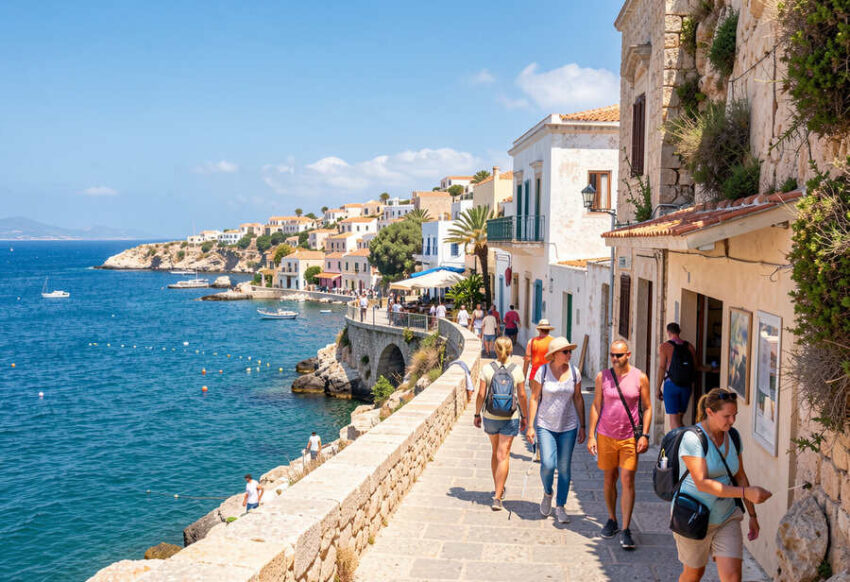
Malta Breaks Tourism Records in 2025 with Nearly Four Billion Euro in Visitor Spending and Fastest Growth in the European Union
Malta Breaks Tourism Records in 2025 with Nearly Four Billion Euro in Visitor Spending and Fastest Growth in the European Union
Malta breaks tourism records in 2025 as more than four million visitors drive spending close to four billion euro and push overnight stays up eleven percent, marking the fastest growth rate across the European Union. Strong off season demand, rising per visitor expenditure, and expanded international connectivity have fueled this exceptional performance, positioning the island as one of Europe’s most dynamic travel markets.
Over four million travelers chose Malta and Gozo last year, contributing more than €3.9 billion to the national economy. That total marks an 18.6 percent rise compared with 2024 and a remarkable 44 percent jump over 2023. The increase reflects not just higher volumes but stronger per capita returns. Average expenditure per visitor climbed from €924 to €971, indicating that travelers are spending more during their stay and engaging with a wider range of services and experiences.
Accommodation data tells a similar story. The islands recorded more than 25.4 million guest nights in 2025, representing an 11 percent increase year on year. This growth rate outpaced every other European Union country, where the average rise was just 2 percent. Even more significant was the expansion beyond the traditional summer rush. Off-peak months saw a 19 percent surge in overnight stays, surpassing seasonal highs and reinforcing Malta’s push to smooth demand across the calendar.
The figures suggest that strategic planning over recent years is now translating into measurable results. Rather than depending heavily on short bursts of summer tourism, Malta is steadily extending its appeal into quieter months, spreading economic benefits more evenly and easing seasonal pressure on infrastructure.
Connectivity remains a driving force behind this evolution. The country is preparing to introduce its first-ever direct flights to New York in June, opening a new transatlantic gateway. This step represents more than a route expansion; it signals a broader ambition to tap into long-haul markets and reduce reliance on traditional European feeder countries. Discussions around further long-distance connections are ongoing, reflecting a desire to diversify visitor origins and strengthen global reach.
At the same time, authorities are moving to refine the regulatory framework governing accommodation. Updated rules covering hotels, short-term rentals, and other lodging providers are expected to raise standards across the sector. These reforms, shaped by public consultation, aim to ensure that rising visitor numbers do not dilute quality or strain local communities. The objective is clear: growth must remain controlled, structured, and sustainable.
Community-focused initiatives are also gaining traction. Pilot schemes in Valletta and Swieqi are being rolled out to address tourism-related challenges at a neighborhood level. From summer 2026 onward, additional support mechanisms will be introduced to manage pressures linked to high visitor flows, with plans to expand these measures to other localities in phases.
Investment in public infrastructure continues to reshape key areas. Projects such as the regeneration of Bugibba Square and the restoration of the Blue Lagoon highlight efforts to enhance both visitor experience and environmental protection. These upgrades are designed not only to beautify public spaces but also to improve crowd distribution and preserve fragile ecosystems.
Digital transformation is playing a growing role in Malta’s tourism management. The Malta Tourism Authority is adopting artificial intelligence tools to analyze travel patterns, forecast demand, and refine international marketing strategies. Data-driven planning allows authorities to anticipate peak periods, redirect flows where necessary, and target higher-spending segments more effectively. Technology, in this sense, is becoming an essential partner in sustainable growth.
Industry stakeholders see 2025 as a landmark year, but not a final destination. Strong financial results provide breathing room to reassess priorities and fine-tune strategy. The focus now shifts toward maximizing value rather than simply increasing headcounts. Higher-quality experiences, improved service standards, and stronger economic returns per visitor are central to this recalibration.
Malta’s tourism trajectory reflects a careful balancing act. Rapid expansion can bring economic opportunity, yet it also demands vigilance. Policymakers continue to emphasize resilience, environmental stewardship, and the importance of safeguarding residents’ quality of life. The aim is to maintain momentum without compromising the character and livability that make the islands attractive in the first place.
Malta breaks tourism records in 2025 as over four million visitors generate nearly four billion euro in spending and drive the fastest rise in overnight stays across the European Union. Strong off season demand and expanding international connectivity have powered this exceptional growth.
As 2026 approaches, Malta stands at a pivotal moment. Record-breaking expenditure and unmatched growth in overnight stays have elevated the islands within Europe’s tourism rankings. With expanded air links, upgraded infrastructure, tighter standards, and smarter digital tools, Malta is positioning itself not just as a popular Mediterranean escape, but as a forward-looking destination built on quality, sustainability, and enduring economic value.
The post Malta Breaks Tourism Records in 2025 with Nearly Four Billion Euro in Visitor Spending and Fastest Growth in the European Union appeared first on Travel And Tour World.
Source: travelandtourworld.com



Sorry, the comment form is closed at this time.