


Maritime Museum: Exploring Malta’s Enduring Relationship with the Sea
Maritime Museum: Exploring Malta’s Enduring Relationship with the Sea
Where the Island’s Seafaring Story Is Preserved
The Maritime Museum stands as a testament to Malta’s long and inseparable relationship with the sea. Located in the historic city of Vittoriosa, also known as Birgu, the museum chronicles centuries of maritime activity that shaped Malta’s economy, defense, and cultural identity. Through carefully curated exhibitions and authentic artifacts, the Maritime Museum provides visitors with a comprehensive understanding of how the surrounding Mediterranean influenced Malta’s destiny as a naval stronghold and trading hub.
Historical Background of the Maritime Museum
The Malta Maritime Museum is housed in a former British naval bakery dating back to the mid-19th century. This industrial structure once supplied bread to the Royal Navy fleet stationed in the Grand Harbour, reflecting Malta’s strategic importance during the British period.
Although the building itself originates from the British era, the museum’s narrative extends far deeper into Malta’s past. Exhibitions trace maritime history from prehistoric navigation and Phoenician trade through Roman shipping routes, medieval shipbuilding, the rule of the Knights of St. John, and British naval dominance.
Malta’s role as a safe harbor and naval base made it a focal point of Mediterranean maritime activity for centuries. The establishment of the Maritime Museum provided a dedicated space to preserve this legacy, ensuring that Malta’s naval traditions and technological advancements remain accessible to future generations.
Geographical Location and Harbor Setting
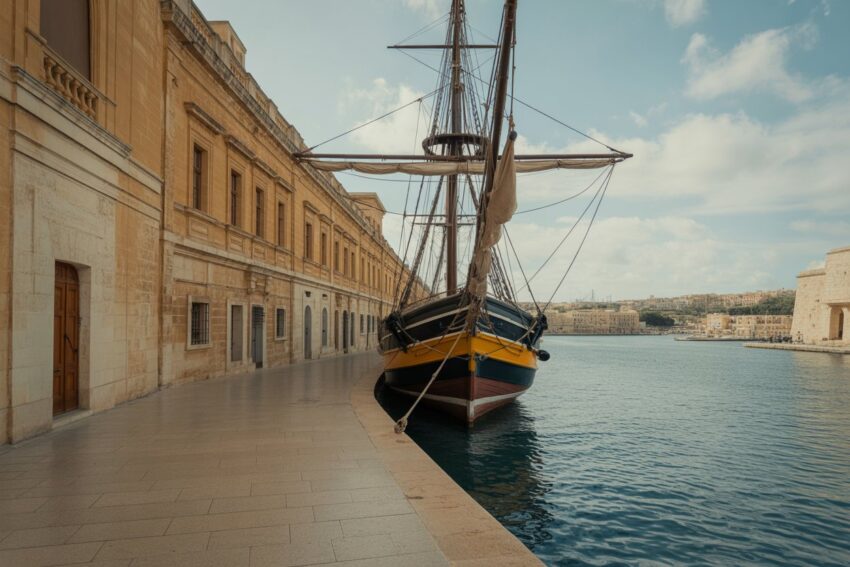
The Maritime Museum is situated along the Vittoriosa waterfront, overlooking the Grand Harbour on Malta’s southeastern coast. Its location places it within one of the most historically significant natural harbors in the Mediterranean.
The Grand Harbour’s deep waters, natural protection, and strategic position between Europe, North Africa, and the Middle East made it an ideal base for naval operations and commercial shipping. The museum’s proximity to the water enhances the visitor experience, allowing historical interpretation to unfold within its authentic maritime context.
Surrounding landmarks, including Fort St. Angelo and historic dockyards, further reinforce the area’s naval character.
Importance of the Maritime Museum in Global Tourism
The Maritime Museum holds international importance as a cultural institution dedicated to Mediterranean naval history. For global tourists, it offers insight into how maritime routes shaped political power, economic exchange, and military strategy across centuries.
The museum strengthens Malta’s appeal as a heritage tourism destination by presenting an integrated narrative that connects land-based fortifications with seafaring traditions. International visitors interested in naval history, ship design, and maritime trade find the museum particularly valuable.
By preserving and interpreting maritime artifacts, the museum contributes to global understanding of how small island nations influenced wider historical developments through strategic maritime positioning.
Museum Collections and Exhibition Highlights
Ship Models and Naval Artifacts
Detailed scale models illustrate the evolution of vessels used in Maltese waters, from ancient galleys to steam-powered ships.
Navigation Instruments
Exhibits include compasses, sextants, charts, and tools that demonstrate how sailors navigated the Mediterranean before modern technology.
Anchors and Maritime Equipment
Historic anchors, rigging elements, and ship fittings reveal practical aspects of ship construction and harbor life.
Trade and Daily Maritime Life
Displays explore fishing traditions, commercial shipping, and dockyard labor, highlighting the social dimensions of maritime activity.
Naval Warfare and Defense
Exhibitions explain how naval power supported Malta’s fortifications and influenced major conflicts, including the Great Siege and World War II.
How to Reach the Maritime Museum
By Air
Malta International Airport is approximately 8 kilometers from Vittoriosa. Taxi and private transport services reach the museum area in about 20 to 25 minutes.
By Ferry
Ferry services operate between Valletta and the Three Cities. Vittoriosa’s ferry landing point is within walking distance of the museum.
By Public Transportation
Public buses connect Vittoriosa with Valletta and other major towns. Bus stops in the city center provide easy access on foot.
By Foot
The museum is easily reached by walking along the Vittoriosa waterfront, making it convenient to combine with nearby attractions.
Who Can Visit the Maritime Museum
History and Maritime Enthusiasts
Visitors with an interest in naval history, shipbuilding, and Mediterranean trade will find the museum particularly engaging.
Educational Groups
Schools and academic institutions often include the museum in studies related to history, geography, and engineering.
Cultural Tourists
Travelers seeking a deeper understanding of Malta’s heritage beyond architecture will benefit from the museum’s thematic approach.
General Visitors
The museum’s clear layout and interpretive displays make it accessible to a broad audience, including families.
Best Time to Visit for Tourists
Seasonal Considerations
The Maritime Museum is suitable for year-round visits. Spring and autumn provide comfortable conditions for combining museum visits with waterfront exploration.
Time of Day
Morning visits allow for quieter exploration, while midday visits fit well into itineraries covering the Three Cities.
Weather Advantages
As an indoor attraction, the museum is ideal during hotter summer days or occasional rainy periods.
Educational and Cultural Role
The Maritime Museum plays a vital educational role by contextualizing Malta’s history within broader Mediterranean maritime networks. Through exhibitions and interpretive materials, it emphasizes the island’s adaptability and resilience in responding to changing naval technologies and political realities.
The museum also supports cultural continuity by preserving traditional maritime knowledge and craftsmanship.
Conservation and Interpretation
Conservation efforts focus on preserving fragile artifacts while maintaining the integrity of the historic building. Exhibition design balances academic accuracy with visitor engagement, ensuring accessibility without oversimplification.
Interpretive strategies encourage visitors to understand maritime history as a dynamic interaction between environment, technology, and society.
A Living Chronicle of Malta’s Seafaring Identity
The Maritime Museum offers a comprehensive exploration of the forces that shaped Malta through the sea. Set within the historic harbor it once served, the museum connects past and present by revealing how maritime activity defined Malta’s role in the Mediterranean. For visitors seeking context, depth, and authenticity, the Maritime Museum stands as an essential gateway to understanding the island’s enduring naval heritage.
The post Maritime Museum: Exploring Malta’s Enduring Relationship with the Sea appeared first on Travel And Tour World.
Source: travelandtourworld.com



Sorry, the comment form is closed at this time.