


Mass Travel Disruption Hits Calgary International Airport in Canada as 42 Flights Are Delayed and 5 Cancelled Disrupting WestJet, Air Canada, Flair Airlines and More Across Calgary, Vancouver, Toronto, Edmonton and Other Major Canadian Routes
Mass Travel Disruption Hits Calgary International Airport in Canada as 42 Flights Are Delayed and 5 Cancelled Disrupting WestJet, Air Canada, Flair Airlines and More Across Calgary, Vancouver, Toronto, Edmonton and Other Major Canadian Routes
Calgary International Airport (YYC) is experiencing notable operational disruption today, with 42 flights delayed and 5 cancellations affecting both domestic and international travel. For passengers moving through one of Canada’s busiest western hubs, the disruption translates into revised itineraries and extended waiting periods as airlines work to rebalance schedules.
Scope of Today’s Flight Disruptions at YYC
The tally of 42 delayed departures and arrivals reflects a measurable slowdown in airport movement cycles. Although cancellations remain limited to five flights, the high volume of delays indicates operational congestion affecting aircraft turnaround timing and departure sequencing.
Even moderate delays can produce secondary impacts. When flights are held for extended periods, aircraft rotations are shifted, departure slots are adjusted, and subsequent flights scheduled later in the day may face ripple effects.
Cancellations, while fewer in number, require more substantial coordination. Passengers must be reaccommodated, aircraft repositioned, and crew schedules reassigned within regulatory limits.
Factors Contributing to Operational Pressure
Air travel disruptions at major Canadian hubs typically stem from interconnected variables rather than a single cause.
Weather variability is frequently a contributing factor. Calgary’s proximity to the Rocky Mountains means wind shifts and rapid temperature changes can influence runway usage and aircraft spacing requirements.
Aircraft rotation dependencies also play a central role. If inbound aircraft from Vancouver, Toronto, or other hubs arrive late, outgoing flights from Calgary may depart behind schedule.
Crew duty regulations add another operational constraint. Airlines must comply with regulated flight and duty time limits, and extended delays may require crew substitutions, adding further complexity.
Network congestion across Canada’s aviation system amplifies localized issues. Calgary serves as a connection point for domestic and transborder routes; delays in one corridor can propagate across the network.
Impact on Domestic and International Connectivity
Calgary International Airport is a strategic gateway linking Alberta to major Canadian cities such as Vancouver, Toronto, Edmonton, Winnipeg, and Ottawa, as well as select U.S. and seasonal international destinations.
When delay volumes rise, connecting passengers face increased risk of missed transfers. Airlines typically prioritize rebooking for affected travelers, but available seats depend on demand levels and route capacity.
International departures often operate within tighter scheduling windows due to slot coordination and long-haul rotation planning. Accumulated delays in domestic segments can therefore influence international departures later in the day.
Passenger Experience Inside the Terminal
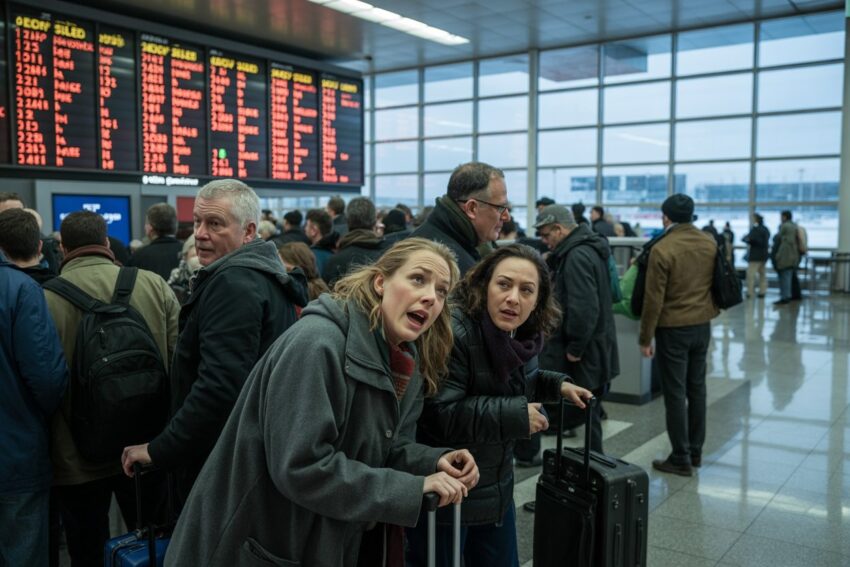
Inside the terminal, real-time digital boards reflect schedule adjustments as airlines update departure times. Passengers receive notifications via airline mobile applications and email systems when itineraries change.
Delays typically result in adjusted boarding times and occasional gate changes. Cancellations require more comprehensive rebooking procedures and customer service coordination.
Airport operations teams continue managing runway sequencing, gate assignments, and passenger flow to minimize congestion. Despite elevated delay counts, airport functions remain active under established contingency procedures.
Airline Recovery and Schedule Stabilization
Airlines operating at Calgary International Airport implement recovery strategies designed to reduce cascading disruption.
These strategies include prioritizing aircraft repositioning, adjusting crew assignments, consolidating departures where possible, and communicating schedule revisions promptly.
Operational recovery depends on clearing earlier bottlenecks and restoring rotation timing throughout the network. As inbound aircraft align with revised schedules, departure flows typically stabilize.
Calgary’s Role in the National Aviation Network
Canada’s aviation infrastructure spans large geographic distances and diverse weather zones. Calgary functions as a central western hub connecting prairie provinces, British Columbia, and eastern Canada.
Because of this interconnected structure, disruptions in one region may affect flight schedules nationwide. While 42 delays and 5 cancellations represent a significant daily impact, they remain within the operational management capacity of a major hub airport.
Travel Advisory for YYC Passengers
Passengers traveling through Calgary International Airport are encouraged to confirm flight status directly with their airline before departing for the airport, allow additional time for check-in and security procedures, monitor digital notifications for gate updates, and review rebooking or refund options if cancellations occur.
Proactive communication reduces uncertainty during elevated disruption periods.
Conclusion
Calgary International Airport’s 42 delays and 5 cancellations underscore the complexity of maintaining synchronized aviation operations across Canada’s interconnected air network. While today’s disruption has affected both domestic and international schedules, airport authorities and airlines continue working to stabilize departures and arrivals.
For travelers navigating YYC, flexibility and real-time information remain essential. The airport continues operating under standard procedures as recovery efforts progress, reinforcing the resilience of Canada’s aviation system even during periods of heightened operational strain.
The post Mass Travel Disruption Hits Calgary International Airport in Canada as 42 Flights Are Delayed and 5 Cancelled Disrupting WestJet, Air Canada, Flair Airlines and More Across Calgary, Vancouver, Toronto, Edmonton and Other Major Canadian Routes appeared first on Travel And Tour World.
Source: travelandtourworld.com



Sorry, the comment form is closed at this time.