


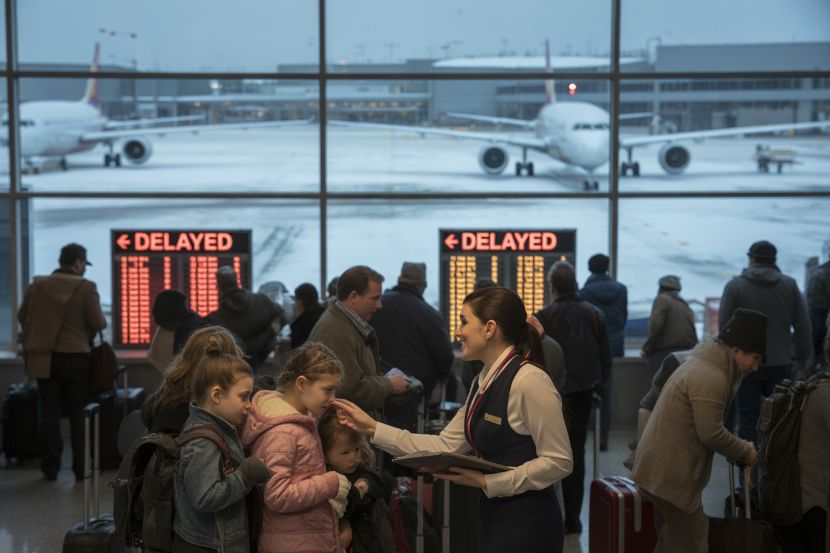
Massive Travel Turmoil in US and Canada: 37 Flights Scrapped and 432 Delayed Across Hartsfield-Jackson, LAX, and Toronto Pearson, with Air Canada and United Airlines Taking the Brunt – What Travelers Must Know About Their Rights and Alternatives
Massive Travel Turmoil in US and Canada: 37 Flights Scrapped and 432 Delayed Across Hartsfield-Jackson, LAX, and Toronto Pearson, with Air Canada and United Airlines Taking the Brunt – What Travelers Must Know About Their Rights and Alternatives
Air travel in the United States has been severely impacted today by an alarming number of flight cancellations and delays across major airports. The total number of flights canceled today has reached a staggering 34, with 307 delays. This widespread disruption is attributed to various factors, including weather conditions, staffing issues, and technical difficulties. Here’s a comprehensive analysis of how different airports are experiencing these travel interruptions and what passengers can do in light of these challenges.
Toronto Pearson International: Major Disruptions in Canada’s Busiest Airport
Toronto Pearson International Airport, one of the busiest airports in North America, has faced significant cancellations and delays. A total of 15 cancellations and 23 delays have been reported today, with Air Canada and its subsidiaries bearing the brunt of the disruptions.
Airlines Most Affected at Toronto Pearson
The following table outlines the airlines that have suffered the most at Toronto Pearson International:
AirlineCancellationsCancellations (%)DelaysDelays (%)Air Canada82%72%Air Canada Rouge (ACA)33%45%Jazz (ACA)32%54%Porter Airlines11%22%Air Transat00%15%United00%110%WestJet00%21%Air India00%150%
Analysis of Toronto Pearson’s Cancellations and Delays
From the table, it is clear that Air Canada, the national carrier of Canada, experienced the highest number of cancellations at 8 (2% of its flights). The airline also accounted for 7 delays, representing 2% of its total departures.
Air Canada Rouge and Jazz, two of Air Canada’s regional carriers, also saw significant disruptions with 3 cancellations each.
Porter Airlines, a regional airline serving Canadian destinations, reported 1 cancellation, a small percentage of its flights.
Air Transat and United Airlines experienced fewer cancellations but still had some delays.
These cancellations and delays primarily reflect ongoing operational challenges that airlines face, including staffing shortages, severe weather conditions, and logistical hurdles. The massive number of delays – 23 in total – highlights the severity of the situation at Toronto Pearson.
Los Angeles International: A Minor Disruption But Noteworthy Delays
Los Angeles International Airport (LAX) has seen a relatively smaller number of cancellations, with only 1 flight canceled today. However, delays have also impacted 28 flights across various airlines, marking a slight inconvenience for travelers.
Airlines Most Affected at LAX
AirlineCancellationsCancellations (%)DelaysDelays (%)Spirit15%15%Air France00%125%Alaska Airlines00%11%China Airlines00%233%Air China00%214%China Southern Airlines00%228%Delta Air Lines00%20%Lufthansa00%125%El Al00%150%Hawaiian Airlines00%325%
Analysis of LAX Cancellations and Delays
Though the number of cancellations at LAX is lower compared to Toronto Pearson, the delays are more widespread, with 28 flights delayed across various airlines. The cancellation from Spirit Airlines represents 5% of its total departures from the airport.
China Airlines and Air China both reported delays, with 2 flights each delayed. China Southern Airlines also experienced delays, with 2 flights delayed by 28% of their operations.
El Al and Lufthansa had a significant share of delays, with 50% of El Al flights delayed, showcasing how even a small number of delays can cause ripple effects at major international airports like LAX.
While the disruption at LAX may seem smaller in comparison to Toronto Pearson, it is still a reminder of the volatility of air travel.
Seattle-Tacoma International: Minor Cancellations But Notable Delays
Seattle-Tacoma International Airport, often referred to as Sea-Tac, has seen 2 flight cancellations today and 21 delays, which further emphasizes the delicate nature of air travel logistics.
Airlines Most Affected at Seattle-Tacoma
AirlineCancellationsCancellations (%)DelaysDelays (%)Alaska Airlines10%51%Horizon (ASA)10%00%China Airlines00%133%China Cargo00%133%Delta Air Lines00%10%Hawaiian Airlines00%430%Japan Airlines00%150%Korean Air00%150%SkyWest00%63%Southwest00%12%
Analysis of Sea-Tac Cancellations and Delays
Sea-Tac has faced a smaller number of cancellations and delays, but it still saw significant delays affecting 21 flights across different airlines. The cancellations largely came from Alaska Airlines and Horizon, with 1 cancellation each.
Hawaiian Airlines experienced 4 delays, amounting to 30% of its departures from Sea-Tac.
Japan Airlines and Korean Air also suffered delays, each with 50% of their flights delayed today.
The delays at Sea-Tac further show how international travel can be disrupted due to unforeseen circumstances such as weather or technical issues.
Newark Liberty International: Cancellations and Delays Impacting Domestic and International Flights
Newark Liberty International Airport in New Jersey, a major hub for United Airlines, reported 3 cancellations today and 12 delays. This airport primarily serves both domestic and international flights, making these disruptions particularly impactful for passengers traveling to and from North America.
Airlines Most Affected at Newark Liberty
AirlineCancellationsCancellations (%)DelaysDelays (%)United20%50%WestJet120%00%Austrian Airlines00%150%Spirit00%59%SAS00%116%
Analysis of Newark Liberty Cancellations and Delays
United Airlines experienced the highest number of cancellations at Newark Liberty with 2 cancellations. WestJet also saw a significant cancellation, accounting for 20% of its operations from this airport.
Spirit Airlines and SAS had notable delays, with Spirit reporting 5 delays and SAS experiencing a 16% delay rate.
Austrian Airlines had a high percentage of its flights delayed (50%), indicating a serious disruption in their operations at Newark.
Hartsfield-Jackson Atlanta International: Flight Cancellations Continue to Affect Operations
Hartsfield-Jackson Atlanta International, a hub for Delta Air Lines, saw 2 cancellations and 14 delays today. Despite the relatively lower number of cancellations, the delays could affect travelers’ schedules across the U.S. and international destinations.
Airlines Most Affected at Hartsfield-Jackson
AirlineCancellationsCancellations (%)DelaysDelays (%)Spirit13%26%Delta Air Lines00%70%Jazz (ACA)00%116%SAS00%250%Southwest00%12%WestJet00%125%
Analysis of Hartsfield-Jackson Cancellations and Delays
Though the cancellations at Hartsfield-Jackson are minimal, the delays are still notable. Spirit Airlines saw 2 delays out of 3% of its operations, while SAS had a major impact with 50% of its flights delayed. Delta experienced minimal disruption in terms of cancellations but had 7 delays.
Severe Weather Disruptions: The Unseen Forces Shaping Your Travel Plans
The current wave of cancellations and delays sweeping through major U.S. airports is largely driven by severe weather conditions, especially the winter storms that have been hitting across the continent. These storms are not just a minor inconvenience – they’re a significant threat to smooth travel operations.
Snowstorms lead to limited visibility and difficult landing conditions, requiring planes to divert or return to their departure airports.
Thunderstorms can cause hazardous air traffic, grounding flights until conditions improve.
Icy weather necessitates time-consuming de-icing procedures, which can push back scheduled departures.
These natural phenomena cause ripple effects that delay thousands of flights. But weather is not the sole culprit. Other factors contributing to disruptions include:
Staff shortages, exacerbated by the ongoing workforce challenges faced by the airline industry, especially after the pandemic.
Mechanical issues: Unexpected technical problems require repairs or replacements, often grounding flights for hours.
Air traffic control restrictions: During high congestion, airspace closures or traffic bottlenecks can further delay flight schedules, especially at airports like Los Angeles International or Toronto Pearson.
Airports with high volumes of traffic, such as Toronto Pearson and Los Angeles International, are more vulnerable to these cascading delays due to the dense concentration of flights scheduled within a short time frame. What could have been a minor disruption at a smaller airport becomes a large-scale issue when multiple flights are affected simultaneously.
What You Need to Know About Your Passenger Rights During Disruptions
When flights are canceled or delayed, knowing your rights is not just helpful – it’s essential for minimizing frustration and securing compensation. Here’s a breakdown of what passengers are entitled to:
Meal Vouchers – If your flight is delayed significantly, especially during extended ground times, airlines are often required to provide meal vouchers. This allows you to grab a bite while you wait for your rescheduled flight.
Hotel Accommodation – If a cancellation results in a long delay, especially overnight, airlines may be obligated to offer hotel accommodations. This is particularly common when flights are delayed due to weather-related disruptions.
Cash or Credit Compensation – If your flight is canceled and you’re stranded, you may be entitled to cash compensation or travel credits, depending on the airline’s policy and the nature of the delay (whether the delay was within the airline’s control or due to weather).
Rebooking Assistance – Airlines must offer to rebook you on the next available flight or provide a full refund if you no longer wish to travel. Many airlines also allow flexibility for rebooking when a delay is caused by operational factors.
Tips for Passengers:
Always check the airline’s specific policies ahead of your flight, as they can differ significantly between carriers.
Be sure to document everything, including your communications with airline representatives, to ensure your rights are honored.
Download the airline’s mobile app for real-time updates, and consider enrolling in the airline’s travel protection programs if you frequently fly.
Understanding these rights not only helps you navigate through the current chaos, but it also ensures you are compensated for the inconvenience caused.
The Ripple Effect: How Cancellations Are Hurting Tourism and Straining the Economy
Beyond individual frustration, widespread flight cancellations and delays carry serious economic consequences. With key airports like Toronto Pearson and Los Angeles International serving as major international hubs, these disruptions can severely affect:
Tourism: Tourists coming from abroad may find their trip delayed or interrupted. This is especially detrimental for tourists on tight itineraries, like those visiting the U.S. or Canada for events, cruises, or short-term business trips. The ripple effect extends to hotels, tours, and attractions that rely on incoming flight schedules to fill their bookings.
Business Travel: Executives and business travelers who rely on punctuality for meetings, conferences, and events face significant setbacks. The cancellations not only disrupt schedules but also impact the bottom line, leading to missed deals, delayed meetings, and a stunted business flow.
The Broader Economy: Airports and airlines are major contributors to the local economy. A single major cancellation event can reduce revenue for airlines, local businesses, and tourism operators, which, in turn, affects jobs and revenue. Cities like New York, Los Angeles, and Toronto, which depend on airport traffic for economic activity, feel the sting more than others.
Travel Tips:
Plan Ahead: Allow extra time between connecting flights. This extra buffer time will help minimize the impact of delays.
Alternative Routes: If your primary flight is canceled, consider booking an alternative airport nearby or rebooking via different airlines to reduce the risk of more disruptions.
If you’re traveling to an important event, consider getting travel insurance to cover unexpected disruptions.
Aviation Industry’s Wake-Up Call: Adapting to the Challenges of Weather Disruptions
As these cancellations and delays continue, it’s becoming clear that airlines must do more to respond to the growing frequency of extreme weather disruptions. The old systems of reactive communication and limited compensation need to evolve into more robust and resilient strategies:
Proactive Communication: Airlines must improve how they communicate with passengers. Notifications should be sent early enough so passengers can adjust plans before arriving at the airport. Real-time tracking via mobile apps should keep passengers in the loop about gate changes and flight status.
Flexible Rescheduling Policies: Passengers should be able to easily reschedule flights without paying change fees. Airlines should offer more flexibility when cancellations occur due to weather.
Investing in Technology: Weather prediction tools and AI-driven operational systems could help airlines anticipate disruptions and prevent them from escalating. For instance, predictive tools can give airlines a clearer picture of which routes are likely to face weather issues, allowing them to adjust schedules in advance.
Staffing Solutions: It’s imperative for airlines to ensure they have enough ground and technical staff during weather disruptions. Having standby crews ready to step in when needed can reduce operational delays.
Air Travel Reminders: Patience and Preparation Can Turn Disruptions into Opportunities
The wave of cancellations and delays today might feel overwhelming, but this moment serves as a reminder of the unpredictable nature of air travel. While these disruptions can be frustrating, they also highlight the resilience of both passengers and the aviation industry in managing chaos.
Here’s how you can turn these challenges into opportunities:
Patience is Key: While your immediate travel plans might be disrupted, staying calm and composed can help. Rushed decisions, like opting for poorly thought-out rebookings, can lead to more frustration down the line.
Adaptability: Flexibility is your best asset when traveling during peak disruption times. Consider adjusting your travel dates or flights based on real-time updates, and always have a backup plan.
Stay Positive: While setbacks are inevitable, the global aviation industry is resilient. Airlines are working tirelessly to accommodate passengers and reduce disruptions. By planning ahead and being prepared, you can navigate even the most difficult travel conditions with ease.
Traveling today may require more patience and preparation than ever before, but with the right attitude and knowledge, you can turn these challenges into a seamless journey.
The post Massive Travel Turmoil in US and Canada: 37 Flights Scrapped and 432 Delayed Across Hartsfield-Jackson, LAX, and Toronto Pearson, with Air Canada and United Airlines Taking the Brunt – What Travelers Must Know About Their Rights and Alternatives appeared first on Travel And Tour World.
Source: travelandtourworld.com


Sorry, the comment form is closed at this time.