


Middle East Airspace Shutdown Sparks Global Travel Chaos Tens of Thousands of Flights Canceled, Airports Shut Down, and Passengers Stranded Worldwide Amid Rising Tensions in February 2026!
Middle East Airspace Shutdown Sparks Global Travel Chaos Tens of Thousands of Flights Canceled, Airports Shut Down, and Passengers Stranded Worldwide Amid Rising Tensions in February 2026!
The global aviation landscape plunged into turmoil in late February 2026 after several Middle Eastern countries closed their airspace in response to escalating regional hostilities, prompting sweeping disruptions across airline networks, mass flight cancellations, and airport closures that resonated around the world. The unprecedented shutdown of civilian corridors prompted authorities and carriers to take extraordinary measures to protect passengers and crew as long‑established flight routes suddenly became untenable. The ripple effect of these decisions left operators and passengers alike grappling with uncertainty, delayed travel plans, and complex reroutes as aviation safety protocols were elevated to the highest levels.
A flurry of governments and civil aviation regulators issued notices confirming that civilian airspace was either temporarily or fully restricted over key Gulf states. According to official statements from the UAE General Civil Aviation Authority, the partial and eventual temporary closure of Emirati skies was implemented as an exceptional precautionary action to safeguard aircraft and passengers in light of rapidly changing security conditions. Iran, Israel, Kuwait, Bahrain, Qatar, and Iraq had already announced similar closures, effectively silencing substantial portions of one of the world’s busiest commercial flight corridors.
Major airports in the region, including Abu Dhabi’s Zayed International and Dubai International, which serve as major hubs between Europe, Asia, Africa, and Australasia, abruptly halted scheduled operations. State aviation bodies confirmed the suspension of arrivals, departures, and overflights across these facilities as they coordinated with international air traffic organizations to manage airborne traffic and maintain safety protocols.
Air carriers quickly reacted to the evolving situation with significant operational changes. Flagship Gulf airlines suspended many services to and from the region, and carriers around the world canceled or rerouted flights to avoid risk. Government aviation advisories in India, the United States, Europe, and Asia stressed that passenger safety was paramount and urged travelers to stay in contact with their airlines for updates, often offering flexible rebooking or refunds where possible.
In the UAE, Etihad Airways officially announced a temporary halt to departures from Abu Dhabi’s primary airport through early March 1, citing the unfolding security conditions and ongoing airspace limitations as the cause for suspension. Emirates and flydubai adopted parallel measures, suspending operations to and from Dubai while coordinating with authorities to manage logistics and passenger needs under these exceptional circumstances.
Across the region, commercial aviation faces a stark new reality. With Iran and Israel both restricting civilian flights and neighboring states progressively closing their skies, carriers have been forced to dramatically recalibrate their routes. Long‑standing flight paths that historically traversed the Middle East to shorter haul connections between continents are now off limits, necessitating extended flights via alternate corridors over southern Asia or Africa. The International Civil Aviation Organization and national aviation authorities continue to issue updated Notices to Air Missions advising carriers on permissible routes and safety considerations.
The wider consequences became clear as airports well beyond the Middle East reported knock‑on effects. Airports in Europe and Asia experienced an influx of diverted flights and unplanned landings as aircraft were forced to alter their intended paths mid‑route to comply with the unfolding airspace restrictions. In India, carriers such as Air India and IndiGo announced temporary suspensions of their Middle East services, aligning operational decisions with civil aviation advisories aimed at prioritizing safety in the conflict‑affected area.
Airlines operating transcontinental flights were also compelled to reroute aircraft around prohibited zones, resulting in significant fuel and time penalties, extended flight durations, and logistical headaches for crew scheduling. Aviation analysts have noted that the strategic rerouting of flights, while necessary for safety, places considerable strain on airline resources and may have durable economic impacts if closures persist for an extended period.
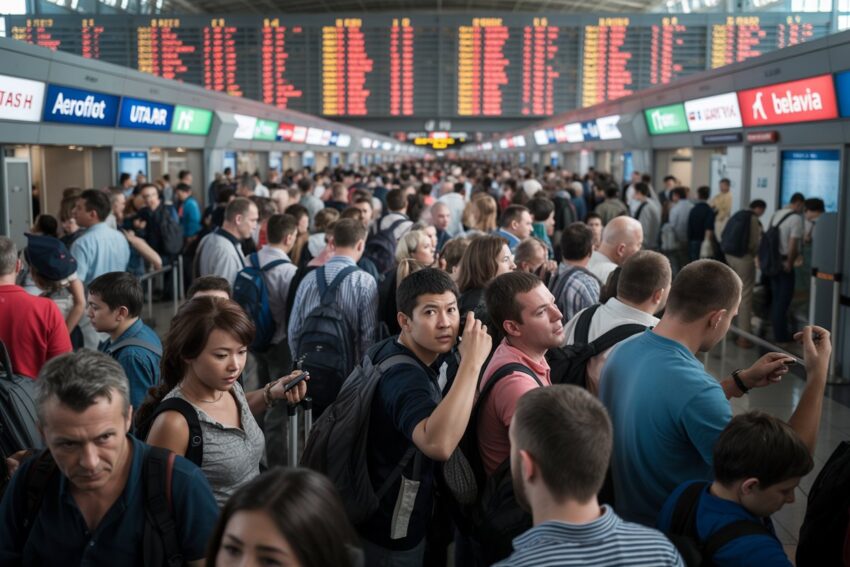
Passengers caught in this disruption found themselves stranded at hubs worldwide, faced with canceled flights or protracted journeys. Governments issued travel advisories reminding citizens to avoid non‑essential travel to regions with active closures and to monitor official channels for further information. Overseas missions and embassies participated in outreach efforts, ensuring that nationals abroad were informed of the evolving issues and had access to appropriate support where needed.
Despite the immediate and dramatic crisis in February 2026, there is cautious optimism among industry experts that airspace management systems, international regulators, and airlines can collaborate to restore connectivity in a phased manner once security conditions allow. Aviation authorities emphasize that re‑opening airspace will depend on real‑time assessments of environmental, security, and operational hazards, with safety remaining the overriding priority.
While the precise timeline for normalisation of international flight routes remains uncertain, the collective response by governments and aviation operators underscores a commitment to managing this extraordinary disruption with structured oversight. For now, the effects of these closures have had a profound impact on global aviation, highlighting how geopolitical developments can suddenly reshape the landscape of international travel.
Final Humanized Summary:
As skies fell silent over the Middle East in February 2026, the wider world of aviation watched in disbelief. What began as precautionary closures quickly escalated into a profound disruption that forced airlines, airports, and governments to rethink the mechanics of global connectivity. Amid uncertainty and delays, the shared priority across nations remains clear: protect lives, maintain clear public communication, and work tirelessly to ensure that once the storms of conflict subside, the world’s flight paths will soar again with renewed certainty.
The post Middle East Airspace Shutdown Sparks Global Travel Chaos Tens of Thousands of Flights Canceled, Airports Shut Down, and Passengers Stranded Worldwide Amid Rising Tensions in February 2026! appeared first on Travel And Tour World.
Source: travelandtourworld.com



Sorry, the comment form is closed at this time.