


Myanmar Airways International, Air KBZ, Golden Myanmar Airlines and Myanmar National Airlines Spark New Travel Buzz Across China, Thailand, India and Japan as PyinOoLwin Airfield Upgrade Positions Hill Town for Global Tourism Takeoff and Hotel Boom
Myanmar Airways International, Air KBZ, Golden Myanmar Airlines and Myanmar National Airlines Spark New Travel Buzz Across China, Thailand, India and Japan as PyinOoLwin Airfield Upgrade Positions Hill Town for Global Tourism Takeoff and Hotel Boom
Myanmar Airways International, Air KBZ and Golden Myanmar Airlines are at the center of a renewed aviation conversation in Myanmar as infrastructure upgrades in Pyin Oo Lwin, including improvements at Anisakhan Airfield, signal a strategic push to strengthen Mandalay Region’s tourism appeal. With Myanmar officially recording more than 973,000 foreign tourist arrivals in 2025 and identifying China, Thailand, Japan, South Korea and India among its leading source markets, the timing of these developments is significant. Airlines operating domestic and regional routes are closely linked to how quickly destinations rebound, and improved aviation infrastructure plays a critical role in restoring traveler confidence, supporting charter potential and enabling seamless multi-city itineraries through Mandalay International Airport. At the same time, the launch of the Pyin Oo Lwin–Gokteik sightseeing train in late 2025 and the construction of new hotel facilities near the railway precinct reflect a coordinated tourism strategy that blends air access, heritage rail and hospitality expansion. Together, these moves position the highland town not merely as a scenic retreat, but as an emerging node in Myanmar’s broader effort to attract domestic and international visitors through improved connectivity, upgraded facilities and structured travel experiences that meet evolving regional demand.
Myanmar Airways International, Air KBZ, Golden Myanmar Airlines and Myanmar National Airlines Spark New Travel Buzz Across China, Thailand, India and Japan
Pyin Oo Lwin is quietly moving from a nostalgic hill retreat to a strategic aviation gateway. Airlines such as Myanmar Airways International, Air KBZ, Golden Myanmar Airlines and Myanmar National Airlines are watching closely as infrastructure upgrades, including improvements at Anisakhan Airfield, position the Mandalay Region’s highland town for renewed domestic and international tourism. Myanmar recorded more than 973,000 foreign tourist arrivals in 2025, according to official figures released in January 2026, with China, Thailand, South Korea, Japan and India among the leading source markets. Against this backdrop, Pyin Oo Lwin’s airfield upgrade, railway tourism expansion and new hotel development are being framed as catalysts for a broader regional revival. For travelers, it signals easier access, curated experiences and upgraded hospitality standards in one of Myanmar’s most scenic destinations.
Myanmar Airways International, Air KBZ, Golden Myanmar Airlines and Myanmar National Airlines Expand Strategic Connectivity Across China, Thailand, India and Japan as PyinOoLwin Airfield Upgrade Repositions Mandalay Region for Tourism Growth
Myanmar’s aviation sector remains a central pillar in rebuilding inbound travel. Myanmar Airways International operates regional routes connecting Yangon and Mandalay to key Asian cities, including destinations in Thailand, China and India. Air KBZ and Myanmar National Airlines maintain strong domestic networks linking Yangon, Mandalay, Heho, Nay Pyi Taw and other regional airports, supporting multi-destination itineraries. Golden Myanmar Airlines contributes to domestic connectivity, which is essential for distributing tourists beyond Yangon.
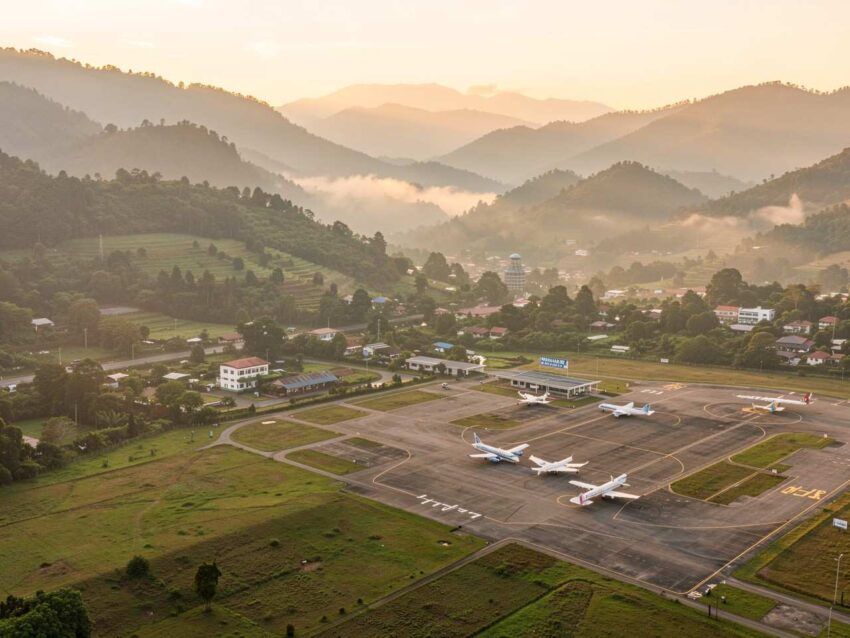
Mandalay International Airport continues to serve as the primary international gateway to Upper Myanmar. From Mandalay, Pyin Oo Lwin is reachable by road in approximately 90 minutes. With the reported upgrading of Anisakhan Airfield, authorities are signaling long-term aviation ambition. The airfield features a runway of over 3,000 meters, making it technically capable of handling medium-sized aircraft. While commercial scheduling announcements remain limited, infrastructure improvements indicate future potential for charter operations, special tourism flights and emergency diversion capacity.
The strategic logic is clear. Improved aviation infrastructure supports direct or semi-direct access to leisure hubs. It reduces reliance on long overland transfers. It encourages airlines to consider seasonal or charter services aligned with peak demand from China, Thailand, Japan and India. With nearly one million foreign visitors recorded in 2025, even modest traffic redistribution to Mandalay Region can generate measurable economic impact.
Myanmar Airways International, Air KBZ, Golden Myanmar Airlines and Myanmar National Airlines Strengthen Airline and Hospitality Momentum as PyinOoLwin Airfield Upgrade Fuels Hotel Investment, Railway Tourism and Retail Expansion
Infrastructure rarely works in isolation. In Pyin Oo Lwin, aviation improvements align with hospitality development and rail tourism expansion. Authorities have announced construction of a modern hotel and commercial complex within the railway station precinct. Local reporting also confirmed the development of a three-star railway hotel and high-end shopping facilities near the station area. This clustering model reflects global tourism trends. Transport nodes become hospitality anchors. Hotels benefit from passenger flow. Retail captures visitor spending.
The Pyin Oo Lwin–Gokteik sightseeing train service adds another dimension. Launched in December 2025, the scenic weekend train attracted more than 2,000 passengers within weeks of operation. The route offers panoramic views and heritage appeal, transforming transportation into an attraction itself. This model is proven internationally. Scenic railways extend length of stay. They increase room occupancy. They boost food and beverage revenue.
For the hospitality industry, the formula is straightforward. Better air access increases arrivals. Structured rail excursions create itinerary depth. New hotel inventory elevates accommodation standards. Retail and dining clusters improve average daily spend. Even capturing 1–2 percent of Myanmar’s 2025 foreign arrivals could translate into 9,000 to nearly 20,000 additional visitors annually for the region. For a hill town economy, that scale matters.
Airfield Improvements in PyinOoLwin Create a New Access Narrative for Mandalay Region Travelers
Pyin Oo Lwin has long attracted domestic travelers seeking cooler temperatures and colonial-era architecture. Now, the access narrative is evolving. Anisakhan Airfield upgrades are positioned as part of long-term development planning. The objective is not only military or administrative utility. It is economic diversification through tourism.
For travelers, access matters as much as attractions. Efficient air connectivity shortens travel time. It supports weekend breaks from Bangkok or Kolkata if charter services emerge. It makes combined Mandalay–Pyin Oo Lwin–Gokteik itineraries more feasible. Airlines evaluate routes based on demand, operational feasibility and infrastructure readiness. Runway length and airport modernization are critical variables.
Mandalay International Airport currently serves as the region’s hub for international arrivals. From there, tourists can reach Pyin Oo Lwin by road or rail. Domestic carriers such as Air KBZ and Myanmar National Airlines provide feeder flights to Mandalay from Yangon and other cities. This layered network supports both inbound and domestic tourism flows.
China, Thailand, India, Japan and South Korea Remain Key Source Markets for Myanmar Tourism
Official tourism data for 2025 identifies China, Thailand, South Korea, Japan and India among the leading visitor origins. These markets are geographically proximate or regionally connected. They offer strong potential for repeat short-haul travel. China and Thailand traditionally provide high visitor volumes. Japan and South Korea contribute culturally motivated travelers interested in heritage and scenic experiences. India’s proximity and expanding middle class create additional opportunity.
For these countries, improved access to Mandalay Region enhances itinerary diversity. Chinese and Thai tourists often prefer compact regional circuits. A scenic rail excursion combined with a hill station stay fits that model. Japanese and South Korean travelers show sustained interest in unique rail journeys and historic engineering landmarks. Indian travelers benefit from shorter travel distances and cultural curiosity.
If infrastructure improvements continue and airline confidence stabilizes, incremental visitor growth from these five markets can reinforce hospitality expansion. Even modest increases produce multiplier effects in accommodation, dining and transport sectors.
Hospitality Industry Expansion Reflects Confidence in Tourism Rebound
Hotel development near Pyin Oo Lwin Railway Station signals investor confidence. The three-star Railway Hotel under construction adds mid-range capacity. Shopping facilities within the station precinct introduce a controlled retail environment. Such integration supports convenience and visitor comfort.
Myanmar’s tourism industry recorded more than 1.06 million foreign arrivals in 2024 and over 973,000 in 2025. While still below pre-pandemic peaks, these figures demonstrate gradual normalization. For hotel investors, stabilization matters more than rapid spikes. Predictable growth encourages capital deployment.
Hospitality standards influence airline decisions as well. Airlines prefer destinations with sufficient room inventory and reliable service infrastructure. Hotels provide not only beds but also event space, dining options and logistical support for tour operators. As Pyin Oo Lwin strengthens its hospitality ecosystem, it becomes more attractive for packaged travel products.
Scenic Rail Tourism Enhances Length of Stay and Visitor Spend
The Pyin Oo Lwin–Gokteik train operates primarily on weekends and public holidays. It departs in the morning and returns in the afternoon, allowing a full scenic experience. With more than 2,000 passengers recorded within weeks of launch, demand appears tangible.
Rail tourism generates layered economic impact. Passengers require accommodation if they arrive the previous evening. They dine locally before departure. They purchase souvenirs and refreshments. Photography tourism thrives. Social media exposure increases destination visibility.
For airlines, scenic rail adds a marketing hook. A flight to Mandalay can be packaged with a guaranteed seat on the sightseeing train and a two-night hotel stay. Tour operators in China, Thailand and Japan often favor structured experiences. A reliable rail product simplifies itinerary design.
Travel Tips for International Visitors Planning a Pyin Oo Lwin Trip
Travelers should monitor official entry requirements. Myanmar’s eVisa system requires proof of accommodation booking and travel plans. Visitors must stay in registered accommodations. It is advisable to confirm hotel reservations in advance, particularly during holiday weekends when rail services operate.
Flights into Mandalay International Airport remain the primary international entry point for Upper Myanmar. Myanmar Airways International operates selected regional routes linking Myanmar with major Asian cities. Domestic connections via Air KBZ and Myanmar National Airlines facilitate onward travel.
Road travel from Mandalay to Pyin Oo Lwin takes roughly 90 minutes. The hill ascent offers scenic views but includes winding sections. Private transfers and organized tours are common. Travelers should check current travel advisories from their home governments and follow official guidance.
Economic Impact on Mandalay Region Could Be Gradual but Significant
Tourism functions as a multiplier industry. Each foreign visitor spends on accommodation, food, local transport and attractions. Even if Pyin Oo Lwin captures a small share of national arrivals, the economic effect accumulates. A 1 percent capture rate from nearly one million visitors equals thousands of incremental guests.
Hospitality workers benefit from increased occupancy. Transport providers gain new customers. Retail outlets around the station experience higher turnover. If Anisakhan Airfield eventually supports tourism charters, direct arrival in the vicinity would further concentrate spending locally.
Airlines also benefit indirectly. Strong regional demand supports route sustainability. Domestic carriers can optimize fleet utilization. International airlines assess seasonal opportunities. Connectivity strengthens the overall tourism network.
Why This Aviation Shift Could Redefine Mandalay Region’s Tourism Map
Infrastructure upgrades signal intent. Pyin Oo Lwin’s development plan integrates airfield improvement, railway modernization and urban beautification. Together, these elements create a cohesive tourism proposition. A hill town once known primarily to domestic travelers now appears in regional tourism discussions.
Myanmar’s tourism figures remain below historic highs, yet nearly one million foreign arrivals in 2025 indicate resilience. China, Thailand, Japan, South Korea and India remain core markets. Airlines such as Myanmar Airways International, Air KBZ, Golden Myanmar Airlines and Myanmar National Airlines form the backbone of connectivity. Hospitality investment strengthens visitor confidence.
For travelers seeking cooler climates, colonial architecture and scenic rail journeys, Pyin Oo Lwin offers layered experiences. For airlines, it represents incremental demand potential. For hoteliers, it signals a strategic opportunity near a transport node.
The transformation will not happen overnight. Aviation decisions depend on market stability. Traveler sentiment responds to safety and policy conditions. Yet the direction is visible. Airfield improvements, combined with rail tourism and hotel expansion, position Pyin Oo Lwin as a strategic tourism asset within Mandalay Region.
Myanmar Airways International, Air KBZ and Golden Myanmar Airlines are watching Pyin Oo Lwin closely as airfield upgrades and rising tourism figures signal new momentum in Mandalay Region. With nearly one million foreign visitors recorded in 2025, improved aviation access and expanding hospitality infrastructure could redefine how travelers reach and experience Myanmar’s hill country.
For tourists planning a future Myanmar journey, Pyin Oo Lwin deserves consideration. It combines accessible regional connectivity, emerging hospitality infrastructure and a defined scenic experience. If infrastructure progress continues and airline partnerships expand, this hill town could indeed reshape Mandalay Region’s tourism trajectory.
The post Myanmar Airways International, Air KBZ, Golden Myanmar Airlines and Myanmar National Airlines Spark New Travel Buzz Across China, Thailand, India and Japan as PyinOoLwin Airfield Upgrade Positions Hill Town for Global Tourism Takeoff and Hotel Boom appeared first on Travel And Tour World.
Source: travelandtourworld.com



Sorry, the comment form is closed at this time.