


Nashville Bound United Airlines Flight 605 Boeing 737-800 Aircraft Hits De-Icing Truck at Denver International Airport as Brutal US Snowstorm Disrupts Operations, New Update is Here
Nashville Bound United Airlines Flight 605 Boeing 737-800 Aircraft Hits De-Icing Truck at Denver International Airport as Brutal US Snowstorm Disrupts Operations, New Update is Here
Nashville Bound United Airlines Flight 605 Boeing 737-800 Aircraft Hits De-Icing Truck at Denver International Airport as Brutal US Snowstorm Disrupts Operations, New Update is Here
A dramatic aviation incident unfolded when the Nashville Bound United Airlines Flight 605 Boeing 737-800 Aircraft Hits De-Icing Truck at Denver International Airport as Brutal US Snowstorm Disrupts Operations, New Update is here, sending shockwaves across the US travel and aviation sector. Early reports confirm that the Nashville Bound United Airlines Flight 605 Boeing 737-800 Aircraft Hits De-Icing Truck at Denver International Airport as Brutal US Snowstorm Disrupts Operations, New Update is here, highlighting how extreme winter weather across the US is beginning to strain airport ground operations and disrupt critical airline schedules.
As the brutal US snowstorm disrupts operations, aviation authorities, airport teams, and airline crews are now racing to understand how this dramatic ground collision unfolded at Denver International Airport, one of the busiest aviation gateways in the US and a vital hub for US travel and US tourism connectivity.
Meanwhile, the Nashville Bound United Airlines Flight 605 Boeing 737-800 Aircraft Hits De-Icing Truck at Denver International Airport as Brutal US Snowstorm Disrupts Operations, New Update is here incident has rapidly become a major aviation story across the US, particularly as the US tourism sector and US travel network continue to face weather-driven operational pressure. With investigators moving quickly and passengers suddenly deplaned amid heavy snowfall, this unfolding situation reveals how severe winter conditions can ripple through the US aviation system, affecting aircraft operations, airport safety procedures, and the wider US tourism ecosystem. Travel And Tour World urges readers to read the entire story to uncover the full developments behind this breaking aviation event.
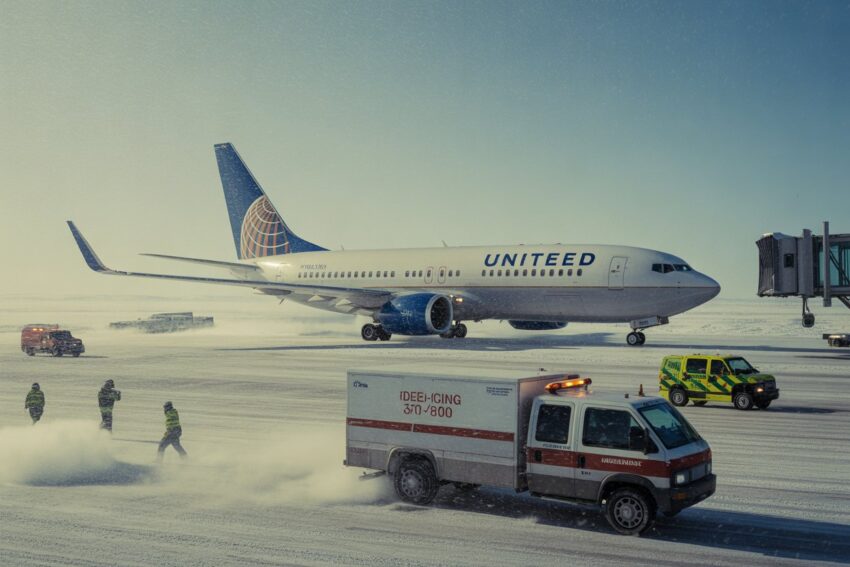
A routine winter morning at Denver International Airport quickly turned dramatic after a United Airlines aircraft collided with a de-icing truck while preparing for departure. The unexpected incident forced passengers to evacuate the aircraft and triggered an immediate safety response at one of the United States’ busiest aviation hubs.
The collision occurred on Friday morning at around 8:30 a.m. local time, when United Airlines Flight 605, scheduled to travel from Denver to Nashville, struck a vehicle operated by a de-icing contractor. Authorities confirmed that the accident happened during active snow conditions, when ground crews were working rapidly to prepare aircraft for departure amid heavy winter weather sweeping across Colorado.
Although aviation incidents involving ground vehicles are relatively rare, they remain a recognised operational risk during severe weather operations, when airports intensify aircraft de-icing procedures to ensure safe take-offs.
What Happened on the Tarmac
According to early information from investigators, the Boeing 737-800 aircraft was positioned on the airport apron when it made contact with a de-icing truck operating nearby. The aircraft was preparing to depart when the collision occurred.
The aircraft carried 122 passengers and six crew members at the time of the incident. Following the impact, the airline quickly initiated emergency procedures to ensure passenger safety.
Passengers were instructed to deplane using air stairs, rather than through a jet bridge. Airport staff then transported the passengers by bus back to the terminal, where airline representatives began arranging alternate travel plans.
Although the collision caused visible disruption, there were no reported injuries among passengers or the flight crew.
However, the employee operating the de-icing vehicle was injured and was immediately transported to a nearby hospital for medical treatment. Officials did not disclose the severity of the injuries.
United Airlines Responds to the Incident
Following the collision, United Airlines released an official statement confirming the event and outlining the airline’s response.
The airline explained that a de-icing truck made contact with the aircraft during morning operations at the airport. As a precaution, the airline decided to remove all passengers from the aircraft and replace the aircraft with another plane to continue the journey.
United emphasised that passenger safety remained the airline’s highest priority and confirmed that arrangements were being made to ensure travellers could continue their journey to Nashville with minimal delay.
Such aircraft substitutions are standard procedure when a plane is involved in a ground incident, even if the damage appears minor.
FAA Investigation Begins
The Federal Aviation Administration (FAA) has launched an investigation to determine exactly how the collision occurred. Investigators will examine multiple factors, including:
aircraft positioning
ground vehicle movements
visibility conditions
communication procedures between crews
One important detail revealed by investigators is that the collision took place in an area not controlled by air traffic control. In these zones, aircraft movement is typically coordinated through ground operations and airport procedures rather than direct ATC instructions.
This means investigators will likely review the coordination between the flight crew and ground service teams operating in the area at the time.
The FAA routinely examines such incidents to determine whether procedural improvements or safety recommendations are necessary.
Winter Weather Complicates Airport Operations
The incident occurred during a First Alert Weather Day in Colorado, with a winter weather advisory in effect across large parts of the state.
Meteorologists reported heavy snowfall across several regions, including Denver, which required airports to increase the use of de-icing equipment to remove ice and snow from aircraft surfaces before departure.
Aircraft de-icing is essential during winter operations because ice accumulation on wings can significantly affect aerodynamics and aircraft performance. To prevent this risk, airports use specialised trucks that spray heated glycol-based fluid over aircraft surfaces.
During snowstorms, dozens of these trucks operate simultaneously on airport aprons, increasing the complexity of ground coordination between vehicles and aircraft.
Images captured at the airport at the time of the incident showed snow falling heavily across the airfield, highlighting the difficult conditions ground crews were working under.
Passenger Experience During the Incident
Passengers on board Flight 605 experienced an unexpected interruption to their journey. After the collision, the aircraft remained stationary while airline and airport personnel assessed the situation.
Once it became clear that the aircraft could not continue its scheduled departure, the airline began a controlled evacuation process.
Passengers exited the aircraft via portable air stairs, a common method used when planes are parked away from gates or when jet bridges cannot be used.
Airport buses then transported travellers across the tarmac back to the terminal building, where airline staff assisted with rebooking and travel arrangements.
While such situations can be stressful for travellers, aviation safety procedures are designed to ensure orderly and calm passenger handling during operational disruptions.
Denver International Airport’s Busy Winter Operations
Denver International Airport is one of the largest and busiest airports in North America, handling tens of millions of passengers each year.
During winter months, the airport frequently deals with snowstorms and freezing temperatures, requiring extensive snow removal and de-icing operations to keep flights running safely.
The airport maintains a large fleet of snowploughs, runway sweepers and de-icing vehicles to manage winter weather challenges.
However, despite sophisticated systems and highly trained crews, complex airport environments with multiple moving vehicles and aircraft always carry some operational risk.
Aviation Safety and Ground Vehicle Incidents
Ground vehicle collisions involving aircraft are uncommon but not unheard of in aviation.
Such incidents typically occur during:
aircraft pushback procedures
maintenance operations
de-icing procedures
congested ramp conditions
Airports worldwide enforce strict ramp safety rules, including speed limits, radio communication protocols and designated vehicle lanes to reduce the risk of collisions.
Investigations following such events often lead to updated procedures, training improvements or revised operational guidelines to strengthen safety.
The FAA’s investigation into the Denver collision will likely analyse whether the incident resulted from human factors, operational miscommunication or challenging weather conditions.
What Happens Next
For the passengers on United Airlines Flight 605, the airline confirmed that a replacement aircraft would operate the journey to Nashville once arrangements were completed.
Meanwhile, investigators will continue gathering evidence, including:
aircraft inspection reports
vehicle operator statements
airport surveillance footage
weather data
The findings will help determine whether the collision was a simple operational mishap or part of a broader safety issue.
Regardless of the cause, the swift response by airline staff and airport personnel ensured that all passengers were safely evacuated and assisted.
As winter weather continues to affect aviation across the United States, airports and airlines remain on high alert to maintain safe operations during challenging conditions.
The post Nashville Bound United Airlines Flight 605 Boeing 737-800 Aircraft Hits De-Icing Truck at Denver International Airport as Brutal US Snowstorm Disrupts Operations, New Update is Here appeared first on Travel And Tour World.
Source: travelandtourworld.com


Sorry, the comment form is closed at this time.