


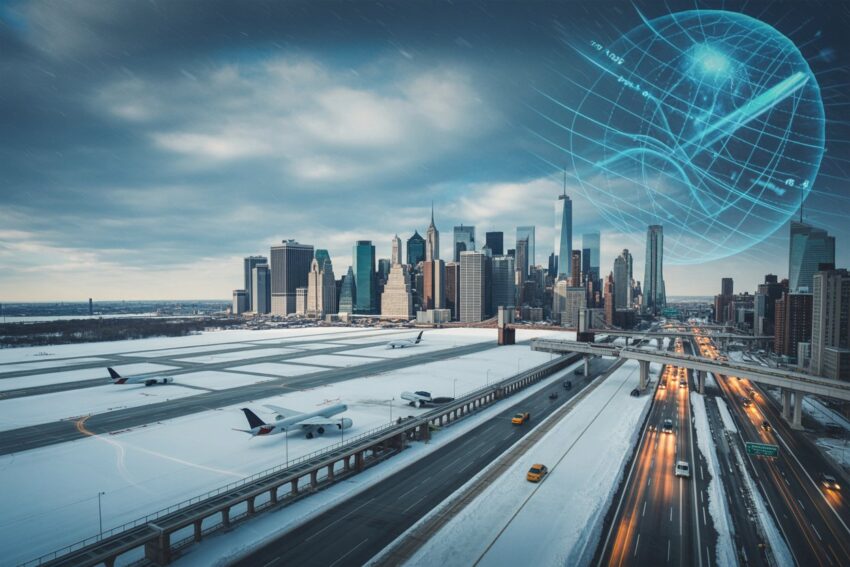
New Jersey Joins Massachusetts, Rhode Island, Connecticut, Maryland and Delaware in Paralysing Northeastern United States Tourism Sector as Powerful Snowstorm Wallop John F. Kennedy International, LaGuardia, and Newark Liberty, New Update is Here
New Jersey Joins Massachusetts, Rhode Island, Connecticut, Maryland and Delaware in Paralysing Northeastern United States Tourism Sector as Powerful Snowstorm Wallop John F. Kennedy International, LaGuardia, and Newark Liberty, New Update is Here
New Jersey joins Massachusetts, Rhode Island, Connecticut, Maryland and Delaware in paralysing the Northeastern United States tourism sector as a powerful snowstorm wallops John F. Kennedy International, LaGuardia, and Newark Liberty— and this new update is here with urgent clarity. New Jersey joins Massachusetts again as Rhode Island, Connecticut, Maryland and Delaware echo the same warning: the Northeastern United States tourism sector is under pressure after a powerful snowstorm walloped John F. Kennedy International, LaGuardia, and Newark Liberty within hours.
Because the powerful snowstorm intensified overnight, operations at John F. Kennedy International, LaGuardia, and Newark Liberty slowed dramatically. Consequently, New Jersey joins Massachusetts in disruption, while Rhode Island, Connecticut, Maryland and Delaware report ripple effects across the Northeastern United States tourism sector. Airports froze. Flights stalled. Travelers waited.
Moreover, the Northeastern United States tourism sector now faces mounting cancellations as the powerful snowstorm continues to wallop John F. Kennedy International, LaGuardia, and Newark Liberty. Meanwhile, New Jersey joins Massachusetts, Rhode Island, Connecticut, Maryland and Delaware in assessing economic fallout. Hotels brace. Tour operators recalibrate. Airlines reshuffle fleets.
Therefore, this new update is here to explain how New Jersey joins Massachusetts, Rhode Island, Connecticut, Maryland and Delaware in paralysing the Northeastern United States tourism sector after the powerful snowstorm walloped John F. Kennedy International, LaGuardia, and Newark Liberty. Travel And Tour World urges readers to read the entire story for critical developments.
Winter storms paralyzed the northeastern United States, adding to the chaos caused by a partial government shutdown and security concerns in western Mexico. Monday’s travel disruption was catastrophic for thousands of passengers, leaving them stranded in airports, battling severe weather, and scrambling to find new flights. A powerful snowstorm gripped Boston, New York, Philadelphia, and other major cities, wreaking havoc on air traffic. Airlines grounded flights by the thousands as blizzards and whiteouts left airports helpless.
U.S. Winter Storm Chaos: Hundreds of Flights Canceled, Thousands Stranded!
Winter hit the U.S. hard, with over 5,600 flight cancellations. The storm’s severity led to widespread disruptions across the East Coast, with snow, strong winds, and blizzard warnings paralyzing New York, Philadelphia, Boston, and Washington, D.C. All major airports saw delays, including John F. Kennedy International, LaGuardia, and Newark Liberty International, each reporting the highest number of cancellations. Even small airports like Rhode Island’s T.F. Green International suspended operations. Travelers were stranded for hours, with no idea when they’d get home.
Airlines like Delta, American, and United Airlines were among the hardest hit. New York was the worst affected city, with flights to and from the city facing delays of up to 6 hours. Over 1,700 flights were canceled for Tuesday, exacerbating the ongoing struggle of restoring full schedules.
New York: Blizzards Bring the Big Apple to a Standstill
New York is experiencing some of the heaviest snowfall on record, with over 18 inches falling in parts of the city. JFK, LaGuardia, and Newark airports have seen massive flight cancellations. Over 1,000 flights were grounded on Monday alone as snow piled up, and blizzard warnings remain in effect.
New York City has declared a state of emergency with travel bans in place for non‑essential vehicles. This has caused severe delays and left thousands of passengers stranded at airports and train stations. The Long Island Rail Road suspended all services due to dangerous snow conditions. Roads were impassable, and the Metropolitan Transportation Authority warned of delays on the subway as trains struggled to run in freezing conditions.
Despite the snow, the NYPD worked tirelessly to clear major routes, but it will take days for the city to recover fully from the storm. The storm’s impact on New York has been devastating, and air travel is expected to remain disrupted throughout the week.
New Jersey: Record Snow and Closed Highways
New Jersey is facing similar snowfall totals, with some areas reporting over 30 inches of snow. With major highways closed, statewide travel bans, and public transit suspended, the situation has reached a state of emergency. The New Jersey Turnpike and Garden State Parkway were both closed for several hours on Monday as snow and high winds made driving dangerous.
Newark Liberty International Airport was also heavily impacted, with hundreds of cancellations. The Port Authority worked tirelessly to clear the runways, but continued blizzard conditions made it difficult to keep up. New Jersey residents are being urged to stay indoors and avoid unnecessary travel, as the storm continues to dump snow throughout the region.
Massachusetts: Historic Snowfall Causes Travel Havoc
Massachusetts has been severely impacted by the storm, with snowfall rates exceeding 2 inches per hour in some areas. In Boston, record snow totals of 32-37 inches have caused massive delays and airport closures. Logan International Airport has been closed for several hours, and travelers faced back-to-back cancellations as airlines tried to get their flights back on track.
The storm has also left thousands without power, with electricity outages reported across the state, especially in western Massachusetts. Road conditions are treacherous, and state highways have been blocked due to snow and fallen trees. The National Guard has been deployed to assist with snow removal and rescue operations. Travel in Massachusetts is expected to be difficult for several more days, with the storm showing no signs of slowing down.
Rhode Island: Blizzard Shutdowns and Airport Chaos
Rhode Island has broken snow records, with some parts of the state receiving over 37 inches of snow. The blizzard conditions have made it nearly impossible for road crews to keep up. Major routes across the state were shut down due to drifting snow and low visibility.
T.F. Green International Airport also reported significant disruptions, with dozens of flights canceled and ground operations at a standstill. Rhode Island has issued a statewide travel ban, urging residents to stay home and avoid unnecessary travel. The state is facing a massive recovery effort, and airport operations are expected to resume in a limited capacity over the next few days.
Connecticut: Snow, Ice, and Traffic Gridlocks
Connecticut has been caught in the storm’s path, with heavy snow and ice accumulation covering roads and delaying all forms of transport. Hartford and New Haven experienced 15-20 inches of snow, and many secondary roads remain impassable. I-95 and I-84 have seen serious traffic gridlocks, and emergency vehicles have been struggling to make it through.
At Bradley International Airport, flight delays and cancellations were widespread. Airlines like American Airlines and JetBlue canceled multiple departures, and the airport was forced to operate on limited capacity. State officials have declared a state of emergency, and the National Guard is on standby for snow removal operations. Travelers in Connecticut should expect further delays as conditions improve only gradually.
Pennsylvania: Flights Grounded and Roads Closed
In Pennsylvania, snow has caused widespread road closures and flight disruptions. Philadelphia International Airport has seen major delays, with over 500 flight cancellations. Amtrak services between Philadelphia and New York City were also halted as snow blocked tracks and rail services became unsustainable.
On the ground, Interstate 95 and Interstate 76 were closed at various points as snow and ice made the roads too dangerous for travel. Governor Tom Wolf declared a statewide disaster emergency, activating the National Guard to assist with road closures and rescues. Travelers in Pennsylvania should stay off the roads as conditions are expected to remain hazardous for the foreseeable future.
Maryland and Delaware: Snow and Ice Strain Infrastructure
In Maryland and Delaware, freezing rain and heavy snow have caused widespread disruption. Both Baltimore and Dover have reported over 12 inches of snow accumulation, while major highways in both states have been shut down for hours. The Chesapeake Bay Bridge was temporarily closed due to high winds and ice.
BWI Thurgood Marshall Airport in Maryland was also significantly impacted by the storm, with hundreds of cancellations affecting both domestic and international flights. Both states have issued travel advisories urging residents to stay home and avoid driving. As clean-up efforts continue, Maryland and Delaware are still reeling from the storm’s effects, with significant delays expected over the coming days.
Washington D.C. Metro: Snow, Delays, and Road Closures
The Washington D.C. metro area saw heavy snow and ice accumulation that paralyzed roads and airports. Reagan National Airport faced mass cancellations as snowfall intensified. Flights to Chicago, Atlanta, and other major cities were grounded due to snow-covered runways.
On the ground, I-495 and I-270 saw gridlocked traffic as snow and ice caused multiple accidents. Public transit in D.C. also faced delays, and travelers were advised to use alternative routes. D.C. officials declared a snow emergency to help speed up snow removal, but recovery will take time. The region is still dealing with significant delays and should be avoided by travelers if possible.
Ohio and West Virginia: Snow on the Fringe, But Dangerous
While the Ohio Valley wasn’t at the storm’s core, states like West Virginia and Ohio felt the outer bands of the storm, which brought freezing temperatures, snow, and ice. The highways and bridges in Cincinnati, Columbus, and Charleston became dangerously slick, forcing road closures.
Cleveland Hopkins International Airport reported multiple flight delays and cancellations, with Amtrak also suspending services across certain routes. The Ohio Turnpike was closed for several hours, and drivers were stuck on highways for hours before rescue efforts could begin.
Ground Travel Nightmares: Snow and Chaos Block Roads, Buses, and Trains
The chaos wasn’t limited to air travel. The National Weather Service described travel conditions as “nearly impossible” in many storm-hit areas. Cities like New York declared transportation bans, with only emergency vehicles allowed on the roads. Public transit services were halted across the city, and subway delays were rampant.
Amtrak also suspended services on key routes, including the New York to Boston corridor, while New Jersey’s Long Island Rail Road halted operations entirely. The storm’s crippling effect meant that travelers who weren’t affected by flight cancellations were stuck on the ground, unable to move from city to city.
In some areas, such as Massachusetts, state authorities issued warnings against leaving homes. This compounded the struggles faced by travelers trying to navigate through the thick snow. With major highways closed and public transport at a standstill, ground travel became nearly impossible for the millions under blizzard warnings.
Mexico in Turmoil: Violence Erupts Following Cartel Leader’s Death
While the U.S. was in the grips of a severe winter storm, Mexico faced its own devastating crisis. The killing of a senior cartel leader, Nemesio Oseguera Cervantes, sparked violent retaliation across Mexico, particularly in Jalisco state. Explosions, gunfire, and widespread panic have gripped the region, making it one of the most dangerous places for travelers.
The U.S. and Canadian governments both issued travel advisories urging tourists to avoid non-essential travel to Jalisco, Guadalajara, and Puerto Vallarta. Several airlines, including United, American, Delta, and Air Canada, canceled or scaled back their flights to affected areas, offering rebooking options to passengers.
One American tourist, Steve Perkins, described the terrifying experience in Puerto Vallarta. “We were having coffee when we heard an explosion, followed by black smoke. We thought we might never make it out,” Perkins said. His flight was canceled, leaving him stranded in Puerto Vallarta for an indefinite period. He and his wife, who have vacationed in Puerto Vallarta for years, never imagined their peaceful retreat would turn into a nightmare. They now plan to stay until March, unsure of when they will be able to return home.
The situation in Mexico was a volatile mix of violence and unrest, making travel even more perilous. Local authorities suspended public transportation, and foreign governments issued warnings about escalating security risks. The storm of violence following Oseguera Cervantes’ death created a perfect storm of dangers for both locals and tourists.
The U.S. Government Shutdown Makes Matters Worse
As if the weather and violence weren’t enough, the ongoing partial shutdown of the U.S. government exacerbated the situation. On February 14, the Department of Homeland Security (DHS) halted its Global Entry program, which provides expedited screening for pre-approved travelers entering the U.S. The suspension of this program added delays to travelers arriving at U.S. airports.
DHS had initially planned to suspend the TSA PreCheck program as well, but it only adjusted operations in a “case-by-case” manner, leaving airport security lines even longer for some. Travelers returning from overseas were left frustrated, with no way to speed up the customs process as the government shutdown continued to hinder operations.
As travelers from across the world tried to make their way back to the U.S., they found themselves in limbo, waiting for the shutdown to end, hoping that the disruptions would soon come to an end.
Travelers’ Nightmare: Tips for Managing Disruptions
For those facing cancellations and delays, U.S. airlines are required to offer refunds for canceled flights, and many carriers are allowing customers to rebook without additional fees. Travelers are urged to subscribe to text alerts from their airlines to receive updates. The best way to avoid confusion is by staying on top of the news, checking alternative routes, and ensuring all connections are still operational.
In the case of Mexico, travelers are advised to monitor safety alerts and stay updated on the security situation. Rebooking options are available for those affected by cancellations, but with safety concerns still widespread, flexibility will be key to navigating the crisis.
The travel chaos of Monday, February 26, 2026, was one of the most difficult days for travelers in recent memory. Whether it was battling the blizzards in the U.S. or grappling with cartel violence in Mexico, travelers were left facing an overwhelming mix of disruptions. With air travel across the U.S. grounded, delays spilling over into Tuesday, and ongoing unrest in Mexico, it is a day that will go down as a travel disaster for many.
The post New Jersey Joins Massachusetts, Rhode Island, Connecticut, Maryland and Delaware in Paralysing Northeastern United States Tourism Sector as Powerful Snowstorm Wallop John F. Kennedy International, LaGuardia, and Newark Liberty, New Update is Here appeared first on Travel And Tour World.
Source: travelandtourworld.com


Sorry, the comment form is closed at this time.