


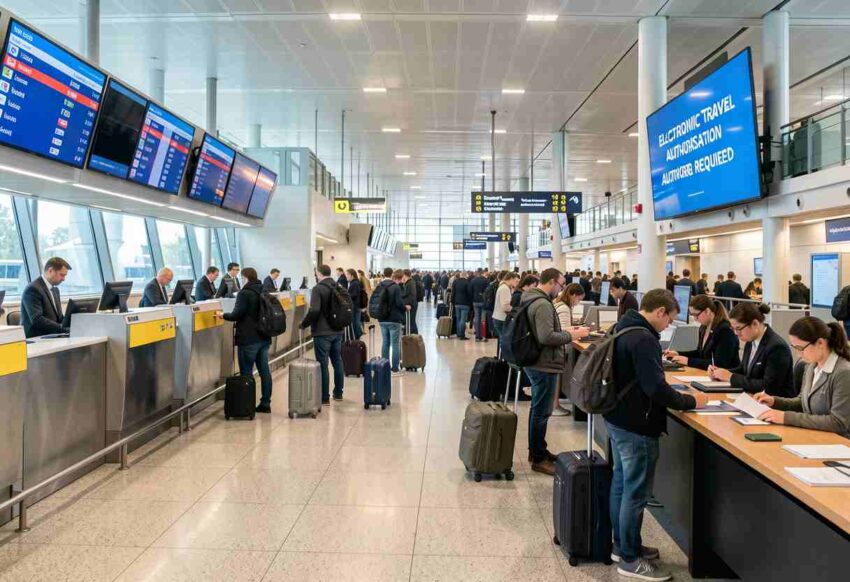
New UK Travel Crackdown Starts Today: No ETA, No Boarding For Millions Of Visa‑Free Visitors
New UK Travel Crackdown Starts Today: No ETA, No Boarding For Millions Of Visa‑Free Visitors
From 25 February 2026, a major change in UK border rules is being enforced for millions of travellers. Most non‑visa nationals are now required to hold an approved Electronic Travel Authorisation, known as an ETA, or an eVisa before they start their journey to the UK. Without this digital permission in place, boarding will simply not be allowed. The new system is being operated under a strict no permission, no travel approach, meaning the crucial checks are done by airlines, Eurostar and ferry operators at departure points, not after arrival in the UK.
The ETA is being used as a digital travel permission that is electronically linked to a traveller’s passport. It is being designed for short visits of up to six months for tourism, visiting family and friends, many business trips and some forms of short‑term study. For travellers who were previously used to simply turning up with a valid passport, these changes mean that a new layer of pre‑travel preparation is now mandatory.
Who must have a UK ETA – and who is exempt
From today, an ETA has become essential for a large group of travellers who do not normally need a visa to visit the UK. These are being referred to as non‑visa nationals.
An ETA must be held if a person does not already have a UK visa or immigration status and is a national of one of 85 non‑visa countries. This group includes:
All EU and EEA countries and Switzerland.
Major visa‑exempt countries such as the United States, Canada, Australia and New Zealand.
A range of other nations listed on the official government ETA checker.
For these travellers, the ETA requirement applies both to visits of up to six months and to certain transit journeys where the passenger has to pass through UK passport control. Anyone in this group who intends to enter the UK as a visitor or passes through the border as part of a connecting itinerary is now being required to secure an ETA in advance.
Some travellers remain completely exempt from the ETA system. British and Irish citizens, including dual citizens, do not need an ETA when they travel to the UK, but they are expected to carry a valid British passport or present a Certificate of Entitlement. Legal residents of Ireland who hold a visa‑exempt nationality and who are travelling within the Common Travel Area, and can prove their Irish residence, are also being recognised as exempt in defined circumstances.
In addition, anyone who already has a valid UK visa or UK immigration status, such as those under the EU Settlement Scheme, Skilled Worker visa or Student visa, is not required to obtain an ETA for the purpose covered by their status. Their existing eVisa or physical vignette continues to cover their travel. Travellers who transit through a UK airport without passing through passport control, in what is known as airside transit, do not currently require an ETA either, although it is being strongly advised that arrangements be checked in advance with the airline.
Dual nationals need to be particularly careful. A dual UK national who attempts to travel on only a foreign passport and cannot show a valid British passport or acceptable digital proof of status may be treated as ETA‑required. In such cases, boarding can be denied if exemption rules are not clearly met.
Cost, validity and permitted stay under the ETA
The practical details of the ETA are straightforward but important. The cost has been set at £16 per person and this fee is the same whether an application is made through the official website or via the mobile app. The payment is non‑refundable, even if travel plans change or if an application is refused.
Once granted, an ETA permits multiple journeys to the UK. It remains valid for two years or until the passport used in the application expires, whichever happens sooner. This means that if a passport has less than two years of validity remaining, the ETA will expire at the same time as the passport and a new ETA will be required once a new passport is issued.
Each individual visit under the ETA regime can last up to six months, provided the purpose fits within the permitted activities. These include holidays, visiting friends and family, attending meetings and conferences, many other business visit activities, and short‑term study on courses of up to six months. The ETA does not in itself permit work, long‑term stay or extended study; it simply authorises travel to the UK for short‑term visitor purposes.
Step‑by‑step: applying via the UK ETA app
For travellers preparing at the last minute, the UK ETA app has been designed as the quickest way to apply. The process is structured in clear steps.
First, a traveller is being asked to prepare the essentials. The passport that will be used for travel must be available and it must be valid and from an ETA‑eligible country. An email address is required, along with a method of payment for the £16 fee such as a credit or debit card, Apple Pay or Google Pay.
The next step involves downloading the official UK ETA app from the iOS App Store or Google Play. Travellers are being advised to check that the app is published either by the UK government or the Home Office, or accessed via a link on the official gov.uk website, in order to avoid imitation services.
Once the app is installed, a new ETA application can be started. The applicant confirms that they understand what an ETA is and whether they are applying for themselves or for someone else. The app then guides them through the process of capturing passport details. The passport’s photo page can either be scanned using the phone’s camera or the details can be typed in manually, including the traveller’s full name, date of birth, passport number, expiry date and nationality. It is being strongly emphasised that all details must match the passport exactly, as any discrepancy can cause the check carried out by the airline to fail.
The app then requests a facial photo. This biometric step requires a live selfie or facial image to be taken within the app. Clear lighting, no filters, no hats and no sunglasses are being requested so that the system can accurately capture the face.
After that, the applicant is presented with a set of security and suitability questions. These cover areas such as criminal history, immigration history and other security‑related issues. The expectation is that these questions are answered fully and truthfully.
A review step follows, where all the details can be checked once again, including the passport number and email address. The £16 fee is then paid through the in‑app payment screen. Once the payment has been processed, the application is submitted for decision.
In many cases, an automatic decision is returned within minutes, particularly when the app is used and no issues are flagged. The applicant receives confirmation by email, and the ETA is digitally linked to the passport. No physical document is issued. However, it is still being recommended that travellers apply at least three working days before travel, in case an application is selected for manual review, which can take longer.
A key point is that travellers must use the same passport to travel that was used to apply for the ETA. If a passport is renewed or replaced after an ETA has been granted, a new ETA application must be submitted using the new passport.
Checking whether an ETA is needed for your nationality
The safest and most accurate way to confirm whether an ETA is required is through the official GOV.UK tools. Travellers are being asked to rely only on these channels.
The first tool is the dedicated page that allows people to check whether they can get an electronic travel authorisation. This page lists the nationalities that are currently eligible for, and therefore expected to use, an ETA. The list includes countries such as the USA, Canada, Australia, New Zealand, the EU and EEA member states, Switzerland and other visa‑exempt nations. If a traveller’s nationality appears on this list, an ETA will usually be required for short visits unless a visa or UK immigration status is already held.
The second tool is the overall ETA overview page, which explains that the requirement to obtain an ETA or a visa depends both on nationality and on the purpose of the visit. This page directs users to the appropriate sections where they can check whether an ETA is suitable or whether a visa is needed instead.
If a nationality is not shown on the ETA list, it is classified as a visa national. In that case, the Visit the UK as a Standard Visitor page explains that such travellers generally must apply for a Standard Visitor visa in advance and cannot obtain an ETA. This distinction is central to avoiding confusion.
The key rule that emerges from these tools is simple. Travellers from visa‑exempt countries will usually require an ETA for visits of up to six months, while those from visa‑required countries will need a visa and will not be able to use the ETA system.
What happens at check‑in and at the UK border
With full enforcement now in place, the documentation checks for ETA compliance are being conducted before boarding. Airlines, ferry operators and rail services such as Eurostar are required to perform electronic checks on every traveller who might need an ETA. The systems they use verify whether the passport is linked to a valid ETA, an eVisa or a recognised exemption such as a British or Irish passport.
If these checks show that there is no valid digital permission or exemption attached to a traveller’s passport, boarding must be refused. Staff do not have the discretion to override a negative result. For the purposes of airline procedures, such a situation is treated as a documentation failure on the part of the passenger, rather than an error by the carrier. This means that carriers are generally not obliged to rebook or refund tickets in these cases.
A traveller who is denied boarding in this way will need to submit an ETA application, wait for it to be approved, and then purchase a new ticket in order to travel at a later time. For that reason, last‑minute airport applications are being strongly discouraged, as there is no guarantee that a decision will be made in time.
If a traveller manages to reach UK passport control without holding a valid ETA, eVisa or recognised exemption, Border Force officers have the power to refuse entry and arrange for the person to be sent back on a return flight at their own cost. This underscores how important it has become to have the correct digital permission in place before departing.
Transit passengers must also pay attention to the precise nature of their journey. Those who have to pass through UK passport control during a connection are being treated like ordinary visitors and are required to hold an ETA, if they are otherwise ETA‑eligible. Those remaining airside without crossing the border currently do not need an ETA, but specific arrangements should still be checked with airlines.
Last‑minute practical tips for travellers today
For anyone travelling to the UK from today onwards, certain practical steps can help avoid stressful situations at the airport.
Before booking or travelling, it is being advised that travellers check via the official gov.uk pages whether their nationality requires an ETA or a visa. The passport being used should be checked for validity and it should be confirmed that this is the same document that will be used in any ETA application and at the time of travel.
When applying, only the official UK ETA app or the gov.uk website should be used. Third‑party sites cannot accelerate decisions and may add unnecessary costs. Careful attention should be paid to entering the correct passport number, personal details and email address. Travellers are being recommended to submit applications several days ahead and not to leave the process until they are at the airport.
On the day of travel, arriving early at check‑in can provide a buffer in case there are any issues with automated ETA checks. The passport will be the main document needed, but keeping the ETA approval email accessible on a phone or printout can help resolve any mismatches or system errors that might occur.
For those who already hold a UK eVisa or immigration status, including EU Settlement Scheme status, it is crucial that the UK Visas and Immigration online account is updated with any new passport details. This ensures that the status is recognised correctly when carriers and border systems run their checks.
Comparing the UK ETA with US ESTA
Many frequent travellers will be familiar with the US ESTA system, and the UK ETA is operating in a broadly similar way, although important differences remain.
Both systems are being used as pre‑travel electronic authorisations for visa‑exempt travellers, allowing security and admissibility checks to be carried out before passengers board their transport. In both cases, the permission is not a full visa and does not guarantee entry; the final decision is always taken by border officers at the point of arrival. Both systems also permit multiple entries while valid and collect a combination of biographic, biometric and security‑related data to run automated checks against security databases.
However, the details differ. The UK ETA costs £16, while the US ESTA currently costs a higher amount in US dollars. The UK ETA is valid for two years or until the passport expires, whichever comes first, and allows visits of up to six months per stay. The US ESTA is generally valid for two years or until passport expiry and usually allows stays of up to 90 days per visit under the Visa Waiver Program. The geographic scope is different too: the ETA covers the United Kingdom, while ESTA covers entry to the United States alone, with other regions such as Canada and the European Union operating separate systems like eTA and ETIAS.
For travellers who have used ESTA before, the UK ETA will feel familiar in terms of process and purpose, but attention will need to be paid to the specific UK rules on cost, length of stay and eligibility.
Choosing between a UK ETA and a UK visa
The line between when to use an ETA and when to apply for a visa is being clearly drawn in official guidance. The ETA has been created for short visits by visa‑exempt nationals. Visas are reserved for visa‑required nationals and for longer or more complex types of stay.
An ETA is appropriate when a traveller’s nationality appears on the ETA‑eligible list and the planned trip is short term, up to six months. The permitted reasons include tourism, visiting friends and family, most business visits such as meetings and conferences, short‑term study, some permitted paid engagements and certain forms of transit via the UK. The key point is that the traveller does not intend to work in the UK, live there long‑term or undertake longer academic courses.
In this context, the ETA acts as a digital pre‑travel permission that is applied for online or via the app, costs £16 and is linked electronically to the passport. It allows the traveller to board transport to the UK and to ask to be admitted as a visitor at the border.
A visa is required instead when a person is from a nationality that is not ETA‑eligible, or when the purpose of travel involves work, long‑term residence, long‑term study, stays longer than six months or any route that the UK explicitly channels through its visa system. Common examples include family migration routes, skilled worker visas and student visas.
The process for obtaining a visa is usually more complex than applying for an ETA. It often involves a more detailed application form, supporting documents, and in some cases, a biometrics appointment, with processing times that can stretch from days to several weeks depending on the route and country of application.
A practical rule of thumb can be applied. Travellers from countries such as the US, Canada, EU and EEA states, Australia, New Zealand and other ETA‑listed nations who plan to visit for up to six months for tourism, short business or short study should generally use the ETA route. Those from non‑listed countries, or those who wish to work, live or study long‑term in the UK, should apply for the appropriate visa instead.
The safest approach, especially for those unsure of their status, is to first check nationality on the gov.uk ETA checker and then read the Standard Visitor visa overview if ETA does not apply. By doing this and by acting ahead of time, travellers can adapt to the new system smoothly and avoid being caught out at the last moment.
The post New UK Travel Crackdown Starts Today: No ETA, No Boarding For Millions Of Visa‑Free Visitors appeared first on Travel And Tour World.
Source: travelandtourworld.com



Sorry, the comment form is closed at this time.