


New York, Boston and the Wider I-95 Belt Hit by Severe Winter Weather, Forcing Dubai and Abu Dhabi Long-Haul Services to Rethink Schedules — A Detailed Guide for Transatlantic Travelers
New York, Boston and the Wider I-95 Belt Hit by Severe Winter Weather, Forcing Dubai and Abu Dhabi Long-Haul Services to Rethink Schedules — A Detailed Guide for Transatlantic Travelers
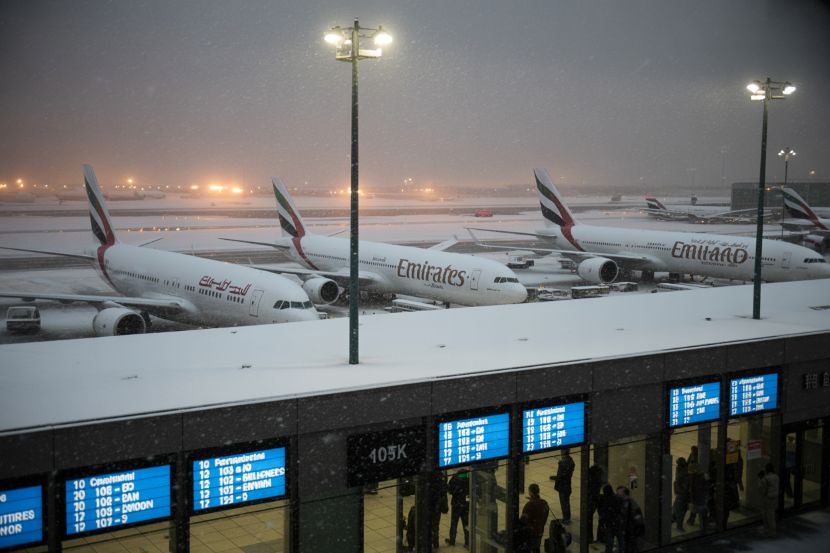
A powerful Nor’easter sweeping across New York, Boston and the broader I-95 corridor has triggered significant aviation disruption, forcing Emirates and Etihad Airways to suspend multiple long-haul services between the United Arab Emirates and the United States. The storm, which brought heavy snowfall and strong winds to key East Coast hubs, directly affected scheduled departures and arrivals connecting Dubai, Abu Dhabi, New York (JFK/EWR), and Boston. The temporary suspension of these intercontinental routes has wider implications for business travelers, leisure tourists, and cargo operators who rely on seamless transatlantic connectivity. As Dubai and Abu Dhabi serve as major global transit gateways linking Asia, Africa, Europe, and North America, the weather event is creating ripple effects far beyond the affected US airports. Airlines have begun offering rebooking options and refunds, while authorities continue to monitor severe winter conditions across the northeastern United States.
Storm System Disrupts Strategic Transatlantic Links
The winter system intensified along the US East Coast, prompting weather advisories and blizzard warnings in parts of New York State, Massachusetts, and surrounding northeastern regions. Major airports including John F. Kennedy International Airport (JFK), Newark Liberty International Airport (EWR), and Boston Logan International Airport faced operational constraints due to snow accumulation, strong crosswinds, and reduced runway visibility.
As a result, Emirates suspended several scheduled services on 22–23 February, including its flagship Dubai–New York (EK203/204) rotation, the Athens–Newark (EK209/210) service, and the Dubai–Boston (EK237/238) route. Meanwhile, Etihad Airways cancelled its Abu Dhabi–New York (EY1/2) and Abu Dhabi–Boston (EY7/8) flights, while adjusting departure times on the EY3/4 service by several hours.
These adjustments were implemented to ensure passenger safety and aircraft positioning integrity, as weather forecasts projected prolonged operational challenges across the northeastern United States.
Why Dubai and Abu Dhabi Connections Matter Globally
The disruption extends beyond point-to-point travel between the UAE and the US. Dubai International Airport (DXB) and Zayed International Airport in Abu Dhabi function as vital intercontinental hubs, connecting passengers from India, Southeast Asia, Africa, Australia, and Europe to North America.
Premium cabins on US-bound services often carry corporate travelers heading to financial centers in Manhattan and Boston, while belly-hold cargo space supports time-sensitive freight moving between Asia and the US. During the late February travel window — following the Lunar New Year peak season — aircraft load factors typically remain strong, especially in business and cargo segments.
Missed connections at Gulf hubs can therefore create cascading delays for passengers originating from cities such as Mumbai, Delhi, Singapore, Johannesburg, Nairobi, and Sydney, who transit through the UAE en route to North America.
Travel Advisory Intelligence: What Passengers Should Do Now
Safeguarding Itineraries During East Coast Weather Events
Travelers with bookings through New York or Boston are advised to:
Verify flight status directly through airline mobile applications.
Update contact information to receive SMS or email alerts.
Explore rerouting options via Chicago O’Hare, Washington D.C., or West Coast gateways such as Los Angeles and San Francisco, where weather conditions remain stable.
Retain documentation of cancellations for insurance or corporate reimbursement purposes.
For leisure tourists planning winter city breaks in New York or New England, flexible booking options are particularly important during February, historically one of the region’s most weather-sensitive months.
Visa and Entry Considerations for Delayed Travelers
Extended disruptions raise important compliance considerations. Travelers holding ESTA authorisations or US visitor visas whose entry windows overlap with rescheduled departures may need to monitor validity timelines carefully.
In weather-related delay scenarios, US immigration authorities typically exercise discretion; however, overstays remain legally sensitive. Corporate mobility teams and business travelers are encouraged to document force majeure circumstances in case of delayed departures from the United States.
Transit passengers connecting through UAE hubs should also verify visa requirements for alternate routings, especially if rebooked via different US cities.
Cargo Capacity and Business Travel Pressures Intensify
Beyond passenger movement, the suspension of these routes impacts freight capacity. Gulf carriers play a crucial role in transporting electronics, pharmaceuticals, perishables, and e-commerce shipments between Asia and North America.
With February cargo demand traditionally elevated due to post-holiday restocking and supply chain replenishment, any removal of wide-body aircraft from US routes tightens available space. Freight forwarders may need to secure alternative capacity on European or Pacific corridors.
Business travelers, particularly those scheduled for financial meetings in New York’s Wall Street district or Boston’s biotech corridor, face rescheduling challenges. Travel managers are advised to build buffer days into late-winter itineraries for northeastern US destinations.
Tourism Industry Implications: Hotels, Events, and Conferences
The storm’s timing coincides with a period of steady inbound tourism to the northeastern United States. New York City Tourism + Conventions and Meet Boston continue to promote winter travel campaigns, but severe weather can temporarily suppress short-term arrivals.
Hotels in Manhattan and downtown Boston may see late cancellations or delayed check-ins, especially from international guests arriving via Middle Eastern carriers. On the outbound side, UAE residents planning shopping trips or university visits in the US may need to adjust schedules.
Travel insurance policies covering trip interruption and missed connections become particularly relevant during winter travel months.
Operational Resilience: How Airlines Navigate Winter Disruptions
Long-haul carriers operating ultra-long routes between the Gulf and the US Northeast must balance crew duty time limitations, aircraft rotation sequencing, and slot allocations at congested airports.
When snow and wind conditions compromise runway throughput, airlines often opt for proactive cancellations rather than last-minute ground delays. This strategy allows aircraft to be repositioned efficiently once weather improves, minimizing network-wide knock-on effects.
For travelers, early cancellations can sometimes be advantageous, offering clearer rebooking pathways rather than prolonged airport waits.
Alternative Travel Strategies for UAE–US Passengers
Passengers seeking quicker re-entry into the US may consider:
Connecting through European hubs such as London or Frankfurt.
Flying into unaffected cities like Chicago, Washington D.C., Dallas, or Los Angeles, then taking domestic connections.
Monitoring fare adjustments, as airlines may temporarily release additional seats on alternative routes.
Leisure travelers might also reassess travel timing, especially if plans are flexible, as weather patterns across the northeastern US can remain volatile through early March.
Weather as a Seasonal Risk in Northeast US Travel Planning
February and early March historically bring heightened risk of Nor’easters impacting New York, Boston, Philadelphia, and Washington D.C. Travel planners and tour operators typically factor contingency buffers during this period.
While the current disruption is temporary, it underscores the vulnerability of high-density international corridors to severe weather events. For the Gulf aviation sector — increasingly reliant on premium long-haul connectivity — resilience planning remains essential.
Looking Ahead: Network Recovery and Travel Confidence
As meteorological conditions stabilize, airlines are expected to restore normal operations gradually. Aircraft rotations and crew schedules may take several days to realign fully.
For travelers, the episode highlights the importance of flexible booking policies, comprehensive travel insurance, and proactive itinerary management during winter travel seasons. Despite short-term turbulence, the strategic air bridge between the United Arab Emirates and the United States remains one of the most robust intercontinental corridors in global aviation.
The post New York, Boston and the Wider I-95 Belt Hit by Severe Winter Weather, Forcing Dubai and Abu Dhabi Long-Haul Services to Rethink Schedules — A Detailed Guide for Transatlantic Travelers appeared first on Travel And Tour World.
Source: travelandtourworld.com



Sorry, the comment form is closed at this time.