


New York, United States, North America – Travel Disruptions Spread Across US and Canada as Middle East Airspace Closures Trigger Flight Cancellations and Delays
New York, United States, North America – Travel Disruptions Spread Across US and Canada as Middle East Airspace Closures Trigger Flight Cancellations and Delays
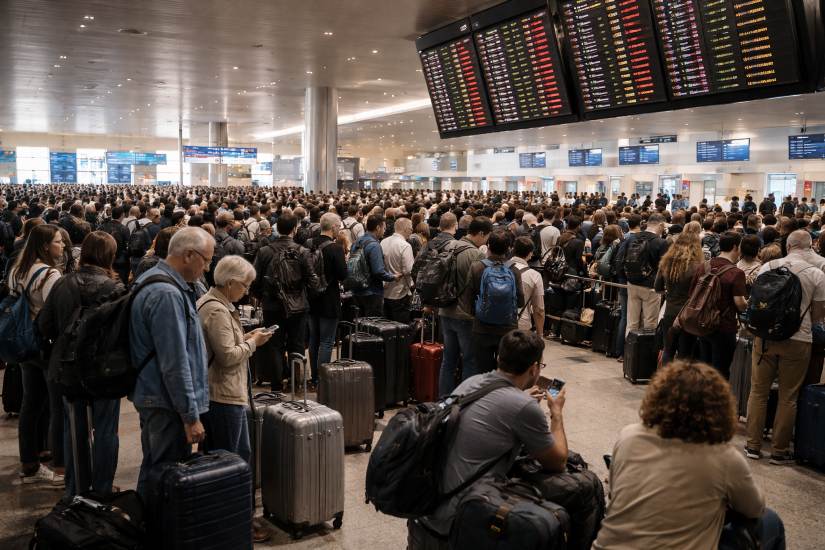
The ripple effects of the ongoing Middle East conflict are now being felt far beyond the region itself. Airports across North America are beginning to experience growing disruption as airlines cancel flights, reroute aircraft and adjust schedules in response to restricted airspace thousands of miles away. In New York, United States, North America, travelers arriving at major airports are already seeing the impact reflected on departure boards as airlines struggle to maintain long-haul operations that normally pass through Middle Eastern hubs.
The disruption began after large sections of Middle East airspace were closed following late-February strikes on Iran and subsequent retaliatory tensions across the region. Several Gulf countries quickly restricted overflights and scaled back airport operations as a precaution.
While those decisions were made locally, their consequences have spread across global aviation networks. Major hubs such as Dubai, Abu Dhabi and Doha, which serve as key connecting points for flights linking Europe, Asia, Africa and North America, have seen severe operational interruptions. Because many long-haul routes rely on these airports, airlines worldwide are now dealing with unexpected schedule changes.
Gulf Airlines’ Suspensions Reach North America
Airlines based in the Gulf play a crucial role in global connectivity. Carriers like Emirates and Etihad Airways transport thousands of passengers every day between North America and destinations across Asia, Africa and the Middle East through their hub airports in the United Arab Emirates.
With parts of the region’s airspace temporarily restricted, many of these flights have been suspended or rerouted. That change is now affecting passengers departing from cities such as New York and Toronto, where travelers often rely on Gulf carriers for long-distance connections.
Flight operations data shows that more than 100 flights serving North American passengers have already been canceled or cut short, while over 200 additional flights are running significantly behind schedule. Airlines forced to avoid closed airspace are flying longer routes, which adds hours to journey times and disrupts carefully planned aircraft rotations.
For passengers waiting to travel, that means fewer available flights and longer waits for rebooking options.
New York Area Airports Feel Immediate Impact
Airports in the New York region are among the first in the United States to feel the pressure. Flights connecting John F. Kennedy International Airport and Newark Liberty International Airport with Gulf destinations have been trimmed or removed from airline schedules altogether.
Inside airport terminals, travelers are forming long lines at airline counters as they search for alternative routes. Many passengers who planned to connect through Dubai or Abu Dhabi are now being rerouted through European cities instead.
Major U.S. airlines such as Delta Air Lines and United Airlines are also adjusting their schedules to cope with the ripple effects. Although most domestic flights are operating normally, delays and occasional cancellations are appearing on connecting routes as aircraft and crews become misaligned due to longer international flight paths.
Boston and Chicago See Growing Schedule Changes
Other U.S. airports are experiencing similar challenges.
In Boston, where Gulf carriers have steadily expanded their presence in recent years, flights to the Middle East and onward to South Asia have been among the first to face disruptions. Some departures have left several hours late after airlines were forced to replace crews who had exceeded their permitted working hours. Others have been canceled entirely.
Airlines are increasingly directing passengers through European hubs such as London, Frankfurt and Paris as an alternative way to reach destinations that would normally be accessed through Gulf airports.
Meanwhile, Chicago O’Hare International Airport, one of the Midwest’s largest international gateways, is also seeing reduced long-haul capacity. Travelers connecting from regional cities through Chicago to destinations in India or Southeast Asia are finding their travel plans suddenly rerouted through European partner airlines.
Canadian Airports Confront Capacity Pressure
The disruption is also affecting major Canadian airports.
At Toronto Pearson International Airport, airlines are dealing with a growing number of delays and cancellations on flights that normally connect travelers to the Middle East and beyond. Passengers heading from Toronto to destinations in the Indian subcontinent and Southeast Asia are being forced to accept revised itineraries that often involve additional stops or overnight layovers in Europe.
Regional airline Jazz Aviation, which feeds short-haul passengers into Canada’s main international hubs, has also felt the impact. Missed connections and delayed arrivals are forcing airlines to adjust schedules throughout the domestic network.
In Montreal, airport staff report longer lines at help desks and baggage claim areas as passengers wait for updates about their flights. Some travelers are waiting for luggage that arrived on aircraft forced to return mid-route due to airspace restrictions.
Airlines Adjust Policies to Help Passengers
Airlines are responding by offering flexible travel options and expanded rebooking policies.
Carriers including Emirates and Etihad are prioritizing limited repatriation flights while advising passengers with non-essential travel plans to consider postponing their journeys. Many airlines have introduced temporary travel waivers that allow passengers to change flights without paying standard change fees.
However, the operational challenge remains complex. Flights that must detour around restricted airspace consume more fuel and extend flight times, which can quickly push flight crews beyond their duty limits. When that happens, airlines must delay departures, swap aircraft or cancel flights entirely.
Industry experts say these cascading effects explain why a disruption centered in the Middle East is now influencing flight schedules across North America.
Travelers Encouraged to Stay Alert
Airport authorities and airlines are urging travelers to stay informed and check their flight status regularly.
Passengers traveling from New York, Boston, Chicago, Toronto or Montreal to destinations in the Middle East, South Asia or Africa should confirm their flight is operating before heading to the airport.
Travelers are also advised to allow extra time for check-in, security and potential rebooking discussions if schedules change.
Travel agencies report that demand for alternative routes through Europe has surged, though available seats are becoming limited as airlines work to accommodate displaced passengers.
Recovery May Take Time
Even if airspace restrictions in the Middle East begin to ease soon, aviation experts say it may take several days for the global flight network to stabilize.
Aircraft and crew schedules must gradually return to their normal rotations before airlines can fully restore long-haul services.
Until that happens, travelers across North America should expect ongoing delays, cancellations and schedule adjustments.
For passengers waiting at airport terminals today, the focus remains on finding the next available route home. Across busy hubs including New York, United States, North America, airline staff and airport teams continue working to guide stranded travelers through one of the most complex travel disruptions the aviation industry has faced in years.
The post New York, United States, North America – Travel Disruptions Spread Across US and Canada as Middle East Airspace Closures Trigger Flight Cancellations and Delays appeared first on Travel And Tour World.
Source: travelandtourworld.com



Sorry, the comment form is closed at this time.