


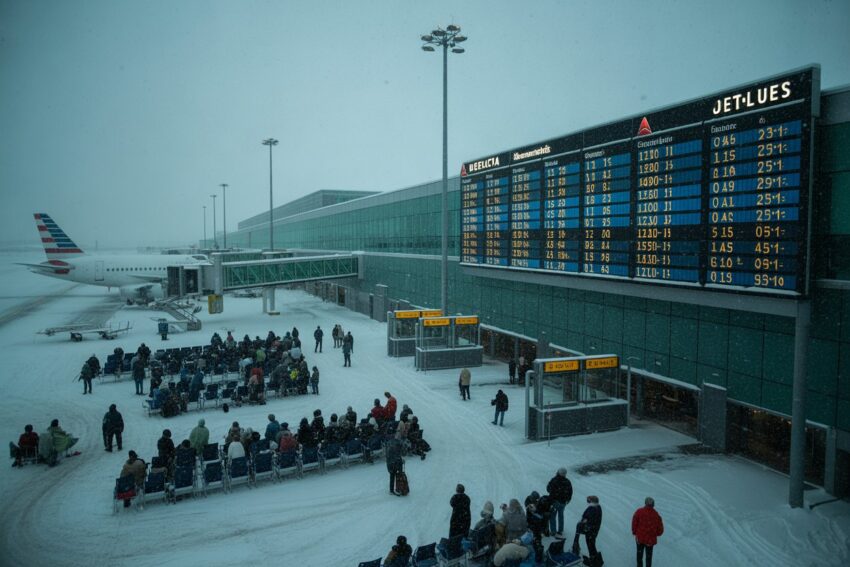
New York, Washington, Atlanta as November’s Flight Cancellations Ignite Travel Panic Across US Hubs
New York, Washington, Atlanta as November’s Flight Cancellations Ignite Travel Panic Across US Hubs
A sudden spike in U.S. flight cancellations during November shook major airport hubs and left thousands of passengers facing abrupt rebooking and long airport waits, the U.S. Department of Transportation’s monthly Air Travel Consumer Report shows.
DOT Data Shows Noticeable Monthly Increase
The DOT reported that the national cancellation rate climbed markedly in November, reflecting an extraordinary operational response from the Federal Aviation Administration after widespread air-traffic controller absences strained safe operations. The November figures mark a sharp departure from typical month-to-month variation. DOT’s November Air Travel Consumer Report recorded an overall cancellation rate that rose into the mid-single digits percentage-wise for the month — a leap that industry analysts attribute directly to the FAA’s temporary capacity caps on flights at 40 of the nation’s busiest airports. Those caps were introduced after a sustained period in which significant numbers of air-traffic controllers did not report to work amid a prolonged federal shutdown and related staffing pressures.
FAA Orders Temporary Capacity Reductions at 40 Airports
The FAA’s emergency action, announced in early November, instructed airlines to cut operations across targeted airports in staged steps — initially a 4% reduction, moving to 6% and rising toward a planned 10% cap — while reserving the authority to prohibit certain general-aviation operations at facilities meeting staffing triggers. The administration framed the reductions as a measure to preserve safety margins given real-time staffing shortfalls in tower and terminal radar facilities. Airlines were given latitude to choose which flights to cancel to meet the percentage limits, producing a patchwork of trimmed frequencies across carriers and airports.
Operational data and day-by-day tracking show the practical consequences. Flight-tracking and news organizations tallied thousands of daily cancellations and tens of thousands of delays during the most acute stretch, with certain weekends registering several thousand cancelled departures systemwide. The sudden capacity controls hit hub-heavy carriers especially hard because reductions at major hubs ripple through connecting networks, amplifying missed connections and forced schedule rework across the system. Passengers experienced the disruptions immediately: crowded rebooking desks, longer-than-normal customer-service waits, and volatile itineraries as carriers reallocated aircraft and crews to prioritize longer-haul, revenue-critical flights.
Airlines Forced to Trim Schedules
Airlines followed different strategies — some electing to cancel low-yield short-haul frequencies while holding international and cross-country services — but the net effect was the same: travelers lost planned flight options and were compelled to accept alternate routings, refunds, or vouchers. Consumer advocates emphasized the human stress of the disruption and pressed carriers to honor rebooking and accommodation policies. The government’s own documents emphasize the exceptional nature of the intervention. DOT’s automated monthly reporting aggregates day-to-day chaos into a single monthly snapshot, which can obscure the intensity of brief spikes; nonetheless, November’s aggregated numbers stood apart from seasonal norms and from both the prior month and the previous year’s November performance.
The FAA stressed that the flight reductions were temporary safety measures tied directly to staffing availability — not weather — and that normal operations would be restored as controller attendance improved. In mid-November the FAA and Transportation Department announced termination of the emergency order and a return to standard operations after controller attendance improved enough to ease the agency’s immediate safety concerns. The termination allowed airports to resume normal schedules, but aviation experts cautioned that the downstream effects — deferred itineraries, backlogs in crew and aircraft positioning, and passenger frustration — would echo beyond the formal end of the caps. Restoring full confidence among travelers and clearing the operational backlog can require days to weeks even after schedules normalize.
Industry trade groups and carriers said they complied with the cap targets where necessary but also raised concerns about forecasting and enforcement: airlines are structured around tight operational blocks, and sudden percentage-based cuts force difficult decisions about which flights to drop that may be commercially unfavorable but operationally necessary. Regulators signaled they would review instances of noncompliance, even as they acknowledged the complex, real-time tradeoffs that airlines confronted while safeguarding passenger movement. For travelers, the episode offers clear takeaways.
Travelers flying through major hubs — especially during high-demand windows — should anticipate elevated risk of schedule disruption during systemic events, and should prefer flexible fares or refundable tickets when timing is critical. Airlines provide app-based rebooking and often process refunds automatically, but the speed and clarity of those remedy paths varied during the event; DOT reminded consumers of their rights and encouraged passengers to keep documentation for any post-travel complaints. Beyond immediate passenger inconvenience, the November disruption carries broader implications for U.S. aviation resilience.
The incident exposed the fragility of a system where concentrated hub operations and a lean staffing model can produce outsized impact if controller attendance drops. Policymakers and industry leaders may weigh structural measures — from staffing incentives to revised surge plans and clearer contingency rules — to reduce the odds that localized absences translate into national-level cancellations. Several aviation labor and safety groups called for longer-term solutions to prevent similar episodes from recurring. When the cancellations finally subsided and schedules began to stabilize, the human toll remained etched in hours spent in terminals and the inconvenience to business and leisure plans. For many passengers the memory will linger: a vivid reminder that modern travel depends on a tightly synchronized labor and technical system. DOT’s November report will be used not just as an after-action statistic, but as a prompt for regulators, airlines, and policymakers to shore up the weak points revealed by a single, disruptive month.
The post New York, Washington, Atlanta as November’s Flight Cancellations Ignite Travel Panic Across US Hubs appeared first on Travel And Tour World.
Source: travelandtourworld.com



Sorry, the comment form is closed at this time.