


Northumberland, United Kingdom: The Secrets of the Bamburgh Lighthouse and Its Coastal Wonders
Northumberland, United Kingdom: The Secrets of the Bamburgh Lighthouse and Its Coastal Wonders
The Northumberland coastline is frequently celebrated for its rugged grandeur and sweeping vistas, but one destination with a quirky architectural personality is largely overlooked by the typical tourist trail. While the majestic silhouette of Bamburgh Castle dominates the local skyline, a short journey north reveals a maritime structure that has become a source of local amusement. Known formally as the Bamburgh Lighthouse—and colloquially as the Stag Rock Lighthouse—this site is becoming increasingly popular not only for its navigational value but also for its strikingly anthropomorphic appearance.
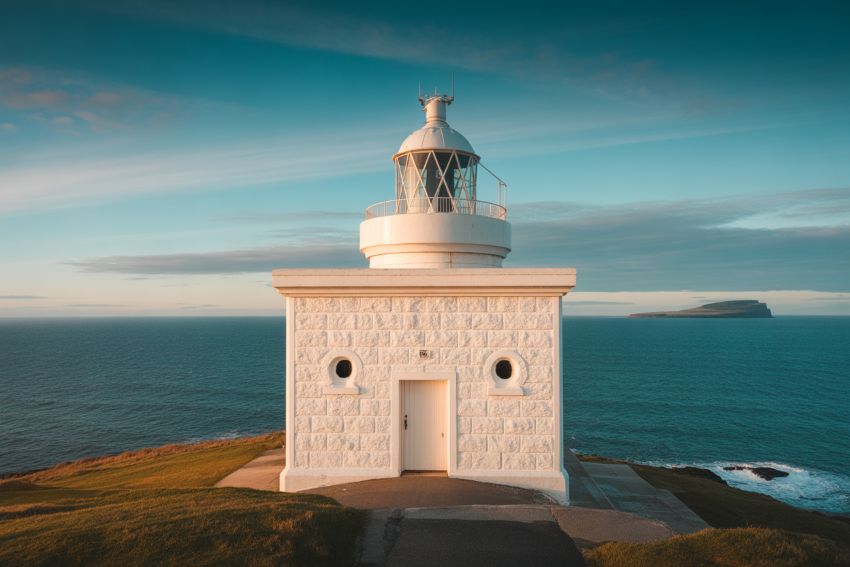
Many visitors notice a humorous expression as they approach the structure from a distance. This effect is created by the precise placement of two small, circular windows directly above the central door. The resulting “startled” or “shocked” expression is a refreshing contrast to the nearby castle’s stoic, ancient stone walls. This “hidden gem” is a refreshing alternative to the more crowded landmarks of the North East, offering a blend of historic significance and quirky charm.
The Evolution of the Most Northerly Land-Based Light
The history of this site is deeply intertwined with the safety of the North Sea’s shipping lanes. In 1910, the responsibility for guiding vessels through the treacherous waters surrounding the Farne Islands was undertaken by Trinity House, the official authority for lighthouses in England. At that time, an unmanned, 42-foot steel tower was constructed to house acetylene gas lamps. This original metal-framed structure served as a vital beacon for over half a century before modernization efforts were initiated.
Significant structural transitions were enacted in 1964 when the site was electrified. However, the most drastic visual change occurred in 1975. During this period, the original steel tower was decommissioned and subsequently removed. In its place, the lantern was relocated to the roof of the adjacent acetylene fuel store—the very building that provides the “startled” face enjoyed by photographers today. Although the tower is long gone, its original footprint remains visible on the ground, serving as a silent reminder of the lighthouse’s former vertical profile.
Engineering the Light: From Acetylene to the Grid
Technical advancements at the Bamburgh Lighthouse reflect the broader industrial shifts of the 20th century. Following the removal of the tower, the station’s operations were streamlined. For several years, diesel generators were utilized to power the lamp, ensuring that the critical light remained active during the transition away from gas. It was not until 1980 that the building was finally integrated into the national grid, allowing for a more consistent and sustainable power supply.
Currently, the light is monitored and controlled remotely by Trinity House from their operations centre. Despite its modest height of only 9 metres (approximately 29 feet), the lighthouse remains a powerhouse of maritime safety. A range of 14 nautical miles is covered by the white and red sectors of the light, providing essential guidance for craft navigating the jagged Northumberland coastline. This efficiency is maintained through modern LED technology, which has replaced the older bulb systems, ensuring the “startled” sentinel continues its watch with minimal environmental impact.
Exploring the Surroundings of Stag Rock
The location of the lighthouse is as storied as the building itself. It is perched upon the Black Rocks point, a short ten-minute stroll from the village of Bamburgh. This village has consistently been ranked as one of the premier seaside destinations in the United Kingdom, often lauded for its “breathtaking” views and pristine sands. However, the walk toward the lighthouse offers a more intimate connection with the coastal ecology and local lore.
Adjacent to the lighthouse, the “Stag Rock” can be found. This landmark is distinguished by a large, white stag painted onto the dark rock face. According to local tradition, the image was originally painted to commemorate a legendary leap made by a stag to escape hunters or as a navigational marker for sailors. Today, the painting is meticulously maintained by locals, standing as a bright white contrast to the deep blues and greys of the North Sea. The area around the rocks is also an excellent vantage point for birdwatching, as various seabirds can be observed nesting on the nearby Farne Islands.
A Legacy Preserved by Trinity House
Trinity House, a corporation granted a Royal Charter by Henry VIII in 1514, ensures the continued preservation of the Bamburgh Lighthouse. The General Lighthouse Authority’s responsibility is to ensure that the “startled” face remains a functional component of England’s maritime infrastructure. While many lighthouses in the UK have been converted into private homes or vacation rentals, the Bamburgh lighthouse continues to serve as an active navigation aid.
Visitors are encouraged to explore the public footpaths leading to the site, but the interior of the fuel store building is still closed to the public to protect the sensitive monitoring equipment inside. The area is best explored during the “golden hour” of sunset, when the light hits the lighthouse’s windows just right, emphasising its amusing expression against the backdrop of the darkening sea. It serves as a poignant reminder that even the most functional structures can have a distinct personality that captivates the public’s attention.
The post Northumberland, United Kingdom: The Secrets of the Bamburgh Lighthouse and Its Coastal Wonders appeared first on Travel And Tour World.
Source: travelandtourworld.com



Sorry, the comment form is closed at this time.