


Passengers Stranded at São Paulo-Guarulhos International Today as LATAM, GOL, Air France, KLM, and Other Airlines Cancel 9 and Delay 103 Flights, Disrupting Travel in São Paulo, Rio de Janeiro, Brasília, and More
Passengers Stranded at São Paulo-Guarulhos International Today as LATAM, GOL, Air France, KLM, and Other Airlines Cancel 9 and Delay 103 Flights, Disrupting Travel in São Paulo, Rio de Janeiro, Brasília, and More
What should have been a routine travel day at the nation’s busiest aviation gateway turned into a maze of frustration and anxiety for thousands of passengers after São Paulo‑Guarulhos International Airport (GRU) reported 103 flight delays and 9 cancellations across domestic and international services. Families en route to holidays, business travellers counting on urgent meetings and students heading abroad found themselves caught in an unexpected web of airport chaos, as airport terminals overflowed with weary travellers and electronic boards flashed delayed and cancelled flight notices.
Massive Disruption at Brazil’s Busiest Gateway
São Paulo‑Guarulhos International — a crucial hub in Latin America that connects Brazil to every continent — was hit hard when a combination of operational bottlenecks, aircraft rotation challenges and crew shortages led to a surge in delays and cancellations. According to reports analysing flight records at the airport, more than 100 flights were delayed and several additional departures were scrubbed for the day, impacting travellers on both short‑haul domestic routes and long‑haul international services. The disruption affected major carriers operating from GRU, including LATAM Brasil, GOL Linhas Aéreas, Air France‑KLM, Lufthansa, and other international partners. Flights bound for destinations in North America, Europe and Argentina saw extended wait times or were pulled from the schedule altogether, leaving passengers scrambling to find alternative connections or rebooking options.
Why It Happened: Knock‑On Operational Effects
Aviation analysts say the wave of delays did not stem from weather alone — though rain and heavy cloud cover earlier in the day added pressure — but from a cascade of operational disruptions that began elsewhere in the network. Aircraft and crews that were scheduled to arrive in São Paulo from hubs such as Doha, Dubai and Lisbon failed to land on time because of separate airspace and routing issues, forcing airlines to reshuffle aircraft usage and disrupt planned rotations. For example, one widely shared operational breakdown occurred when multiple inbound aircraft were delayed by cascading knock‑on effects of earlier delays — a phenomenon that can cascade rapidly in a major airport like GRU, where any delay early in the day often results in exponential delays later. Airport sources and airline schedules indicated that crew availability and aircraft positioning became particularly strained early in the morning peak period. Compounding the issue, airport ground handling resources — already stretched due to high travel volumes — struggled to turn aircraft quickly, contributing to extended block times and further delays accumulating on the departure boards.
Travellers Face Long Queues and Frustration
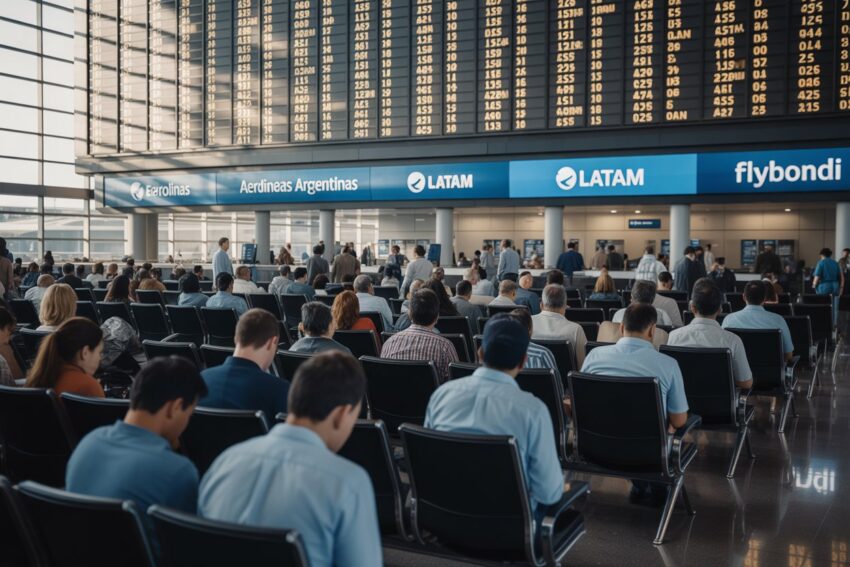
At Guarulhos terminals, the human cost of these disruptions quickly became visible. Departure lounges filled with families, business travellers and senior citizens, many glued to their phones or scanning flight status boards for updates. Airports across Brazil, including GRU, had previously reported similar disruptions over the last month due to crew shortages and scheduling pressures, but the latest spike marked one of the most significant days of travel disruption so far in 2026.
One traveller bound for Paris described the scene: “We arrived three hours early but after being shifted from gate to gate and hearing ‘delayed’ over and over again, it feels like we’re stuck in airport limbo.” Another passenger heading to Rio de Janeiro for a family event said the delays had already caused her to miss half the celebration, while a corporate executive noted the stress of rescheduling multiple meetings because of the late departure times.
Airport seating areas and refreshment zones were packed as airlines sought to distribute meal vouchers, water and accommodation options to those with long delays or cancelled flights. Ground staff worked around the clock to prioritise urgent rebookings and assist passengers with connecting flights.
Official Aviation Response and Passenger Rights
In response to the widespread disruption, Brazil’s Agência Nacional de Aviação Civil (ANAC) — the national civil aviation regulator — issued advisories urging passengers to stay updated on flight statuses and to use official airline and airport channels for real‑time information. ANAC’s guidelines, available on its official government website, emphasise passengers’ entitlement to rebooking, full refunds or hotel accommodation when delays exceed a certain threshold or flights are cancelled at short notice. ANAC also reminded airlines of their obligation to assist passengers with communication, food, water and accommodation when long delays occur, under Brazil’s passenger rights rules. These protections become particularly relevant during days of mass disruption such as the one at GRU. Airlines affected by the backlog have been issuing detailed instructions via SMS, email and airport information boards on how passengers can rebook flights, claim refunds or access compensation. In some cases, carriers provided alternative flights on other operators or rebookings through secondary airports, such as Campinas–Viracopos (VCP) and Rio de Janeiro–Galeão (GIG), to help ease passenger flow.
Impact on International and Domestic Routes
The ripple effects of the chaos at São Paulo didn’t stop at Brazil’s borders. International flights, particularly those heading to Europe and North America, were held up as aircraft and crews fell behind schedule. Connections through hubs like Miami, Madrid, Frankfurt and Lisbon were among the worst impacted, as delayed arrivals in São Paulo delayed departure slots and crew rotations for outbound flights as well. Domestic travel also suffered. Passengers on short‑haul flights to cities including Brasília, Porto Alegre and Salvador experienced delays, leading to long lines at customer service desks and ticketing counters as travellers sought alternatives or accommodation. For a city whose airport handles millions of passengers daily and serves as the main bridge between Brazil and the rest of the world, this level of disruption serves as a stark reminder of how interconnected modern aviation truly is — and how quickly one operational bottleneck can cascade into widespread travel strain.
Humanised Closing Paragraph
For many passengers caught up in the turmoil at São Paulo–Guarulhos International Airport, this was more than just numbers on a board — it was plans disrupted, celebrations postponed, reunions delayed and journeys turned uncertain. Yet among the frustration, stories of cooperation, patience and solidarity emerged, with travellers helping one another through long waits and anxious hours. As airlines and authorities work to restore normal operations, the day’s events offer a fresh test of resilience — not just for Brazil’s busiest airport, but for every traveller whose plans hang in the balance of modern aviation’s complexity.
The post Passengers Stranded at São Paulo-Guarulhos International Today as LATAM, GOL, Air France, KLM, and Other Airlines Cancel 9 and Delay 103 Flights, Disrupting Travel in São Paulo, Rio de Janeiro, Brasília, and More appeared first on Travel And Tour World.
Source: travelandtourworld.com


Sorry, the comment form is closed at this time.