


Patagonia Park, Argentina: Experience the Wild Steppe in New Eco-Friendly Wooden Yurts
Patagonia Park, Argentina: Experience the Wild Steppe in New Eco-Friendly Wooden Yurts
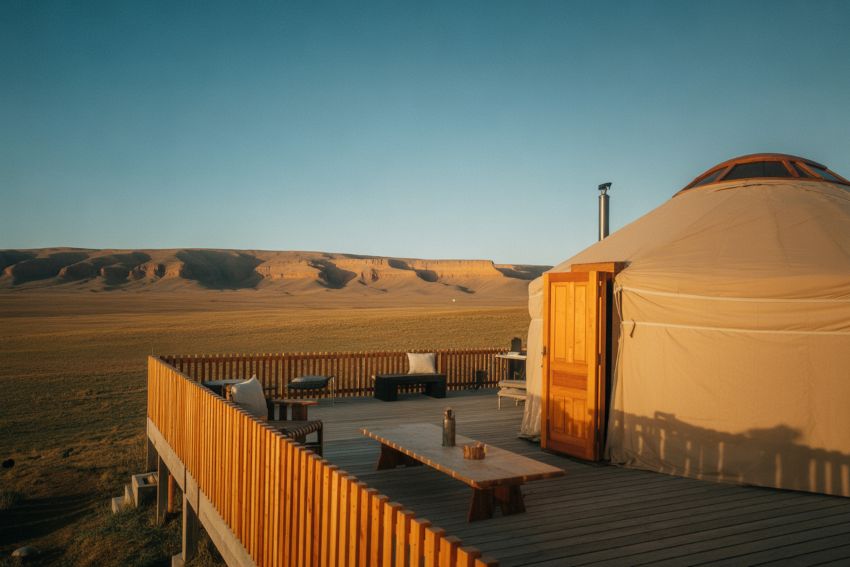
The introduction of a sophisticated accommodation tier in the heart of Patagonia Park has significantly transformed Argentina’s adventure tourism landscape. La Señalada campground offers traditional Patagonian wooden yurts for travellers looking to experience the beauty of the steppe without the hassle of traditional camping. These structures were specifically designed to act as a link between the ruggedness of a tent and the formality of an inn.
Every guest is protected from the notorious Patagonian winds thanks to the use of elevated parapets during the construction process. However, this architectural choice ensures that direct contact with the vast, open horizon is never lost. Inside, the yurts are outfitted with comfortable beds, high-quality warm clothing, and functional furniture, ensuring that you can rest well after a long day of exploring. This intentional design preserves an immersive natural experience while also providing the physical comforts of modern hospitality.
The Strategic Heart of Portal Cañadón Pinturas
The location of La Señalada was chosen with immense precision, as it functions as the central nervous system for the Portal Cañadón Pinturas. From this specific coordinate, a sprawling network of trails is accessed, allowing visitors to delve into the park’s geological and cultural history. Within a short walking distance, the Interpretation Center and the state-of-the-art Planetarium are situated, where the mysteries of the southern sky and the local ecosystem are decoded for the public.
Connectivity is a hallmark of this site. Direct routes from the campground are maintained toward the majestic Cañadón Pinturas and the Bajada de los Toldos. This geographic link is vital, as the world-renowned Cueva de las Manos—a UNESCO World Heritage site—is effectively integrated into the hiker’s reach. By positioning the yurts here, a seamless transition from rest to deep exploration is facilitated.
Navigating the Canyons and Plateaus
The diversity of the terrain is showcased through a trail system that encourages physical engagement with the earth. The Vertientes trail is frequently combined with the Guanaca trail by hikers seeking a comprehensive view of the region’s topography. From the vantage point of Cerro Amarillo, the dramatic confluence of the Cañadón Caracoles and Cañadón Pinturas is observed, revealing a landscape defined by ancient plateaus and deep-cut canyons.
For those who possess a higher degree of trekking experience, the 12-kilometre Huella de Gradin route is offered. This circuit was designed to allow for the exploration of varied ecological niches without the intervention of motorized vehicles. By relying on this pedestrian network, a deeper, more rhythmic connection with the silence of the steppe is fostered.
Wildlife Encounters and Ecological Restoration
The preservation of biodiversity is a core pillar of the Patagonia Park mission. Throughout the region, sightings of guanacos, choiques, and condors are common, as these species are protected within the park’s boundaries. In specific rocky enclaves, the elusive orange chinchillón—an endemic species of significant conservation value—can be spotted by patient observers.
Furthermore, educational outings are led by local guides to visit springs and wetlands that are currently under active restoration. During these excursions, the complex processes of ecological recovery are explained, and the correlation between habitat restoration and the return of native fauna is demonstrated. Through these guided interactions, the visitor’s role is shifted from a mere spectator to an informed witness of environmental healing.
Community and the Slow Travel Movement
At La Señalada, the visitor experience is extended far beyond the conclusion of the hiking trails. A communal atmosphere is encouraged through the use of shared bonfires and outdoor cooking facilities. Under the expansive Patagonian sky, encounters between families, solo travellers, and groups of friends are facilitated, turning the act of dining into a social ritual.
A minimum stay of two nights is recommended by park authorities to fully absorb the environment. This duration is suggested so that the combination of rigorous trekking, wildlife observation, and meditative rest can be balanced without the pressure of a hurried itinerary. In this space, the frenetic pace of modern life is slowed, and the internal clock of the traveller is successfully adapted to the ancient times of the steppe.
Sustainable Access and Reduced Footprint
The commitment to environmental stewardship is reflected in the logistical arrangements for visiting the park. Chaltén Travel has established a dedicated stop at Portal Cañadón Pinturas as part of a strategic partnership. Because of this addition, the park is now accessible by bus from several regional hubs, significantly reducing the carbon footprint associated with individual travel.
The professional park team coordinates internal transfers from the entrance to La Señalada for guests. Implementing this system reduces the reliance on private vehicles within the protected area. As a result, a more sustainable model of nature tourism is promoted, reducing the impact on the fragile Patagonian ecosystem for future generations.
The post Patagonia Park, Argentina: Experience the Wild Steppe in New Eco-Friendly Wooden Yurts appeared first on Travel And Tour World.
Source: travelandtourworld.com



Sorry, the comment form is closed at this time.