


Philippines Cruise Tourism Set to Explode in 2026: Filipino Seafarers at the Heart of a Major Tourism Boom!
Philippines Cruise Tourism Set to Explode in 2026: Filipino Seafarers at the Heart of a Major Tourism Boom!
In 2026, the Philippines is on the verge of a cruise tourism explosion as Manila and the Subic Bay Freeport Zone prepare to welcome thousands of international passengers. The Philippines’ booming cruise industry is being propelled not just by scenic destinations but also by the world-class Filipino seafarers whose friendly service and hospitality are setting new standards in the global cruise industry. With government-backed initiatives and an expanding cruise ship network, the Philippines is rapidly becoming one of the most sought-after cruise destinations in the Asia-Pacific region.
A CRUISE REVOLUTION: FILIPINOS BOOST TOURISM ECONOMY
Filipino seafarers have long been the backbone of the global maritime industry. As 2026 sees a massive surge in cruise arrivals, their contributions are more important than ever. The Philippines, known for its rich cultural heritage and stunning coastlines, is fast becoming the cruise hub of the Asia-Pacific. With Filipino crew members staffing various positions on cruise ships, from hospitality to technical services, their presence is shaping passenger experiences and driving the country’s tourism economy forward. The Filipino workforce is playing a critical role in this tourism resurgence.
CRUISE VISA WAIVER: A GAME CHANGER FOR TOURISTS
To further attract international cruise tourists, the Philippines government has introduced the Cruise Visa Waiver. This new policy allows passengers from certain countries to visit without requiring a traditional visa, making it easier than ever for travelers to embark on cruises that include the Philippines as a port of call. This initiative, backed by the Bureau of Immigration, is part of a broader push to streamline travel and encourage more cruise ship arrivals. By lowering barriers to entry, the Philippines is increasing its appeal as a premium cruise destination.
PORT INFRASTRUCTURE EXPANSION: READY FOR THE CRUISE RUSH
To support the growing number of cruise ships, Manila’s South Harbor and the Subic Bay Freeport Zone are undergoing major upgrades. These facilities are being expanded to handle larger ships, improving passenger flow and overall tourism infrastructure. The modernisation of these ports not only enhances the visitor experience but also bolsters the Philippines’ competitiveness in the global cruise tourism market. With state-of-the-art terminals and expanded services, the Philippines is set to welcome more cruise ships than ever before, positioning the country as a regional cruise hub.
FILIPINOS IN SERVICE: WHY THEY’RE KEY TO CRUISE SUCCESS
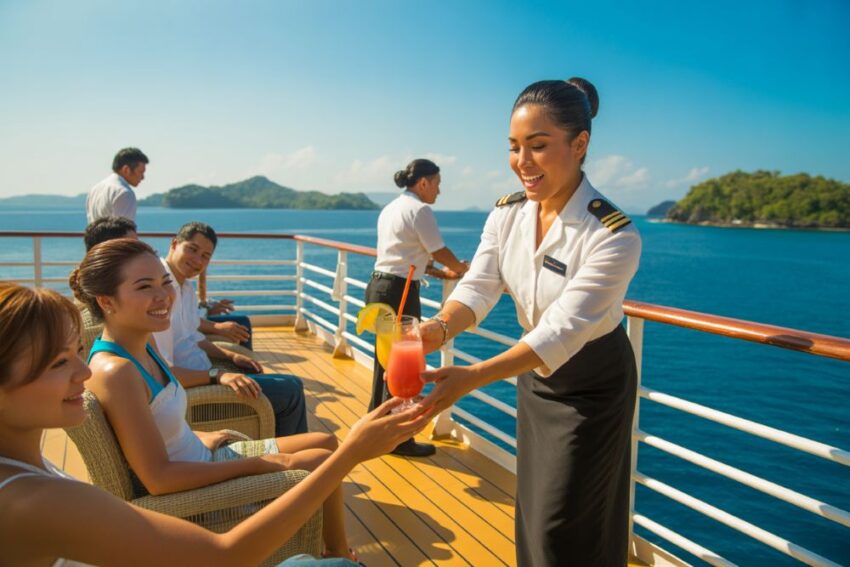
What sets the Philippines apart in the competitive world of cruise tourism is the quality of service provided by its Filipino workers. Known for their warm hospitality, Filipino seafarers are a vital part of the customer experience aboard cruise ships. Whether it’s offering a friendly smile at the reception desk or ensuring passengers’ comfort during their journey, Filipino crew members are making a lasting impact on the global cruise industry. Their dedication to excellent service has helped the Philippines maintain its reputation as a leading exporter of maritime workers, and it is these workers that are helping elevate the country’s tourism sector.
SUPPORTING FILIPINO SEAFARERS: A FOCUS ON JOBS AND WELFARE
The Philippine government, through the Overseas Workers Welfare Administration (OWWA), is committed to supporting its maritime workforce. These programs ensure that Filipino seafarers have access to healthcare, training, and employment support, allowing them to perform at their best and continue to provide world-class service aboard cruise ships. By protecting the welfare of its workers, the Philippines ensures that the cruise industry continues to thrive. Moreover, these workers’ remittances back home contribute significantly to the local economy, reinforcing the link between maritime employment and tourism growth.
FILIPINOS IN THE CRUISE SECTOR: A LOOK INTO THE FUTURE
As the cruise industry grows, the demand for Filipino seafarers is expected to rise. This presents a significant opportunity for the Philippines to boost employment, further solidify its position as a leading maritime nation, and attract more international tourists. By continuing to develop its ports, enhance visa policies, and invest in its maritime workforce, the Philippines is positioning itself as an undeniable cruise powerhouse in the Asia-Pacific region. Filipino workers will remain central to this effort, helping the nation’s tourism industry flourish for years to come.
LOOKING AHEAD: THE PHILIPPINES AS THE FUTURE CRUISE CAPITAL
As 2026 unfolds, the Philippines is well on its way to becoming the cruise capital of Asia, and Filipino seafarers are at the heart of this transformation. The country’s growing port infrastructure, combined with initiatives like the Cruise Visa Waiver, positions it for a remarkable tourism boom in the coming years. By capitalising on the global demand for cruise travel, the Philippines is not only benefiting from increased tourism revenues but is also fostering job creation and economic prosperity for its citizens. It’s clear that the country’s role in the global cruise market is poised to skyrocket.
The post Philippines Cruise Tourism Set to Explode in 2026: Filipino Seafarers at the Heart of a Major Tourism Boom! appeared first on Travel And Tour World.
Source: travelandtourworld.com



Sorry, the comment form is closed at this time.