


Poland Unleashes High-Tech Border Scanners: Here To Know Why Your Travel Experience Will Never Be The Same Again!
Poland Unleashes High-Tech Border Scanners: Here To Know Why Your Travel Experience Will Never Be The Same Again!
In the Republic of Poland, the EU’s Entry/Exit System (EES) and biometric registration for non-EU travellers have been formally launched. All land, air, and rail checkpoints made the switch to a totally computerised border management system on February 15, 2026. According to reports, the manual passport stamping method is being replaced with a centralised database that manages the automatic computation of Schengen stay allowances. It is anticipated that these faster processing times for returning visitors would greatly improve the effectiveness of Poland’s border crossings, establishing the country as a key player in the EU’s digital border reform and guaranteeing complete preparedness for upcoming systems such as ETIAS.
No More Passport Stamps: The Surprising New Way You’ll Enter Poland Starting Today
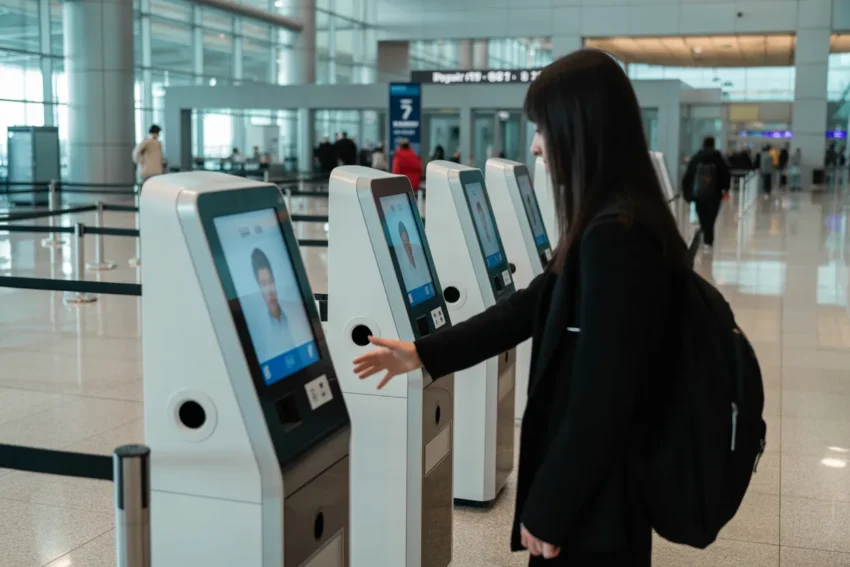
The landscape of European travel was fundamentally altered at midnight on 15 February 2026, as the manual processing of foreign nationals was permanently retired at Polish frontiers. It is observed that the newly installed self-service kiosks at Warsaw Chopin Airport and major land crossings like Medyka are now the primary points of contact for third-country nationals. Every traveler from outside the European Union is now required to provide facial images and four fingerprints during their first entry under the new protocols.
This data is securely stored for a period of three years, allowing subsequent visits to be processed through a simple facial match at an electronic gate. It is noted that this shift not only modernises the aesthetic of the border but serves as a robust defense against identity fraud. By eliminating the ambiguity of ink stamps, the Border Guard is provided with a precise, real-time record of every individual’s travel history, ensuring that the integrity of the Schengen Area is maintained with digital accuracy.
The 90-Day Trap: How This Stealthy AI System Is Catching Every Overstayer
One of the most significant operational changes involves the automated tracking of the 90-day stay limit within any 180-day period. It is reported that the centralised EES software now calculates these allowances instantaneously upon scanning a traveller’s biometric profile. This automation removes the possibility of human error during the calculation of complex travel patterns. If a visitor attempts to enter the country after their legal allowance has been exhausted, an immediate alert is triggered on the officer’s terminal, leading to a mandatory refusal of entry.
For the hundreds of thousands of Ukrainian citizens who regularly commute across the eastern frontier for work and trade, this system introduces a new level of strict compliance. It is observed that temporary protection holders and frequent business commuters must now be more vigilant than ever regarding their digital footprint. The system has been designed to be unforgiving towards those who exceed their permitted duration, as the digital record cannot be altered or obscured once the exit date has been missed.
Airlines In The Crosshairs: The Massive Fines Facing Carriers Over New Compliance Rules
The implementation of the EES has placed an unprecedented burden of responsibility on commercial carriers, particularly airlines and international bus operators. It is confirmed that airline compliance is now strictly monitored, with companies facing potential fines of up to €5,000 for every passenger boarded who does not meet the necessary biometric entry requirements. To mitigate this risk, many carriers have been forced to update their check-in software to interface with the EU’s central databases before a boarding pass can be issued.
At major hubs such as John Paul II International Airport Kraków–Balice, ground staff have been retrained to assist travelers in navigating the new digital hurdles. There is a noted concern among industry leaders regarding the impact on turnaround times, as the initial registration of biometrics can take significantly longer than a traditional check. To prevent a total collapse of the travel network during peak hours, carriers have been instructed to divert first-time users to dedicated manual lanes where Border Guard officers can facilitate the enrollment process without obstructing the flow of frequent, pre-registered travelers.
Corporate Chaos Averted: The Genius Strategies Companies Are Using For Non-EU Staff
Multinational corporations with significant operations in Poland have been forced to rapidly adapt their company strategies for managing non-EU staff. It is observed that mobility teams are now utilising the EES pilot data to predict potential delays for their executive and technical personnel. Many firms have begun a process of pre-enrolling their employees’ fingerprints during the visa application phase at consulates, thereby shaving critical minutes off their arrival time at the border.
The business implications extend beyond just travel time; there is a renewed focus on the legal status of assignees. Companies are being advised to conduct thorough internal audits of their employees’ travel logs to ensure that no digital alerts are triggered during high-stakes business trips. It is noted that the loss of a key project lead due to an overstay alert can result in significant financial damages, making the management of the EES record as vital as the management of a work permit.
ETIAS Is Coming: Why Poland’s Border Upgrade Is Just The Tip Of The Iceberg
The successful activation of the EES is being framed by the Ministry of the Interior as a prerequisite for the next phase of the digital border revolution: the European Travel Information and Authorisation System (ETIAS). It is anticipated that by late 2026, most visa-exempt travelers will be required to obtain a pre-travel authorisation similar to the American ESTA. The current biometric kiosks are already equipped with the hardware necessary to read the QR codes that will be issued under the ETIAS framework.
By taking a proactive role in this digital transition, Poland has positioned itself as a primary testing ground for the future of European security. The integration of facial recognition, fingerprinting, and pre-travel vetting is intended to create a one-stop process that could eventually reduce land-border crossings to under 30 seconds for verified individuals. As the digital fence becomes more sophisticated, the focus of the Border Guard is shifting from administrative paper-checking to high-level security analysis, ensuring that the nation remains both a welcoming host and a secure gateway to the heart of Europe.
The post Poland Unleashes High-Tech Border Scanners: Here To Know Why Your Travel Experience Will Never Be The Same Again! appeared first on Travel And Tour World.
Source: travelandtourworld.com



Sorry, the comment form is closed at this time.