


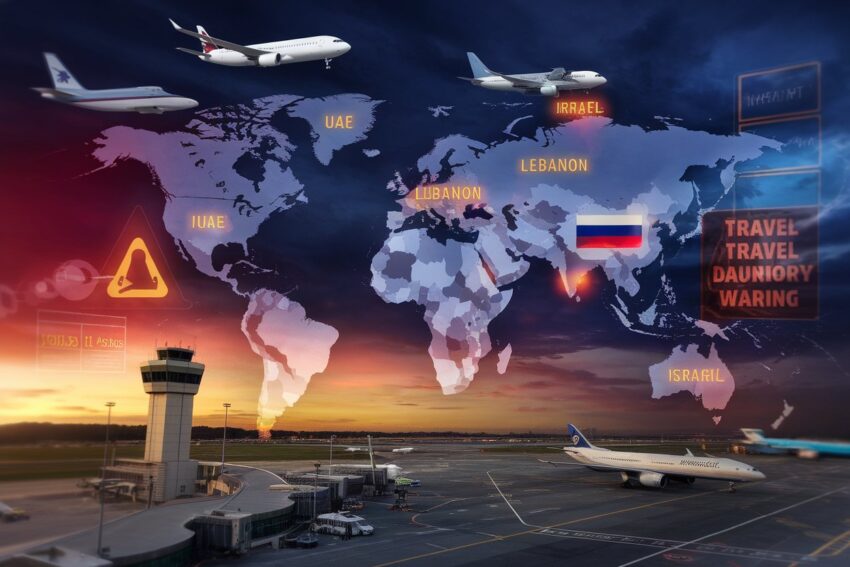
Qatar Joins UAE, Lebanon, Iraq, Russia, Israel and Palestine Under Canada “Avoid All Travel” New Advisory, Latest Update is Here
Qatar Joins UAE, Lebanon, Iraq, Russia, Israel and Palestine Under Canada “Avoid All Travel” New Advisory, Latest Update is Here
A dramatic shift is unfolding in global travel safety alerts as Qatar joins UAE, Lebanon, Iraq, Russia, Israel and Palestine under Canada “Avoid All Travel” new advisory, sending shockwaves across international tourism and aviation sectors. The latest update from Canada places Qatar alongside UAE, Lebanon, Iraq, Russia, Israel and Palestine under the strongest warning level, signalling that the situation has become increasingly sensitive for travellers. As the US-Israel Iran conflict continues to intensify, governments worldwide are monitoring security developments, and Canada’s decision to add Qatar to the “Avoid All Travel” advisory has triggered renewed attention across the travel industry.
Now, as Qatar joins UAE, Lebanon, Iraq, Russia, Israel and Palestine under Canada “Avoid All Travel” new advisory, the latest update highlights how geopolitical tensions can rapidly reshape global travel advisories. Airports, airlines and travellers are closely watching the developments because the US-Israel Iran conflict is creating new uncertainty across the Middle East and beyond. With Qatar, UAE, Lebanon, Iraq, Russia, Israel and Palestine repeatedly appearing in Canada’s Avoid All Travel advisory, concerns are growing about flight disruptions, security risks and travel planning challenges. Travel And Tour World urges readers to read the entire story to understand why Qatar joining UAE, Lebanon, Iraq, Russia, Israel and Palestine under Canada’s “Avoid All Travel” advisory has become one of the most closely watched travel safety developments in the latest update.
The Government of Canada has issued a series of urgent travel advisories for several countries across the Middle East and Eastern Europe, warning its citizens to avoid all travel to Qatar, the United Arab Emirates, Lebanon, Iraq, Russia and Israel and Palestine, while advising travellers to exercise a high degree of caution in Azerbaijan.
These advisories were updated on 5 March 2026, reflecting growing geopolitical tensions, security instability, and escalating military conflict in multiple regions. The warnings come as the global travel industry continues to grapple with the ripple effects of intensifying hostilities involving Israel, Iran, and their allies, which have already triggered airspace restrictions, flight disruptions, and large-scale evacuation plans.
Canadian authorities say the travel warnings are designed to protect citizens from rapidly deteriorating security conditions, potential terrorist threats, and unpredictable military escalation.
Canada’s Travel Advisory System Explained
Canada’s travel advisory framework categorises destinations into four levels depending on risk. These include:
Take normal security precautions
Exercise a high degree of caution
Avoid non-essential travel
Avoid all travel
The final category—Avoid all travel—represents the highest possible warning. It means that Canadians are strongly advised not to visit the destination due to serious security threats such as armed conflict, terrorism, or widespread instability.
When a country receives this designation, the government also warns that consular services may be limited or impossible if a crisis escalates.
Middle East Tensions Drive Travel Alerts
The most significant cluster of advisories relates to countries across the Middle East. The Canadian government has warned travellers to avoid visiting Qatar, the United Arab Emirates, Lebanon, Iraq, and Israel and Palestine, citing ongoing security concerns linked to the expanding regional conflict.
Over the past weeks, the Middle East has witnessed rising military tensions that have begun affecting aviation, tourism, and diplomatic operations. Several missile alerts, drone incidents, and airspace disruptions have been reported across the Gulf region.
These developments have caused major airlines to reroute flights and triggered heightened security measures at international airports.
Authorities warn that the situation remains highly unpredictable, with security conditions capable of deteriorating rapidly without warning.
Lebanon Remains One of the Most Dangerous Destinations
Among the countries listed in the advisory, Lebanon remains one of the most volatile. Canada has long advised citizens to avoid travel to Lebanon due to the country’s fragile political environment and proximity to ongoing regional conflicts.
Security experts warn that tensions between Israel and militant groups along the southern border could escalate quickly, potentially placing civilians and travellers at risk.
In addition to military concerns, Lebanon continues to face severe economic challenges and political instability, which have weakened state institutions and strained public services.
These factors contribute to what Canadian authorities describe as a complex and unpredictable security environment.
Iraq and Israel Under Strict Warning
Iraq has also been placed under the strictest advisory level. The country continues to face threats from extremist groups, armed militias, and regional power struggles.
Canadian officials caution that kidnappings, terrorist attacks, and armed clashes remain significant risks for travellers.
Similarly, the advisory for Israel and Palestine reflects the continuing armed conflict and humanitarian crisis in the region. The situation has resulted in widespread security operations, infrastructure damage, and severe restrictions on movement.
Government officials emphasise that travellers may find it difficult to access transport, healthcare services, or safe accommodation during periods of escalation.
Russia Also Included in “Avoid All Travel” List
Outside the Middle East, Russia remains under Canada’s highest travel warning due to its ongoing war in Ukraine and deteriorating diplomatic relations with Western nations.
Canadian authorities warn that citizens travelling to Russia may face heightened surveillance, legal uncertainties, and limited consular assistance.
In addition, the ongoing conflict and international sanctions have significantly reduced commercial flights and financial services connecting Russia with the rest of the world.
The advisory also highlights the risk of sudden policy changes that could affect foreign travellers.
Azerbaijan Receives Lower Advisory but Still Risky
Unlike the other countries in the advisory list, Azerbaijan has not been placed under a full travel ban. Instead, Canada advises travellers to exercise a high degree of caution when visiting the country.
This warning reflects the region’s lingering tensions following conflicts in the South Caucasus, particularly along the border with Armenia.
While Azerbaijan continues to receive international visitors and business travellers, Canadian authorities caution that security conditions near disputed territories remain unstable.
Travellers are advised to monitor local developments closely and avoid border areas.
Impact on Global Travel and Aviation
The travel advisories arrive at a time when global aviation networks are already facing significant disruption.
Airspace restrictions in parts of the Middle East have forced airlines to reroute long-haul flights between Europe and Asia. Some airlines have also suspended services to destinations within conflict-affected regions.
Industry analysts warn that these developments could have wider consequences for tourism markets, particularly in countries heavily dependent on international travel.
Travel insurance providers have also begun issuing warnings that coverage may not apply if travellers ignore government advisories.
Government Urges Canadians to Monitor Updates
Canadian officials are urging travellers to regularly check the government’s travel advisory website before making international travel plans.
Authorities also recommend that Canadians register with the Registration of Canadians Abroad (ROCA) system so they can receive emergency updates and assistance if conditions change suddenly.
Travellers already in high-risk destinations are advised to remain vigilant, follow instructions from local authorities, and prepare contingency plans in case evacuation becomes necessary.
Growing Concerns Across the Travel Industry
The latest advisories underscore the increasingly complex relationship between geopolitics and global tourism.
As military tensions and diplomatic disputes intensify, travel advisories are becoming a crucial tool for governments attempting to safeguard citizens abroad.
For airlines, tourism boards, and travellers alike, these warnings highlight how quickly international travel can be disrupted when geopolitical crises escalate.
With the Middle East remaining at the centre of global attention, travel experts say the situation will likely continue to evolve in the coming weeks.
For now, Canadian authorities maintain that caution and preparedness remain the most important safeguards for travellers navigating an increasingly uncertain world.
The post Qatar Joins UAE, Lebanon, Iraq, Russia, Israel and Palestine Under Canada “Avoid All Travel” New Advisory, Latest Update is Here appeared first on Travel And Tour World.
Source: travelandtourworld.com



Sorry, the comment form is closed at this time.