


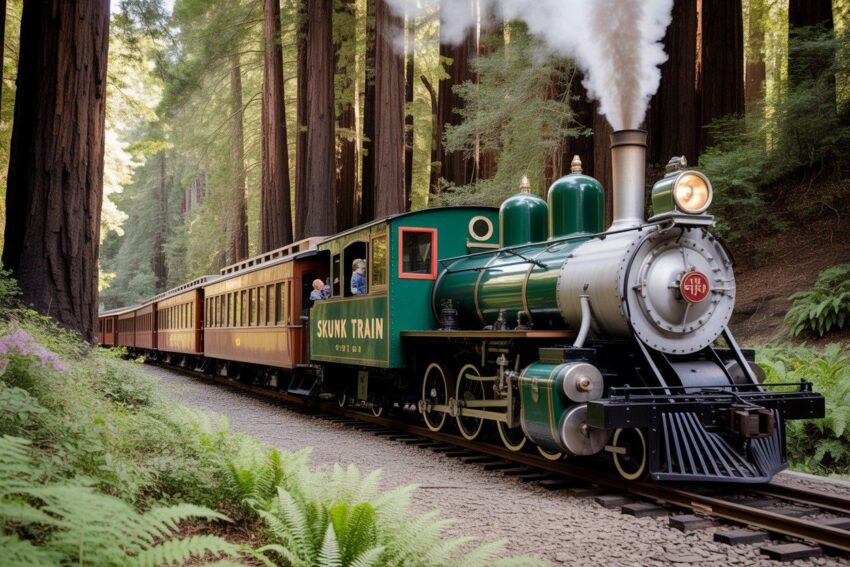
Revolutionary Rail-and-Trail Vision to Transform Mendocino Coast, Skunk Train Combines Historic Charm with Eco-Friendly Recreation, Promising Unprecedented Growth for Fort Bragg and the Redwood Coast
Revolutionary Rail-and-Trail Vision to Transform Mendocino Coast, Skunk Train Combines Historic Charm with Eco-Friendly Recreation, Promising Unprecedented Growth for Fort Bragg and the Redwood Coast
Mendocino Railway, operating along Northern California’s renowned Skunk Train route, is pursuing a groundbreaking rail-and-trail strategy that aims to combine historic rail service with modern recreational facilities. This hybrid approach seeks to simultaneously preserve the scenic beauty of the Mendocino Coast while accommodating both train passengers and Eco-friendly cyclists and pedestrians. The vision could prove pivotal in driving sustainable growth for Fort Bragg, Willits, and the greater Redwood Coast region.
The Skunk Train: A Legacy of Heritage and Innovation
The Mendocino Railway, widely recognized for its iconic Skunk Train, traces a 40-mile route from Fort Bragg on the Pacific Coast to Willits in the interior. Known for its picturesque journey through towering redwood forests, the route crosses pristine salmon habitats and historic logging sites that tell the story of the area’s timber industry. While the Skunk Train continues to attract thousands of visitors for heritage excursions, the railway is looking to transform its role in the modern transportation landscape.
Rather than focusing solely on nostalgic rides, Mendocino Railway is pushing to reframe its tracks as part of a contemporary transportation network that can serve both tourism and the local community. The company envisions an integrated corridor, one that includes a multi-use trail running parallel to the tracks, providing cyclists and pedestrians with a safe, car-free space for travel and recreation.
A Dual Purpose: Balancing Rail and Trail Needs
Mendocino Railway’s rail-and-trail proposal is a forward-thinking concept that could redefine how rural infrastructure is utilized. Unlike traditional rail-to-trail conversions, which typically involve removing rail tracks to make space for recreational trails, the railway’s plan would retain its federally regulated rail status while adding a separate trail alongside it. This will allow for the continuation of heritage train services, while also meeting the growing demand for recreational spaces and active transport options.
The idea, according to railway officials, is to create a multi-functional corridor that can serve local needs, attract tourism year-round, and support climate change initiatives. The company believes this approach offers a sustainable model that can accommodate future passenger or freight services without sacrificing recreational opportunities for residents and visitors.
Riding the Wave of the Great Redwood Trail
This innovative approach coincides with the momentum building around California’s Great Redwood Trail, a project aimed at developing a 200-mile-long trail stretching from San Francisco Bay to Humboldt Bay. This trail, primarily located inland, follows the old Northwestern Pacific Railroad alignment, with segments already in operation in communities like Ukiah and Willits. These active trails serve as a model for Mendocino Railway’s vision, proving that rail and trail systems can coexist harmoniously when designed with adequate separation and safety measures.
Mendocino Railway executives believe that their coastal route will benefit from the success of the Great Redwood Trail. Not only will the rail and trail coexist, but the latter will also drive visitors to experience the Skunk Train and other local attractions. The railway is confident that the connectivity between rail and trail will enhance tourism opportunities along the Mendocino Coast, drawing hikers and cyclists into the region and connecting them to historic sites, local shops, and future waterfront developments.
Driving Innovation with Sustainable Technology
Beyond tourism, Mendocino Railway is linking its rail-and-trail strategy to new technologies aimed at reducing emissions and easing traffic congestion. In 2025, the company partnered with Glid, a sustainable mobility startup, to launch what they claim will be the world’s first autonomous hybrid truck-to-rail pilot program. The project will demonstrate how freight can be shifted from highways to rail lines using hybrid-powered vehicles that operate on both roads and tracks.
This initiative could have significant benefits for rural freight transport, providing a lower-emission alternative to truck-heavy logistics and supporting the broader goals of sustainable development. If successful, the pilot could provide a model for other rural communities across North America, where traditional rail service may not be economically viable, but autonomous, flexible solutions could reduce emissions and traffic congestion.
Legal and Environmental Considerations
Mendocino Railway’s ambitious plan is not without challenges. In recent months, the company has successfully defended its federally regulated status with the U.S. Surface Transportation Board, which ruled that the railway retains rail carrier rights even during times when it is not actively transporting freight. This victory has bolstered the railway’s position in ongoing disputes with local authorities over land use and development permits.
Additionally, environmental concerns have arisen around the restoration of the California Western Railroad alignment, particularly along sensitive waterway corridors that support protected salmon species. The California Coastal Commission has called for an extensive environmental review of the proposed infrastructure upgrades, including the replacement of railroad ties and the rehabilitation of bridges. Mendocino Railway maintains that the upgrades are essential for the safety and sustainability of the corridor and that modern practices can mitigate potential environmental risks.
Economic Impact and Community Support
Despite these hurdles, the potential economic benefits of the rail-and-trail project are significant. Fort Bragg’s economy already relies heavily on tourism, with the Skunk Train serving as one of the town’s key attractions. Local business leaders argue that creating a safe, multi-use corridor could extend the tourism season and encourage visitors to explore the area beyond the summer months. A connected trail would also improve access to natural attractions like Glass Beach and the Pudding Creek Trestle, and promote sustainable travel between the town and other points of interest.
Local planners also see the potential for similar benefits in Willits and other inland communities. With the addition of the trail, these areas could attract cyclists, hikers, and eco-tourists, stimulating business in restaurants, shops, and local accommodations. For residents, the trail offers an affordable, healthy transportation option, especially as traffic congestion along the coast increases.
Moving Forward with Stakeholder Engagement
As the Mendocino Railway moves forward with its rail-and-trail vision, it faces crucial decisions in Fort Bragg and beyond. In particular, ongoing negotiations over the redevelopment of the former Georgia Pacific mill site, an oceanfront property in Fort Bragg, could help define the future of both the railway and the proposed trail system. Environmental reviews and discussions with local agencies will play a pivotal role in shaping the final design and determining how the corridor will evolve.
The future of Mendocino Railway’s rail-and-trail initiative will depend on collaboration between the railway, local governments, environmental organizations, and the community. With careful planning and continued innovation, the region could become a model for sustainable, multi-functional transport corridors that benefit both locals and visitors while protecting the environment.
The post Revolutionary Rail-and-Trail Vision to Transform Mendocino Coast, Skunk Train Combines Historic Charm with Eco-Friendly Recreation, Promising Unprecedented Growth for Fort Bragg and the Redwood Coast appeared first on Travel And Tour World.
Source: travelandtourworld.com



Sorry, the comment form is closed at this time.