


Russia’s Moscow Metro Testing of Driverless Train on Big Circle Line Already Set for Two Thousand Twenty Six Full Autonomous Service Expected by Two Thousand Thirty A New Era Starting Soon: All You Need to Know
Russia’s Moscow Metro Testing of Driverless Train on Big Circle Line Already Set for Two Thousand Twenty Six Full Autonomous Service Expected by Two Thousand Thirty A New Era Starting Soon: All You Need to Know
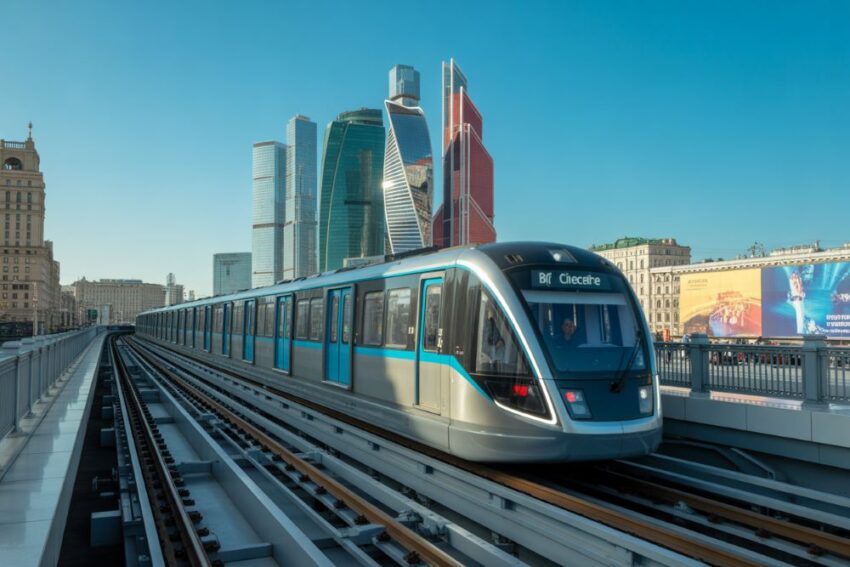
In an ambitious leap toward modernizing its public transportation, Moscow Metro has initiated the trial phase for its first-ever driverless train on the Big Circle Line. The move marks a significant milestone in Russia’s journey towards autonomous urban transport systems. This new phase of innovation comes with advanced software capabilities, developed by the city’s Centre for Research & Development of Autonomous Transport. The goal is to reduce human intervention while ensuring safety and efficiency on the city’s bustling metro system.
The Current Testing Phase What’s Happening Now?
TopicDetailsCurrent Test PhaseTrain operating without passengers, with an operator on board for safety monitoring. Focus on automatic acceleration, braking, and speed control. Train detects people and obstacles on tracks with advanced machine vision. Real-time communication with the dispatch center.Train NameMoskva-2024Train Composition97% of components are locally sourced from Russian manufacturers.Autonomous Systems DevelopmentDeveloped by the Centre for Research & Development of Autonomous Transport in Moscow.Testing Goal (2026)Ensure driverless train can operate alongside other metro trains. Still no passengers during testing phases until end of 2026.Passenger Service Start (2027)First passengers expected in 2027 on the driverless train.Full Autonomous Line (2030)First fully autonomous metro line expected by 2030. Goal: Reduce operational costs, improve efficiency, and create a safer metro system.Benefits for Moscow’s TransportIncreased efficiency and safety in metro operations. Reduced traffic congestion and better energy efficiency. A global model for autonomous transportation.
At the moment, the driverless metro train is undergoing testing without passengers on board. Instead, an operator remains inside the train to monitor its functions and ensure the system operates safely. While it may sound like a futuristic experiment, this step is crucial to ensure everything works seamlessly before passengers are welcomed on board. The key focus of this testing phase is on perfecting the autonomous operation of the train. The system is being tested for automatic acceleration, braking, and speed control. This means that the train is learning how to handle different speeds and stops while navigating its route with precision. The safety of the system is a top priority, so the train is also being tested to detect people and obstacles on the tracks, ensuring there’s no danger to commuters.
Moreover, the train is equipped with advanced machine vision systems, which can identify irregularities or emergency situations, allowing the system to respond instantly. In addition to that, there is real-time communication between the train and the central dispatch center, ensuring that any potential issues are quickly addressed. The testing will continue in multiple stages, each ensuring that the train is ready for passenger service when the time comes.
The Technology Behind the Train
The test train, named the Moskva-2024, showcases Russia’s growing capabilities in technology. A significant feature of this project is that 97% of the train’s components are made in Russia, demonstrating the country’s efforts to bolster its own tech industry. This move aligns with Russia’s broader strategy of reducing its reliance on foreign-made parts and boosting local manufacturing.
The development of the autonomous systems that power the train was led by the Centre for Research & Development of Autonomous Transport in Moscow. This institution has been working on creating smarter transportation solutions for the city, including autonomous vehicles like buses and taxis. With this new step into the world of metro transport, Russia is setting the stage for more technological advancements in everyday urban mobility.
The Road to Full Autonomy What’s Next?
While the initial testing phase is crucial for safety, the ultimate goal is to have the first fully autonomous metro train running on the Big Circle Line by 2027. However, it’s important to note that, initially, this will be done without passengers, as the focus will still be on refining the system and making sure it adheres to Moscow’s tight metro schedules.
By 2026, the goal is to have the first driverless train operating alongside other traditional metro trains, following the same time intervals. Though this will still be a test phase, it will allow the system to become integrated into the daily operations of the metro.
Looking even further ahead, Moscow plans to launch a fully autonomous metro line by 2030. This ambitious project is expected to significantly improve the efficiency and safety of the city’s metro system, setting a new global standard for metro operations.
How This Will Impact Moscow’s Transport System
The introduction of driverless trains in Moscow has the potential to revolutionize urban transport. This move could offer numerous benefits to both locals and tourists visiting the city, such as:
Increased Efficiency: With automated systems in place, trains will operate more efficiently, reducing delays and improving overall service.
Enhanced Safety: The technology can reduce human errors, which are often responsible for accidents in traditional metro systems.
Energy Efficiency: With better control over speed, acceleration, and braking, the system will consume less energy, helping to create a more environmentally friendly metro service.
Smoother Travel Experience: Autonomous systems can make for a quieter, smoother, and more comfortable journey for passengers.
Moreover, this innovation will help alleviate the growing traffic congestion that many major cities face today. With more people able to rely on the metro system, fewer will need to use personal cars, reducing the overall number of vehicles on the roads.
Moscow’s Vision for the Future A Model for Other Cities
Moscow is not just aiming to improve its own transportation system but also to set a global standard. As cities around the world work to modernize their infrastructure, Moscow’s focus on autonomous trains could serve as a model for other urban areas that want to embrace cutting-edge technology in public transport.
The arrival of driverless metro trains is just the beginning. In the future, we may see self-driving buses and taxis, all operating seamlessly within a well-coordinated, autonomous transport network. Moscow’s focus on local technology development means that the city will not only benefit from these innovations but also share its expertise with the rest of the world.
What This Means for Moscow’s Future Travel
The trial of the driverless train on Moscow’s Big Circle Line is a glimpse into the future of urban mobility. With the first autonomous metro service expected by 2027 and a fully autonomous line set for completion by 2030, Moscow is leading the way toward smarter, more sustainable transportation systems.
This forward-thinking project will help reduce operational costs, enhance safety, and improve energy efficiency, all of which will benefit both Moscow residents and travelers. As the city moves toward this new era of transportation, it is not just improving its own infrastructure, but also setting a global example of how technology can transform the way we travel.
The post Russia’s Moscow Metro Testing of Driverless Train on Big Circle Line Already Set for Two Thousand Twenty Six Full Autonomous Service Expected by Two Thousand Thirty A New Era Starting Soon: All You Need to Know appeared first on Travel And Tour World.
Source: travelandtourworld.com



Sorry, the comment form is closed at this time.