


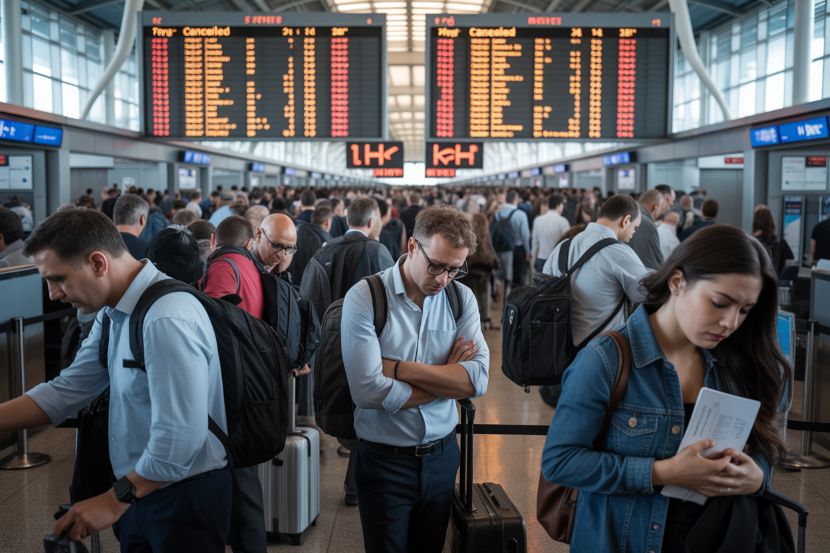
Severe Air Traffic Chaos Hits India with 10 Flights Grounded and 491 Delayed Across Major Airports in Delhi, Chennai, and Bengaluru – Akasa Air, IndiGo, and Air India Affected, Leaving Passengers Stranded – What to Know About the Cancellation Crisis and Affected Routes
Severe Air Traffic Chaos Hits India with 10 Flights Grounded and 491 Delayed Across Major Airports in Delhi, Chennai, and Bengaluru – Akasa Air, IndiGo, and Air India Affected, Leaving Passengers Stranded – What to Know About the Cancellation Crisis and Affected Routes
Severe air traffic chaos has hit India, leaving 10 flights grounded and 491 delayed across major airports in Delhi, Chennai, and Bengaluru. The disruptions have primarily affected Akasa Air, IndiGo, and Air India, causing a significant ripple effect on travelers’ plans. Passengers have been left stranded, with extended waiting times and uncertainty about rebooking options. As the weather conditions worsen, these airlines have been forced to cancel and delay flights, impacting both domestic and international routes. The airports, already bustling with travelers, are now dealing with a high volume of frustrated passengers. The situation has created confusion and inconvenience, particularly for those with connecting flights or time-sensitive commitments. If you’re traveling through these regions, it’s crucial to stay updated on your flight status. Read on to understand the full extent of the cancellations, delays, and what you need to know about the affected routes.
Flight Cancellations Breakdown
Akasa Air, IndiGo, and Air India collectively canceled a total of 10 flights due to adverse weather conditions, most of which were scheduled on peak travel days. These cancellations have had ripple effects across various locations, including India, international destinations, and cities in Southeast Asia. Passengers who had planned to fly out on these flights found themselves at the mercy of weather disruptions that left them with limited options for rescheduling.
Akasa Air alone had four cancellations. IndiGo canceled two flights, while Air India grounded four of its aircraft. The reasons for these disruptions are mainly attributed to unforeseen weather phenomena such as storms, reduced visibility, and unfavorable wind conditions, all of which hindered the airlines’ ability to maintain their scheduled routes.
Key Data from the Cancellation Tables
Akasa Air
Total Cancellations: 4 flights
Affected Routes: Bengaluru to Bagdogra and vice versa; Bengaluru to Jeddah
Type of Aircraft: B38M
Departure Times: From 7:15 AM to 9:00 PM (IST)
IdentTypeOriginDestinationScheduled Departure Time
AKJ1372B38MBengaluru Int’l (BLR / VOBL)Bagdogra (IXB / VEBD)Sun 07:15AM IST
AKJ1850B38MBengaluru Int’l (BLR / VOBL)Bagdogra (IXB / VEBD)Sun 10:00AM IST
AKJ1851B38MBagdogra (IXB / VEBD)Bengaluru Int’l (BLR / VOBL)Sun 01:25PM IST
AKJ576B38MBengaluru Int’l (BLR / VOBL)King Abdulaziz Int’l (JED / OEJN)Sun 09:00PM IST
IndiGo
Total Cancellations: 2 flights
Affected Routes: Biju Patnaik (BBI) to Indira Gandhi Int’l (DEL); Chennai Int’l (MAA) to Chatrapati Shivaji Int’l (BOM)
Type of Aircraft: A320
Departure Times: 6:25 PM and 11:30 PM (IST)
IdentTypeOriginDestinationScheduled Departure TimeIGO1612A320Biju Patnaik (BBI / VEBS)Indira Gandhi Int’l (DEL / VIDP)Sat 06:25PM ISTIGO1608A320Chennai Int’l (MAA / VOMM)Chatrapati Shivaji Int’l (BOM / VABB)Sat 11:30PM IST
Air India
Total Cancellations: 4 flights
Affected Routes: Bengaluru to Delhi; Cochin to Delhi; San Francisco to Vienna and back
Type of Aircraft: A320, A20N, B77W
Departure Times: From 4:40 PM (PST) to 11:10 PM (IST)
IdentTypeOriginDestinationScheduled Departure Time
AIC2814A320Bengaluru Int’l (BLR / VOBL)Indira Gandhi Int’l (DEL / VIDP)Sat 10:10PM IST
AIC1858A20NCochin Int’l (Kochi Int’l) (COK / VOCI)Indira Gandhi Int’l (DEL / VIDP)Sat 11:10PM IST
AIC180B77WSan Francisco Int’l (KSFO)Vienna Int’l (Schwechat) (VIE / LOWW)Sat 04:40PM PST
AIC180B77WVienna Int’l (Schwechat) (VIE / LOWW)Chatrapati Shivaji Int’l (BOM / VABB)Sun 02:05PM CET
Impact on Passengers
Passengers have experienced significant inconvenience due to the flight cancellations. Many were forced to spend hours at airports, unable to find immediate alternative routes. The frustration was compounded by long queues at customer service desks and lack of available rebookings, especially during peak hours.
Most airlines, including Akasa Air, IndiGo, and Air India, have offered rebooking options, but due to the overwhelming number of affected flights, seats on later flights were scarce. Refunds and compensations were also delayed for many passengers. The stranded passengers’ plight, including those who missed crucial events or had connecting flights to catch, further illustrates the ripple effects of weather-related disruptions.
Tourism in Affected Regions
The cancellations, although caused by weather issues, have put a major dent in local tourism in the affected regions. Cities like Bengaluru, Bagdogra, and Kochi saw significant travel disruption, with hundreds of tourists unable to arrive at their destinations. In particular, the travel delays have caused a reduction in tourism during key holiday seasons, affecting both inbound and outbound tourism.
Local tourism businesses and hotels that relied on the steady flow of visitors from major cities like Delhi, Bengaluru, and Chennai suffered a setback. However, the cancellations have also served as a reminder to both airlines and tourism boards to invest in better communication and logistics during such unexpected events.
Affected Airports
Below is a detailed list of the airports affected by the flight cancellations for each airline:
Akasa Air
Bengaluru International Airport (BLR / VOBL)
Bagdogra Airport (IXB / VEBD)
King Abdulaziz International Airport (JED / OEJN)
IndiGo
Biju Patnaik International Airport (BBI / VEBS)
Indira Gandhi International Airport (DEL / VIDP)
Chennai International Airport (MAA / VOMM)
Chatrapati Shivaji International Airport (BOM / VABB)
Air India
Bengaluru International Airport (BLR / VOBL)
Indira Gandhi International Airport (DEL / VIDP)
Cochin International Airport (COK / VOCI)
San Francisco International Airport (KSFO)
Vienna International Airport (VIE / LOWW)
Chatrapati Shivaji International Airport (BOM / VABB)
Key Regions Affected
Here’s a breakdown of the key regions impacted by the cancellations:
Akasa Air
Bengaluru to Bagdogra: Impacting tourist routes, business travelers, and connecting flights between major hubs in India and North-East India.
Bengaluru to Jeddah: The route faced disruptions impacting pilgrims and business travelers en route to Saudi Arabia.
IndiGo
Biju Patnaik (BBI) to Indira Gandhi Int’l (DEL): Primarily affecting passengers traveling from Bhubaneswar to Delhi, including domestic tourists.
Chennai to Mumbai: Popular for business travelers and tourists, this route saw cancellations that delayed corporate trips and leisure vacations.
Air India
Bengaluru to Delhi: Affecting domestic travelers, business flights, and people attending important events.
Cochin to Delhi: Affected both leisure and business travelers in the region.
International Routes (San Francisco and Vienna): Long-haul passengers were particularly hit hard by cancellations, missing conferences, family reunions, or important meetings.
The Ripple Effect on Local Tourism: A Wake-Up Call for Recovery
In regions like Bengaluru, Bagdogra, and Kochi, the disruption caused by flight cancellations during the peak tourist season was nothing short of devastating. Popular tourist spots near Bagdogra, including Darjeeling and Sikkim, which rely heavily on a constant stream of visitors, experienced sharp declines in footfall. This sudden downturn in visitor numbers led to significant losses for local hotels, transport services, and other small businesses dependent on tourism. The region’s economy, already vulnerable due to external factors like the pandemic, found itself further challenged by these unforeseen disruptions.
Moreover, major cities like Delhi and Chennai faced a similar fate. Group tours, which are a key source of revenue for cultural and heritage exploration companies, saw delays and cancellations, leaving many tourists without their planned itineraries. For those traveling to experience India’s rich history and cultural landmarks, the cancellations directly affected their ability to visit famous historical sites, nature reserves, and leisure resorts. The tourism sector, which forms an essential part of these cities’ economic foundation, now faces the uphill task of revitalizing bookings and encouraging visitors to return.
Shattered Routes and Affected Connectivity: Navigating the Cancellations
The primary routes impacted by the cancellations were those connecting vital hubs in India and international destinations. Akasa Air’s route from Bengaluru to Bagdogra, for instance, is crucial not only for local tourism but also for business travel to North-Eastern India. This region, known for its scenic beauty and growing tourism sector, suffered from the cancellations as both domestic and international tourists were unable to reach the popular destinations that the area offers.
IndiGo’s grounded flights between Chennai and Mumbai, along with Bhubaneswar to Delhi, were particularly disruptive for business professionals and leisure travelers alike. These routes, which serve as key arteries for economic and social exchanges, felt the brunt of the weather-related chaos, leading to missed meetings, disrupted conferences, and delayed vacation plans.
Meanwhile, Air India’s long-haul international routes between San Francisco and Vienna were also impacted. These cancellations were particularly hard-hitting for both business travelers, who rely on punctuality for meetings, and tourists, who had planned holidays or family reunions. The severe delays and cancellations on these routes also exposed the fragility of the global travel network in the face of unpredictable weather events.
Passenger Woes: Tips for Navigating the Chaos and Maintaining Calm
For passengers caught in the wake of these cancellations, the disruption went beyond mere inconvenience. Many found themselves stranded for hours, with some even missing connecting flights or critical events. For travelers, especially those flying from regional airports with limited amenities, the emotional toll was palpable. Passengers faced long queues, limited information, and minimal support from customer service representatives.
Advice for Travelers:
Stay Informed and Proactive: Always check the status of your flight before heading to the airport, especially during times of uncertain weather. Many airlines now offer real-time notifications through apps and websites that alert you about potential cancellations or delays.
Understand Your Rights: It’s crucial to be aware of your rights as a passenger during cancellations. Airlines are generally required to offer rebooking options, meal vouchers, or even overnight accommodation depending on the nature of the disruption. Passengers should not hesitate to inquire about these options if not immediately offered.
Book Alternative Routes Early: With cancellations causing a domino effect, securing a spot on a later flight can be challenging. Consider booking directly with the airline or through travel agents who can provide backup routes in case your original flight is canceled.
Remain Calm and Patient: While the situation may be frustrating, maintaining composure and politely communicating with airline staff can go a long way in ensuring better customer service. Always keep your travel documents and confirmation numbers handy for quick assistance.
Pack Essentials in Your Carry-On: In case of extended delays, having a small stash of essentials like snacks, medications, a charger, and entertainment can ease the waiting time.
Strategies for Tourism Recovery: Rebuilding Amidst Disruption
The cancellations serve as a critical wake-up call for the tourism industry to build resilience in the face of unforeseen disruptions. Airlines and tourism boards alike must enhance their communication systems, ensuring travelers are informed about their options quickly. This will allow for a smoother transition when cancellations occur, and passengers will appreciate having clear directions on how to proceed.
Tourism boards and travel agencies should focus on creating more flexible travel policies that cater to last-minute changes. Introducing low-cost insurance options for cancellations and offering vouchers that can be redeemed for future travel would help maintain consumer confidence and keep tourists interested in rebooking their trips. Furthermore, by promoting regional travel, destinations that were not as affected by the cancellations could see an influx of visitors who want to avoid congested, high-traffic routes.
Adaptability and Innovation: The Key to Future Resilience
While severe weather disruptions like these cannot always be anticipated, the key takeaway for the travel and tourism industry is the importance of adaptability. Airlines must invest in better weather forecasting technology, streamline their contingency planning, and improve their airport infrastructures to cope with such eventualities. Enhanced coordination between airlines, airports, and government authorities will help smooth out logistical hurdles during peak travel periods, minimizing disruptions in the future.
In the wake of these cancellations, the tourism sector also has an opportunity to innovate. From introducing real-time flight-tracking apps that offer instant rebooking services to providing travelers with personalized communication about weather delays, these advancements can minimize the impact on passengers and restore confidence in air travel.
Moreover, governments can help by promoting the resilience of local tourism by supporting smaller, off-the-beaten-path destinations. When large airports like Delhi or Chennai face congestion, tourists could be encouraged to explore quieter, less congested cities, thereby helping to relieve pressure on the overburdened infrastructure and enhancing the tourism experience for visitors.
The Path to Recovery: How Tourism Can Emerge Stronger
While the travel disruptions caused by severe weather have left a temporary mark on the tourism sector, the industry’s ability to adapt and innovate will shape its recovery. By focusing on the improvement of passenger experience, communication systems, and regional tourism promotion, the industry can turn these challenges into opportunities for growth.
Moving forward, travelers and industry stakeholders must embrace flexibility and a customer-first mindset. This means prioritizing the rights and comfort of passengers and pushing for stronger technological integration to ensure a seamless travel experience. If airlines and tourism boards learn from these disruptions and take proactive measures, the industry can emerge stronger, more resilient, and better equipped to handle the uncertainties that come with a changing climate.
The post Severe Air Traffic Chaos Hits India with 10 Flights Grounded and 491 Delayed Across Major Airports in Delhi, Chennai, and Bengaluru – Akasa Air, IndiGo, and Air India Affected, Leaving Passengers Stranded – What to Know About the Cancellation Crisis and Affected Routes appeared first on Travel And Tour World.
Source: travelandtourworld.com



Sorry, the comment form is closed at this time.