


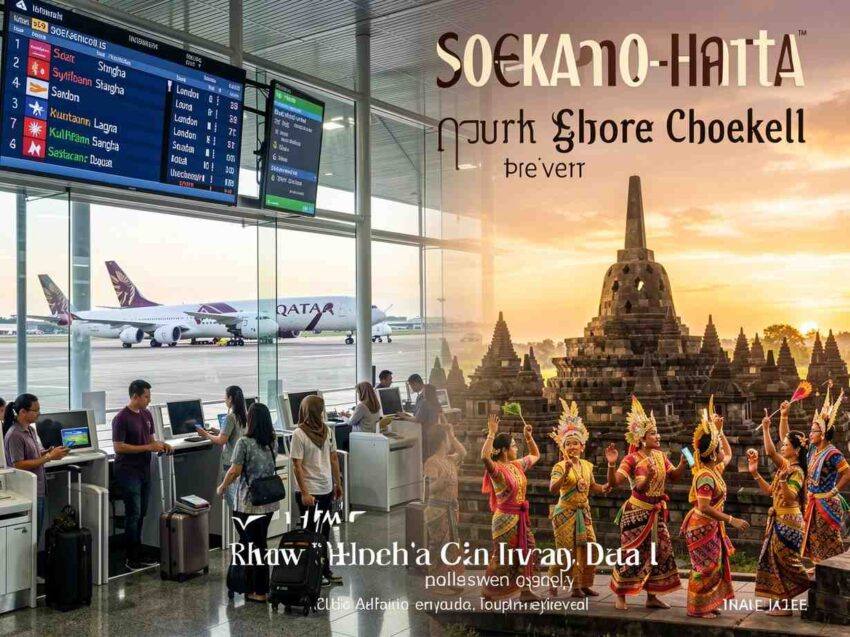
Singapore Joins Australia, China, India, the UK, Malaysia, South Korea & the United States in Powering Indonesia’s Tourism Comeback as Garuda Indonesia, Singapore Airlines & Qatar Airways Expand Access — Is a 17 Million Visitor Shockwave About to Hit Southeast Asia?
Singapore Joins Australia, China, India, the UK, Malaysia, South Korea & the United States in Powering Indonesia’s Tourism Comeback as Garuda Indonesia, Singapore Airlines & Qatar Airways Expand Access — Is a 17 Million Visitor Shockwave About to Hit Southeast Asia?
Singapore, Australia and China are at the center of Indonesia’s powerful tourism resurgence, driving a wave of international arrivals that pushed the country past 15 million foreign visitors in 2025 and setting the stage for an ambitious 17 million target in 2026. Regional demand from Singapore continues to fuel short-haul traffic into Jakarta and Bali, while Australian travelers remain the dominant force in Bali’s inbound market, supported by dense air connectivity from Perth, Sydney and Melbourne. At the same time, China’s outbound revival has restored one of Indonesia’s most critical growth engines, with airlines steadily rebuilding capacity between major Chinese cities and Indonesian gateways. India, the United Kingdom, Malaysia, South Korea and the United States are also contributing to the upswing, supported by expanded one-stop connectivity through hubs such as Singapore and Doha. Major carriers including Garuda Indonesia, Singapore Airlines and Qatar Airways have strengthened frequencies and global access, reflecting renewed confidence in Southeast Asia’s largest economy. With international visitor spending reaching record levels in 2025 and airport passenger traffic climbing steadily, Indonesia’s aviation and tourism ecosystem is entering a decisive growth phase — one that could reshape travel flows across Southeast Asia if current momentum holds.
Singapore Joins Australia, China, India, the UK, Malaysia, South Korea & the United States in Powering Indonesia’s Tourism Comeback
Indonesia is staging one of Asia’s most closely watched travel rebounds. International arrivals climbed to more than 15 million in 2025, marking a strong double-digit recovery year and moving the country close to pre-pandemic highs. Officials are now targeting up to 17 million foreign visitors in 2026. The momentum is not accidental. It is being powered by returning travelers from Singapore, Australia, China, India, the United Kingdom, Malaysia, South Korea, and the United States. Airlines are expanding routes. Airports are modernizing. Cultural tourism is being repackaged with sharper global storytelling. For travelers, this means more flights, better connectivity, competitive fares, and deeper experiences beyond Bali’s beaches.
Singapore, Australia, China & India Drive Indonesia’s Visitor Comeback as Garuda Indonesia, Singapore Airlines & Qatar Airways Expand Access
Singapore remains one of Indonesia’s most reliable feeder markets. Short flight times and strong business links keep passenger flows steady year-round. Multiple daily services operate between Singapore and Jakarta, Bali, Surabaya, and Medan. Singapore Airlines and its regional arm Scoot operate frequent services to Denpasar and Jakarta, while Garuda Indonesia maintains strong connectivity between the two countries. Load factors have improved as regional travel demand surges.
Australia continues to dominate Bali’s long-haul arrivals. Nearly a quarter of Bali’s international visitors in 2025 came from Australia, according to airport data. Qantas, Jetstar, Virgin Australia, and Garuda Indonesia operate high-frequency services from Sydney, Melbourne, Brisbane, and Perth to Denpasar. Perth-Bali remains one of the busiest international leisure corridors in the region due to its short four-hour flight time. Increased seat capacity has pushed competitive fares during shoulder seasons, benefiting travelers seeking value.
China is regaining its position as one of Indonesia’s largest growth drivers. Arrival numbers from China rose sharply in 2025 compared to the previous year, reflecting restored air links and stronger outbound travel demand. Airlines such as China Southern, China Eastern, and XiamenAir have resumed or expanded services to Jakarta and Bali. Garuda Indonesia has also increased charter and scheduled services in response to demand from secondary Chinese cities.
India is emerging as a high-growth market. Indian arrivals to Bali and Jakarta posted consistent gains in 2025. Direct connectivity between Delhi, Mumbai, and Bali has improved via one-stop options through Singapore, Kuala Lumpur, Bangkok, and Doha. Singapore Airlines and Qatar Airways offer seamless connections, while AirAsia connects India to Indonesia through Kuala Lumpur. Indian wedding tourism in Bali continues to generate premium demand across airlines and resorts.
Malaysia, South Korea, the UK & the United States Accelerate Indonesia’s Aviation Expansion as Airlines Scale Routes and Capacity
Malaysia remains one of the top regional contributors due to geographic proximity. AirAsia, Batik Air Malaysia, Malaysia Airlines, and Garuda Indonesia operate dense networks between Kuala Lumpur and multiple Indonesian cities. These short-haul routes support weekend travel, religious tourism, and family visits.
South Korea’s outbound leisure market is expanding steadily. Korean Air and Asiana Airlines operate services to Jakarta and Bali, while low-cost carriers add seasonal capacity during peak travel periods. South Korean travelers are increasingly exploring destinations such as Lombok and Labuan Bajo, drawn by diving, marine parks, and eco-adventures.
The United Kingdom and the United States represent important long-haul markets. Although total visitor numbers are smaller compared to regional Asia-Pacific markets, average spending from these travelers is significantly higher. One-stop connectivity through Singapore, Doha, Dubai, and Kuala Lumpur makes Indonesia accessible within 15 to 20 hours from London and major U.S. hubs. Qatar Airways, Emirates, and Singapore Airlines provide high-quality transit options, boosting premium cabin demand.
Indonesia’s 17 Million Visitor Target Reshapes Southeast Asia’s Travel Map
Indonesia’s tourism authorities are aiming for up to 17 million foreign arrivals in 2026. This target builds on the approximately 15 million international visitors recorded in 2025. International visitor spending has surged as well. Industry estimates indicate foreign traveler expenditure reached record levels in 2025, contributing significantly to GDP and employment.
Tourism now supports millions of jobs across transport, hospitality, retail, and creative industries. Bali alone welcomed close to 7 million foreign visitors in 2025. Jakarta, Batam, and Yogyakarta are also reporting rising hotel occupancy rates and improved revenue per available room. Airlines benefit from stronger load factors, while airports such as Soekarno-Hatta International Airport and Ngurah Rai International Airport are seeing steady passenger growth.
Garuda Indonesia, Singapore Airlines & Qatar Airways Strengthen Connectivity Across Jakarta, Bali & Beyond
Garuda Indonesia has focused on restoring international frequencies while maintaining a strong domestic network. The airline connects Jakarta and Bali to major Asian hubs including Singapore, Kuala Lumpur, Bangkok, Tokyo, and Seoul. It also maintains long-haul links to destinations such as Amsterdam and the Middle East through partnerships.
Singapore Airlines plays a strategic role in funneling European, American, Indian, and Australian passengers into Indonesia through Changi Airport. Multiple daily departures to Jakarta and Denpasar offer flexible schedules. Premium travelers benefit from seamless transfers and award-winning cabin services.
Qatar Airways connects Indonesia to more than 160 global destinations via Doha. Its Jakarta and Bali services provide strong links to Europe and North America. The airline’s expansion reflects confidence in Indonesia’s inbound and outbound demand.
Low-cost carriers are equally critical. AirAsia Group connects Malaysia, Thailand, and India with Indonesian cities. Scoot offers budget options from Singapore. These carriers make short-haul leisure trips more affordable, encouraging repeat travel.
Hotels, Resorts & Boutique Stays Experience a Post-Pandemic Surge in Occupancy and Investment
Indonesia’s hospitality sector is experiencing renewed growth. Bali’s occupancy levels climbed throughout 2025, especially during peak seasons. Luxury resorts in Nusa Dua and Uluwatu report strong forward bookings from Australia, India, and Europe. Urban hotels in Jakarta benefit from business travel and international conferences.
New investments are flowing into emerging destinations. Labuan Bajo in Flores is attracting upscale eco-resorts as Komodo National Park gains global attention. Mandalika in Lombok continues to develop as a sports and leisure hub. Yogyakarta, home to Borobudur and Prambanan, is expanding its boutique hotel portfolio to accommodate cultural tourism.
Average daily room rates have risen moderately, reflecting stronger demand but also intense competition. Travelers can still find competitive pricing outside peak months.
Cultural Tourism Strategy Elevates Borobudur, Prambanan & Heritage Sites to Global Stage
Indonesia’s cultural tourism push is reshaping its international image. The government manages hundreds of national cultural heritage sites and thousands of intangible cultural heritage elements. Iconic destinations such as Borobudur and Prambanan are being positioned not just as historical landmarks but as immersive cultural experiences.
Borobudur, the world’s largest Buddhist temple, currently limits the number of visitors climbing the structure each day to preserve its integrity. This controlled access enhances exclusivity and sustainability. The nearby Yogyakarta International Airport provides improved connectivity from Jakarta and regional hubs.
Other heritage zones such as Dieng Plateau and Muara Jambi are being developed with better infrastructure and interpretation centers. For travelers, this means deeper storytelling and guided experiences rather than simple sightseeing.
Travel Tips for Visitors from Singapore, Australia, China, India, the UK & the United States Planning 2026 Trips
Book flights early during peak seasons such as June to August and December holidays. Australian and Singaporean routes fill quickly due to short travel times. Consider shoulder seasons in April-May or September-October for lower fares and fewer crowds.
Check visa policies before departure. Many ASEAN nationals enjoy visa-free entry. Travelers from other countries may use visa-on-arrival facilities, which have been streamlined in major airports.
Download official travel and customs declaration apps before arrival to speed up immigration clearance. Indonesia has introduced digital processes at several international gateways to reduce waiting times.
Respect local customs, especially in Bali and religious heritage sites. Dress modestly when visiting temples. Follow guidelines issued by local authorities regarding environmental protection.
Travel insurance is strongly recommended, particularly for adventure activities such as diving or trekking in volcanic regions.
Beyond Bali: Emerging Destinations Capture Attention from South Korea, Malaysia, India & Europe
While Bali remains the flagship, other regions are gaining traction. Labuan Bajo serves as the gateway to Komodo National Park. Direct flights from Jakarta and Bali operate daily. Lombok offers quieter beaches and improved resort infrastructure. North Sulawesi attracts divers from Europe and the United States with world-class marine biodiversity.
Batam and Bintan benefit from proximity to Singapore, drawing weekend visitors. Yogyakarta appeals to cultural travelers exploring Java’s temples and arts scene. Each region contributes to Indonesia’s diversified tourism strategy.
Airline Capacity Growth Signals Long-Term Confidence in Indonesia’s Tourism Future
Seat capacity between Australia and Bali increased significantly in 2025 compared to the previous year. Regional routes between Singapore and Indonesian cities operate at high frequencies daily. Chinese carriers have resumed multiple connections suspended during the pandemic. Indian passenger traffic is rising steadily with improved connectivity through Southeast Asian hubs.
Airlines are not expanding blindly. They respond to sustained demand, forward bookings, and improved travel sentiment. Indonesia’s positioning as a cultural and leisure powerhouse supports this growth trajectory.
Economic Ripple Effects Strengthen Aviation, Hospitality & Local Communities
Tourism contributes meaningfully to Indonesia’s GDP. International visitor spending reached record highs in 2025. Increased arrivals translate into stronger demand for flights, hotels, restaurants, transport services, and tour operators.
Employment across aviation and hospitality is rising as airlines restore crews and hotels hire staff. Infrastructure projects around airports and heritage sites create additional jobs. Cultural festivals generate seasonal income for local artisans and performers.
Is a 17 Million Visitor Shockwave About to Redefine Southeast Asia’s Travel Landscape?
Indonesia’s rebound is more than a recovery story. It signals a strategic repositioning. By aligning cultural heritage, digital promotion, airline expansion, and improved infrastructure, the country is strengthening its competitive edge within Southeast Asia.
For travelers from Singapore, Australia, China, India, the United Kingdom, Malaysia, South Korea, and the United States, Indonesia offers greater accessibility and richer experiences than ever before. Flight options are expanding. Heritage sites are being revitalized. Resorts and urban hotels are modernizing. Sustainable tourism principles are gaining prominence.
Singapore, Australia and China are fueling Indonesia’s powerful tourism rebound, helping push international arrivals beyond 15 million in 2025 as the country targets 17 million visitors in 2026. With airlines expanding capacity and global connectivity strengthening, Southeast Asia’s largest economy is fast becoming one of the region’s most watched travel comeback stories.
The projected 17 million visitor mark is ambitious yet plausible based on current growth patterns. If airline capacity continues to rise and cultural tourism gains traction, Indonesia could surpass expectations. For global travelers, the message is clear. Indonesia is not just back. It is evolving.
The post Singapore Joins Australia, China, India, the UK, Malaysia, South Korea & the United States in Powering Indonesia’s Tourism Comeback as Garuda Indonesia, Singapore Airlines & Qatar Airways Expand Access — Is a 17 Million Visitor Shockwave About to Hit Southeast Asia? appeared first on Travel And Tour World.
Source: travelandtourworld.com



Sorry, the comment form is closed at this time.