


South Korea Joins China, Japan, United States, India, Taiwan, Australia, Malaysia and Thailand to Ignite Vietnam’s 3,000km Expressway Surge as Vietnam Airlines, Vietjet, Emirates and Marriott, Hilton Compete for the Next 10%+ Expansion Era — Asia’s Boldest Infrastructure Leap?
South Korea Joins China, Japan, United States, India, Taiwan, Australia, Malaysia and Thailand to Ignite Vietnam’s 3,000km Expressway Surge as Vietnam Airlines, Vietjet, Emirates and Marriott, Hilton Compete for the Next 10%+ Expansion Era — Asia’s Boldest Infrastructure Leap?
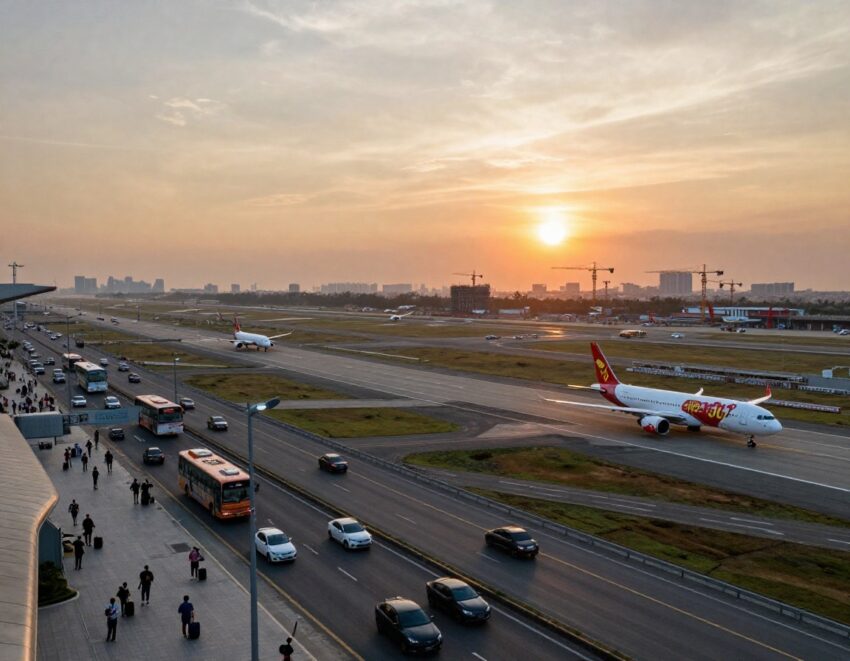
South Korea, China and Japan are at the forefront of a powerful travel surge reshaping Vietnam’s future, as record-breaking visitor numbers and unprecedented infrastructure expansion converge to create one of Asia’s most dynamic growth stories. Vietnam officially closed 2025 with approximately 21.2 million international arrivals, the highest level in its history, and January 2026 alone welcomed around 2.45 million foreign visitors, signaling strong momentum into the new year. At the same time, the country completed 3,000 kilometers of expressways nationwide, dramatically improving intercity travel times and strengthening tourism corridors from Hanoi to Ha Long, Da Nang to Hue, and Ho Chi Minh City to the Mekong Delta. Major aviation projects are advancing in parallel, including Long Thanh International Airport, designed to handle 25 million passengers annually in its first phase, easing congestion at Tan Son Nhat and expanding long-haul capacity. Airlines such as Vietnam Airlines, Vietjet and Emirates are scaling operations to meet demand, while global hotel brands including Marriott and Hilton continue to expand across key cities and resort destinations. Together, rising inbound markets, new aviation capacity and faster ground connectivity are positioning Vietnam not just as a recovering tourism hotspot, but as a rapidly modernizing travel powerhouse entering a new decade of double-digit economic ambition.
South Korea Joins China, Japan, United States, India, Taiwan, Australia, Malaysia and Thailand to Ignite Vietnam’s 3,000km Expressway Surge
Vietnam is entering a decisive new decade of connectivity. The country closed 2025 with 3,000 kilometers of expressways completed nationwide, marking the fastest road expansion period in its modern history. At the same time, international arrivals surged to approximately 21.2 million visitors in 2025, according to official government data. January 2026 alone welcomed about 2.45 million foreign travelers, the strongest monthly start ever recorded. This is not coincidence. Infrastructure and tourism are now moving in sync. Airports are expanding. Airlines are adding aircraft. Hotels are accelerating openings. For travelers from South Korea, China, Japan, the United States, India, Taiwan, Australia, Malaysia and Thailand, Vietnam is becoming easier, faster and more attractive to explore.
South Korea, China, Japan, United States and India Lead the Visitor Wave as Taiwan, Australia, Malaysia and Thailand Strengthen Vietnam’s Global Tourism Momentum
South Korea remains Vietnam’s largest inbound tourism market. China has rebounded strongly and is once again one of the top contributors to total arrivals. Japan and the United States continue to deliver high-spending travelers. India is one of the fastest-growing markets in Southeast Asia. Taiwan, Australia, Malaysia and Thailand add strong regional traffic. This diversified demand base reduces risk and strengthens airline confidence.
The rise in arrivals is visible at major gateways. Tan Son Nhat International Airport in Ho Chi Minh City handled peak days of more than 140,000 passengers during Lunar New Year 2026. Noi Bai International Airport in Hanoi also recorded record volumes. These pressures explain why the next infrastructure phase is critical.
For tourists, this growth means more nonstop routes, more competitive fares and more travel packages. Airlines respond to demand. Hotels respond to occupancy rates. Vietnam is now firmly on global travel radars.
Vietnam Airlines, Vietjet and Emirates Expand Networks as Marriott and Hilton Accelerate Hotel Growth Across a 3,000km Expressway Nation
Airlines are positioning early. Vietnam Airlines signed major aircraft agreements in early 2026 to expand its fleet for regional and long-haul growth. Vietjet continues rapid network expansion across Asia-Pacific. Emirates maintains daily connections to Ho Chi Minh City and Hanoi via Dubai, linking Vietnam to Europe, the Middle East and North America. Qatar Airways also connects Doha to Hanoi and Ho Chi Minh City, strengthening global connectivity.
More capacity is coming from within Asia. Carriers from South Korea, Japan, Thailand, Malaysia and Singapore maintain dense route networks into Vietnam. These routes support leisure and business flows. Increased frequencies reduce airfare volatility during peak seasons.
On the hospitality side, global brands are scaling aggressively. Marriott International operates across Hanoi, Ho Chi Minh City, Phu Quoc and Da Nang with brands ranging from JW Marriott to Sheraton and Renaissance. Hilton continues expansion with Hilton Hanoi Opera, Hilton Saigon and additional pipeline projects. Accor, Hyatt and InterContinental Hotels Group are also strengthening their footprint.
This expansion aligns with strong performance metrics. Hotel occupancy levels in major cities improved significantly through 2025 as international tourism recovered fully. Investors are responding. Market analysts project continued hotel investment growth into 2026 as infrastructure enhances long-term confidence.
For travelers, this means greater brand choice. Luxury beachfront resorts. Business-friendly city hotels. Lifestyle properties for younger travelers. Loyalty program members from the United States, Japan or Australia can now earn and redeem points more easily across Vietnam’s growing inventory.
3,000km of Expressways Transform Multi-City Travel for Tourists
Road infrastructure may not sound glamorous. But for travelers, it changes everything. The completion of 3,000 kilometers of expressways dramatically reduces travel time between key destinations.
Hanoi to Ha Long Bay is now significantly faster. Ho Chi Minh City to the Mekong Delta is smoother. Da Nang to Hue and Hoi An benefits from improved corridors. These improvements enable travelers to combine multiple destinations within a single itinerary.
Tour operators are redesigning packages. Instead of flying short domestic segments, visitors can now choose scenic road journeys. This reduces costs and enhances flexibility. It also disperses tourism revenue into secondary provinces.
For independent travelers, car rentals and private transfers become more efficient. Bus networks also improve with better highways. The result is a more connected tourism ecosystem.
Long Thanh International Airport Signals the Next Aviation Breakthrough
The most transformative project is Long Thanh International Airport near Ho Chi Minh City. Phase one is designed to handle 25 million passengers annually. This will relieve congestion at Tan Son Nhat, which has operated near capacity during peak periods.
Long Thanh is built to international 4F standards. It can accommodate large aircraft such as the Airbus A350 and Boeing 787. For long-haul travelers from the United States, Europe and Australia, this opens room for expanded nonstop connectivity in the future.
Authorities plan strategic allocation of flights between Long Thanh and Tan Son Nhat once operations stabilize. This redistribution will reduce delays and improve on-time performance.
For tourists, fewer delays mean smoother arrivals. Immigration flow management is also expected to improve with new terminal design and technology integration.
South Korea and China Benefit Most from Expanded Air Capacity
Because South Korea and China represent the largest inbound markets, additional airport capacity directly benefits travelers from these countries. More slots enable airlines to add frequencies from Seoul, Busan, Shanghai, Guangzhou and Beijing.
High-frequency routes lower average ticket prices over time due to competition. Group travel operators gain flexibility. Business travelers enjoy improved schedule options.
Japanese and Taiwanese carriers also benefit from expanded slots. Direct services from Tokyo, Osaka, Taipei and Kaohsiung can grow without infrastructure bottlenecks.
United States and Australia Gain Long-Haul Connectivity Advantages
Long-haul markets such as the United States and Australia depend heavily on aircraft range and airport capacity. Vietnam Airlines already operates nonstop routes to the United States. Additional capacity at Long Thanh could allow schedule expansion or new partnerships.
Australian routes between Sydney, Melbourne and Vietnam continue strong performance. As airport infrastructure modernizes, airlines can optimize turnaround times and reduce congestion-related delays.
For premium travelers, upgraded airport lounges and international terminal services enhance experience quality. Business-class demand is rising alongside Vietnam’s growing economy.
India and Southeast Asia Unlock New Tourism Corridors
India is one of Vietnam’s fastest-growing inbound markets. Direct connections between major Indian cities and Vietnam have expanded in recent years. As airport and highway networks improve, Indian tour operators can promote multi-city circuits more effectively.
Southeast Asian neighbors such as Malaysia and Thailand benefit from short-haul convenience. Weekend travel becomes easier. Low-cost carriers maintain strong presence in these corridors.
Improved expressways also support cross-border tourism packages linking Vietnam with Cambodia and Laos through combined itineraries.
Rail and Seaport Projects Strengthen Logistics and Cruise Tourism
Beyond roads and airports, railway modernization and seaport upgrades enhance broader connectivity. The Lao Cai–Hanoi–Hai Phong railway corridor is advancing through feasibility stages. This corridor strengthens links between northern industrial zones and the port of Hai Phong.
Seaport development at Cai Mep–Thi Vai and Lach Huyen positions Vietnam as a deeper logistics hub. Cruise tourism could benefit from improved port infrastructure, especially as larger vessels seek modern docking facilities.
For travelers, this may translate into expanded cruise itineraries and improved cargo efficiency that stabilizes supply chains, indirectly benefiting hotel and airline pricing.
Hospitality Expansion Signals Confidence in Double-Digit Growth Ambitions
Vietnam has set ambitious economic growth targets exceeding 10 percent annually in the coming term. Infrastructure is central to that strategy. Hospitality investors understand this link.
International hotel pipelines show strong forward momentum. Luxury and upper-upscale brands are scheduled to open new properties in Hanoi and Ho Chi Minh City through 2026 and 2027. Resort destinations such as Phu Quoc and Nha Trang also see renewed investment interest.
For tourists, increased supply often moderates room rates over time. Competition improves service standards. Brand diversity grows.
MICE tourism stands to benefit significantly. New airport capacity and better highways enable large conferences. Global brands like Marriott and Hilton are well positioned to capture this segment.
Travel Tips for Visitors Planning 2026–2027 Trips
Book early during Lunar New Year and summer high season. Demand spikes sharply. Monitor whether your flight departs from Tan Son Nhat or Long Thanh once redistribution begins.
Consider multi-destination itineraries. Hanoi plus Ha Long Bay. Da Nang plus Hoi An. Ho Chi Minh City plus Mekong Delta. Expressway upgrades reduce travel fatigue.
Leverage airline loyalty programs. Vietnam Airlines is part of SkyTeam. Emirates connects through Dubai with broad global reach. Frequent flyer miles can reduce costs.
Choose hotels near major transport nodes. This minimizes transfer time in busy cities.
Check visa policies before travel. Vietnam has expanded e-visa eligibility in recent years, simplifying entry for many nationalities.
Why This Infrastructure Decade Matters for Global Travelers
Vietnam’s story is no longer about recovery. It is about acceleration. Record visitor numbers in 2025 proved demand resilience. January 2026 confirmed momentum. Airlines are investing. Hotel brands are expanding. Expressways now connect regions more efficiently than ever before.
South Korea, China, Japan, the United States, India, Taiwan, Australia, Malaysia and Thailand form the backbone of inbound growth. Each market benefits from improved connectivity. Each airline gains operational flexibility. Each hospitality brand sees long-term opportunity.
For travelers, the benefits are clear. Faster journeys. More flight options. Greater hotel choice. Expanded itineraries. Reduced congestion in the long run.
South Korea, China and Japan are fueling Vietnam’s record-breaking tourism surge as the country celebrates 3,000km of expressways and prepares major airport expansions to handle soaring global demand. With international arrivals hitting historic highs in 2025 and new aviation capacity coming online, Vietnam is rapidly emerging as Asia’s next infrastructure-driven travel powerhouse.
Vietnam’s infrastructure expansion is not just concrete and steel. It is a strategic transformation of access. And for millions of tourists planning their next Asian journey, it may indeed feel like witnessing one of the region’s boldest connectivity leaps.
The post South Korea Joins China, Japan, United States, India, Taiwan, Australia, Malaysia and Thailand to Ignite Vietnam’s 3,000km Expressway Surge as Vietnam Airlines, Vietjet, Emirates and Marriott, Hilton Compete for the Next 10%+ Expansion Era — Asia’s Boldest Infrastructure Leap? appeared first on Travel And Tour World.
Source: travelandtourworld.com


Sorry, the comment form is closed at this time.