


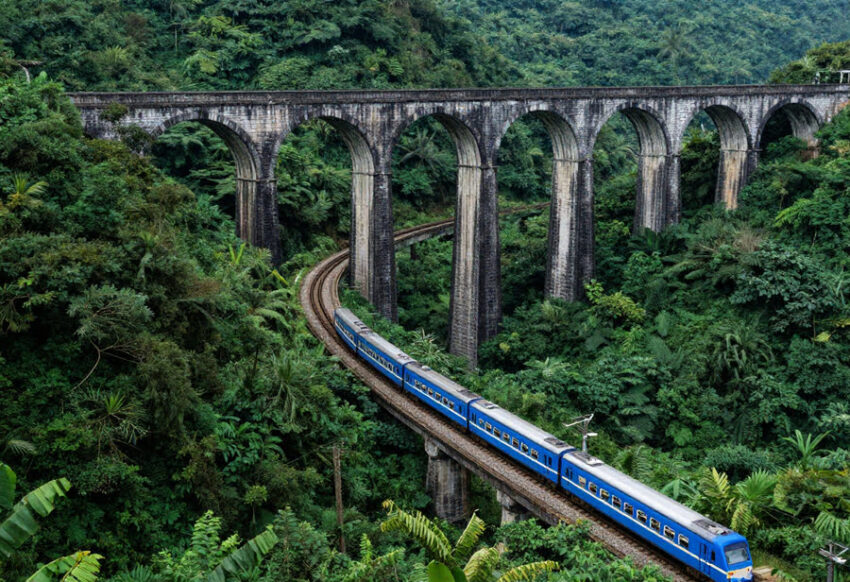
Tanzania–Zambia Railway Restored as TAZARA Brings Back Cross-Border Passenger Travel, Revitalizing Regional Connectivity, Tourism, Trade, and Economic Growth Across Southern and Eastern Africa
Tanzania–Zambia Railway Restored as TAZARA Brings Back Cross-Border Passenger Travel, Revitalizing Regional Connectivity, Tourism, Trade, and Economic Growth Across Southern and Eastern Africa
The restoration of the Tanzania-Zambia Railway (TAZARA) marks a significant milestone in revitalizing cross-border passenger travel between Tanzania and Zambia. This major development promises to boost regional connectivity, enhancing trade, tourism, and overall economic growth across Southern and Eastern Africa. After years of disruption, the revival of TAZARA is set to re-establish a vital transportation link that will support the seamless movement of people and goods, strengthen bilateral ties, and stimulate business opportunities. As both nations recover from past challenges, this revitalization plays a crucial role in driving economic integration, fostering tourism growth, and promoting regional cooperation, positioning the rail corridor as a catalyst for prosperity in the region.
The Tanzania–Zambia Railway Authority (TAZARA) has re-established its cross-border passenger service, rejuvenating regional transport, boosting tourism, and facilitating trade along one of Africa’s most vital rail corridors. This move is expected to strengthen the ties between Tanzania and Zambia, driving greater regional mobility across southern and eastern Africa.
TAZARA resumed the cross-border passenger service between Dar es Salaam, Tanzania, and New Kapiri Mposhi, Zambia, on February 10, 2026. The route had been suspended in June 2024 due to a series of operational challenges, including an aging fleet and persistent maintenance issues, which affected both travel and trade. The restoration of the Mukuba train service marks the return of this critical 1,860-kilometre link that connects Tanzania’s Indian Ocean port to Zambia’s central region. This service is central to both regional commerce and tourism, providing a vital connection between landlocked Zambia and the deep-water ports of Tanzania.
The suspension of the service had disrupted essential transport, negatively impacting trade, tourism, and communities dependent on the train for travel. However, following this period of suspension, TAZARA undertook a comprehensive overhaul of its passenger operations. This restructuring aimed to match services with the available resources while continuing to support the communities that rely on the railway. The revived service is seen as a reaffirmation of TAZARA’s founding mission: to promote regional mobility, trade, and people-to-people exchanges across this strategic corridor.
As part of the restoration, the Mukuba train has been repositioned as the central long-distance service along the route. The revised schedule focuses on providing reliable, predictable service, with TAZARA concentrating its limited resources on this core passenger service. Secondary and overlapping services along the line have been scaled back, allowing TAZARA to better allocate its resources and provide a more consistent experience for passengers. Now operating once a week in both directions, the Mukuba departs from New Kapiri Mposhi every Tuesday afternoon and from Dar es Salaam every Friday evening. This new schedule serves both international tourists traveling the full route and local passengers using the train for shorter journeys between towns where road infrastructure is either inadequate or nonexistent.
The Mukuba train operates at different speeds depending on the region it is traveling through. Between New Kapiri Mposhi and Kasama in Zambia, and between Nakonde and Msolwa in Tanzania, it runs as a limited-stop express service, bypassing areas where alternative transport options are more easily accessible. However, in rural areas with few alternatives, such as the more remote sections of the route, the Mukuba serves as a local service, stopping at numerous stations to connect smaller communities that would otherwise be isolated. This approach ensures that the train is accessible to those who rely on it for essential services, while also catering to long-distance travelers.
The return of the Mukuba train is expected to be a game-changer for regional overland travel. It is particularly important for budget-conscious passengers, small traders, and tour operators who rely on rail services for affordable and convenient transportation. For tourists, the Mukuba provides a scenic and accessible way to reach some of the region’s most beautiful natural destinations, including Tanzania’s Udzungwa Mountains, Ruaha National Park, and Zambia’s northern highlands. The train also serves as a gateway to the Copperbelt region and various wildlife reserves, offering connections to some of Africa’s premier safari destinations.
The predictable weekly departures are expected to make it easier to plan multi-country trips, combining rail travel with cultural tourism and safaris. The rail corridor itself is a major historical landmark, with many tourists drawn to its Cold War-era legacy, its role in Chinese-African cooperation, and its significance in supporting regional liberation movements and post-independence integration. The return of the train also highlights the importance of railway infrastructure in Africa, where transport links are often a crucial factor in promoting both regional cooperation and economic growth.
In addition to the revived cross-border service, TAZARA has also reintroduced its Udzungwa local train service in southern Tanzania. This service, which resumed operations on February 12, 2026, runs twice a week between Kidatu and Makambako, connecting communities in the Morogoro and Njombe regions with the wider TAZARA network. In regions where road access can be slow, costly, and unreliable, especially during the rainy season, the Udzungwa service fills a critical gap in local transport infrastructure. This shuttle service plays a key role in connecting smaller towns and villages, allowing residents to access essential services like schools, clinics, and markets. It also facilitates the transport of goods and supports regional trade.
The Udzungwa service is an essential link for local communities but also plays a vital role in tourism, offering access to Udzungwa Mountains National Park and nearby nature reserves. These areas are increasingly popular with visitors looking to explore Tanzania’s rich biodiversity, with the train providing an affordable and scenic way to access these remote destinations. For local residents, the Udzungwa train is a lifeline, offering a reliable means of travel across long distances where road infrastructure is often inadequate.
By integrating the Mukuba’s long-distance service with the Udzungwa’s local focus, TAZARA aims to maintain a balanced and diverse network that reflects the varied travel needs of people across the region. The revival of both services, even on leaner schedules, ensures that the benefits of the railway are felt not only in major cities and mining hubs but also in smaller towns and rural districts. This integrated approach to railway services is crucial for fostering long-term regional development and ensuring that local communities continue to benefit from the railway’s revival.
The restoration of the Tanzania-Zambia Railway (TAZARA) reintroduces cross-border passenger travel, enhancing regional connectivity, trade, and tourism, while driving economic growth across Southern and Eastern Africa. This revival strengthens bilateral ties and boosts business opportunities between the two nations.
the restoration of the Mukuba and Udzungwa train services is a significant step towards strengthening regional connectivity in southern and eastern Africa. These services offer vital transport links for both passengers and goods, supporting trade, tourism, and community connectivity. TAZARA’s efforts to revamp its operations ensure that the railway continues to play a central role in Africa’s transport network, providing reliable and sustainable transport solutions for both local and international travelers.
The post Tanzania–Zambia Railway Restored as TAZARA Brings Back Cross-Border Passenger Travel, Revitalizing Regional Connectivity, Tourism, Trade, and Economic Growth Across Southern and Eastern Africa appeared first on Travel And Tour World.
Source: travelandtourworld.com



Sorry, the comment form is closed at this time.