


The High-Altitude Crisis: Navigating the Economic and Environmental Disruptions of Ladakh Tourism Industry
The High-Altitude Crisis: Navigating the Economic and Environmental Disruptions of Ladakh Tourism Industry
The journey of the local workforce in the union territory has been marked by extreme fluctuations. For individuals like Irshit Ali, the post-pandemic era initially presented a golden opportunity. Between 2022 and 2023, monthly earnings for transport operators reportedly surged from modest sums to substantial figures, encouraging widespread expansion. This period of prosperity led many to secure significant bank loans for the procurement of additional vehicles and the upgrading of guest houses. However, the reliance on a consistent stream of visitors proved to be a precarious strategy when the region was met with a sequence of unforeseen events beginning in early 2025.
A Confluence of Disruptive Events
The stability of the regional economy was first tested in April 2025. Following security incidents in the neighboring Jammu and Kashmir region, a noticeable decline in international arrivals was recorded. This was compounded by a brief but intense period of regional conflict, which necessitated the total cessation of tourist activities and the closure of Kushok Bakula Rimpochee Airport. Operation Sindoor, launched by the Indian Armed Forces, led to a complete halt of flight operations for several days in May, resulting in an estimated 80% cancellation rate for hotel bookings. The loss of revenue during these peak months was described by industry leaders as a catastrophic blow to the seasonal earning window.
Environmental Extremes and Infrastructural Strains
Nature added further complexity to the situation when record-breaking rainfall occurred in August. In a region defined by its arid, high-altitude desert climate, such intense weather events are rare and destructive. Roads were blocked, and the union territory was effectively isolated for several weeks, further deterring potential travelers. These climatic disruptions highlighted the vulnerability of the local infrastructure to the shifting patterns of the global environment. By the time accessibility was restored, the primary summer season had largely concluded, leaving businesses with a surplus of stock and a deficit of guests.
Civil Unrest and the Demand for Autonomy
Social and political factors also played a significant role in the year’s downturn. In September 2025, protests intensified as residents demanded full statehood and inclusion in the Sixth Schedule of the Constitution. The escalation of these demonstrations led to tragic casualties and the imposition of a week-long curfew in Leh. The resulting atmosphere of uncertainty caused a further drop in visitor numbers, particularly during the month of June, which historically sees the highest influx of tourists. Data suggests that arrivals during this peak period were nearly halved compared to the previous year, dropping from over 150,000 to approximately 75,000.
The Burden of Debt and Financial Relief
The financial ramifications of these disruptions have been felt most acutely by those who invested heavily in the preceding years. Taxi drivers, many of whom are operating vehicles purchased through high-interest loans, now find themselves unable to meet monthly installments. Because the working window in Ladakh is limited to roughly six months due to extreme winter conditions, the loss of summer income is particularly devastating. In response to this mounting crisis, the Finance Department was prompted to declare the region a disaster-affected area. This classification has allowed banks to offer some flexibility in loan repayments, providing a temporary lifeline to a community on the edge of financial insolvency.
The Phenomenon of Overtourism and Market Saturation
While the events of 2025 were significant, officials have pointed toward a deeper structural issue: market saturation. Despite a total decline in tourist numbers of only about 10% for the entire year, the individual earnings of business owners dropped by as much as 40%. This discrepancy is attributed to a massive increase in the number of available facilities. Since 2011, the number of hotels and guest houses in Leh and Kargil has increased by over 100% and 200%, respectively. This rapid expansion of infrastructure, including a taxi fleet that now exceeds 5,500 vehicles in Leh alone, has outpaced the growth of the tourist population. The resulting competition has diluted the profits available to each operator, making the industry less resilient to external shocks.
Environmental Degradation and Long-term Sustainability
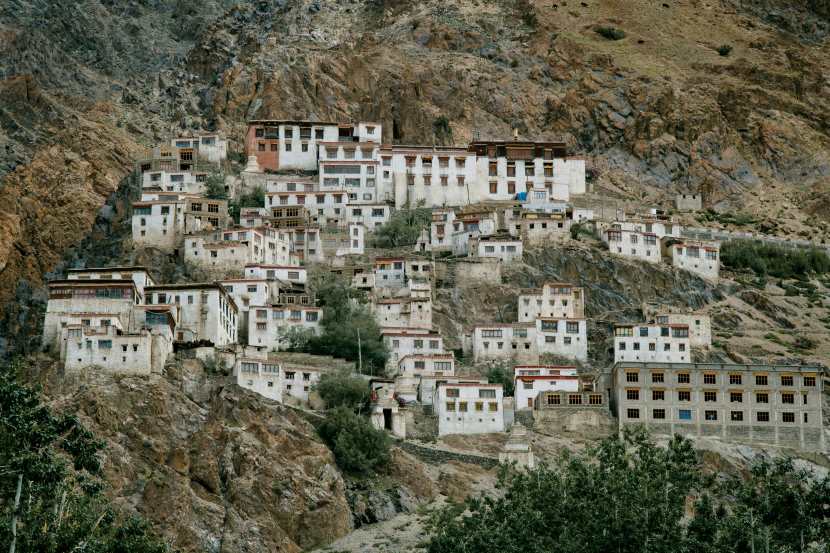
The rapid development of the tourism sector has not occurred without a significant environmental cost. The built-up area in Ladakh has expanded nearly twofold in recent decades, leading to the consumption of limited natural resources and the introduction of non-native plant species. The Ministry of Tourism has expressed concern over the loss of traditional, eco-friendly architecture in favor of modern structures that are ill-suited for the local climate. Furthermore, the management of dry waste and the depletion of water resources are cited as major threats to the region’s biodiversity. There is now a growing consensus among experts that a scientific carrying-capacity analysis is required to determine how many visitors the delicate Himalayan ecosystem can truly support without suffering irreversible damage.
Looking Toward an Uncertain Future
The events of 2025 have served as a sobering reminder of the volatility inherent in a tourism-dependent economy. For the people of Ladakh, the path forward involves a delicate balancing act between economic necessity and environmental preservation. While the hope for a recovery in visitor numbers remains, the lessons of the past year suggest that a more sustainable and diversified approach may be required to protect the livelihoods of the high-altitude desert’s inhabitants. The transition toward a more resilient model will likely require both governmental support and a collective effort from the local community to ensure that the beauty of Ladakh is preserved for future generations while providing a stable life for those who call it home.
The post The High-Altitude Crisis: Navigating the Economic and Environmental Disruptions of Ladakh Tourism Industry appeared first on Travel And Tour World.
Source: travelandtourworld.com



Sorry, the comment form is closed at this time.