


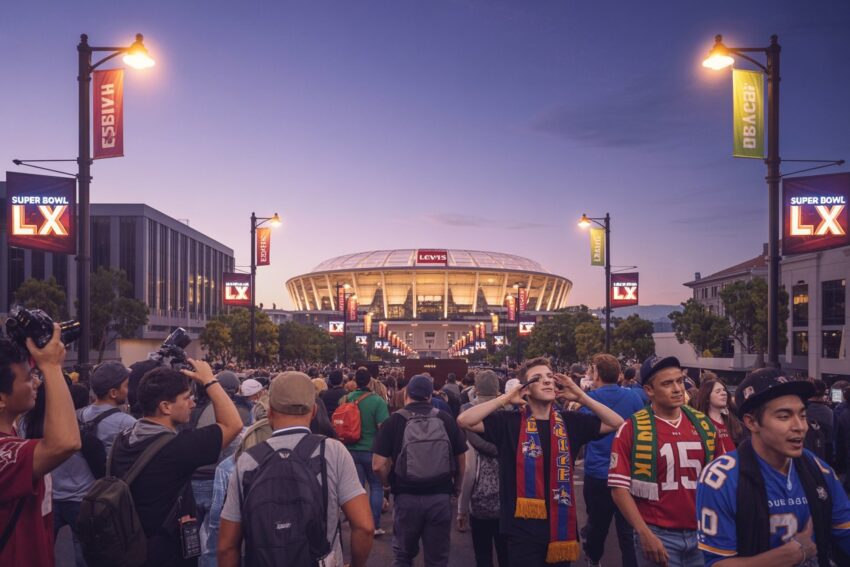
The Super Bowl LX Effect: Why NFL Sports Tourism is Reaching New Heights in 2026
The Super Bowl LX Effect: Why NFL Sports Tourism is Reaching New Heights in 2026
For decades, the Super Bowl has been the pinnacle of American sports. But as we step into 2026, the event has transformed into something much larger than a sixty-minute football game. It has become a global pilgrimage. With Super Bowl LX returning to Northern California at Levi’s Stadium, we are witnessing a “sports tourism” explosion that is reshaping how cities, brands, and fans approach the Big Game.
It’s no longer just about who lifts the Vince Lombardi Trophy; it’s about the week-long immersion, the “I was there” social currency, and a massive surge in travel demand that is setting new economic records.
The Billion-Dollar Huddle
The numbers coming out of the San Francisco Bay Area are staggering. According to the Bay Area Host Committee, the collective impact of Super Bowl LX, combined with upcoming events like the FIFA World Cup, is projected to inject over $1.4 billion into the local economy. Specifically for this Super Bowl weekend, estimates suggest a direct boost between $370 million and $630 million.
But where is that money going? It isn’t just ticket sales. It’s the 400,000 hotel room bookings, the fully committed restaurant reservations from San Jose to San Francisco, and the thousands of local jobs created to support the influx of nearly 100,000 out-of-town visitors. California has long been a tourism powerhouse, but Super Bowl LX is acting as a high-octane fuel for the state’s hospitality sector.
The Rise of the “Experience Seeker”
What is driving this boom? Modern fans are “Experience Seekers.” They aren’t satisfied with watching the game on a 4K TV at home; they want the sensory overload that only a host city can provide.
This year, the demand for “ancillary experiences” has hit an all-time high. Fans are flocking to events like the Toyota Glow Up Classic—a unique black-light flag football exhibition—and the star-studded NFL Experience. With global icon Bad Bunny set for the Halftime Show and Charlie Puth performing the National Anthem, the Super Bowl has successfully merged the worlds of elite athletics and A-list entertainment. For the modern tourist, the game is simply the anchor for a four-day festival of culture.+1
A Global Influx: Beyond American Borders
Perhaps the most significant shift in 2026 is the internationalization of the NFL fanbase. While Massachusetts and Washington State (homes to the Patriots and Seahawks) lead domestic ticket purchases, there is a record-breaking surge in international travelers.
Fans from Mexico, Canada, Brazil, the UK, and Germany are arriving in California in droves. The NFL’s strategic push into international markets over the last few years is paying off, turning the Super Bowl into a global tourism hub similar to the Olympics or the World Cup. This international “sugar rush” is providing a much-needed boost to airlines and luxury travel providers who are seeing “Super Bowl Packages” sell out months in advance.
The Cost of Being “In the Room”
With high demand comes a high price tag. In 2026, the “get-in” price for a ticket averaged over $8,200, making Super Bowl LX one of the priciest in history. Even the commercial landscape has scaled new peaks, with 30-second ad spots hitting a record $8 million to $10 million.+1
For many fans, the cost is secondary to the memory. We are seeing a “revenge travel” sentiment applied to sports—people are willing to splurge on premium experiences, VIP tailgates, and luxury rentals to ensure their Super Bowl weekend is unforgettable.
Humanizing the Host City: Santa Clara’s Stand
Behind the glitz and the billion-dollar projections are the people of Santa Clara and the surrounding Bay Area. Mayor Lisa Gillmor has been vocal about ensuring the event remains a celebration for everyone, emphasizing safety and community clarity. The goal for 2026 isn’t just to have a successful game, but to set a “gold standard” for how a city can host the world without losing its local soul.+1
From local businesses in downtown San Jose seeing a year’s worth of revenue in a week to the volunteers who make the “fan zones” run smoothly, the human element is what truly powers the tourism machine.
Looking Ahead: The Future of Sports Travel
As Super Bowl LX concludes, the momentum won’t stop. California is already preparing for Super Bowl LXI at SoFi Stadium in 2027 and the 2028 Olympic Games. The “Sports Tourism Boom” is not a temporary trend; it is the new reality of the travel industry.
For the traveler, it means more immersive, high-tech, and personalized ways to enjoy the games they love. For host cities, it means a seat at the global table. And for the NFL, it proves that football is no longer just America’s pastime—it’s the world’s invitation to travel.
The post The Super Bowl LX Effect: Why NFL Sports Tourism is Reaching New Heights in 2026 appeared first on Travel And Tour World.
Source: travelandtourworld.com



Sorry, the comment form is closed at this time.