


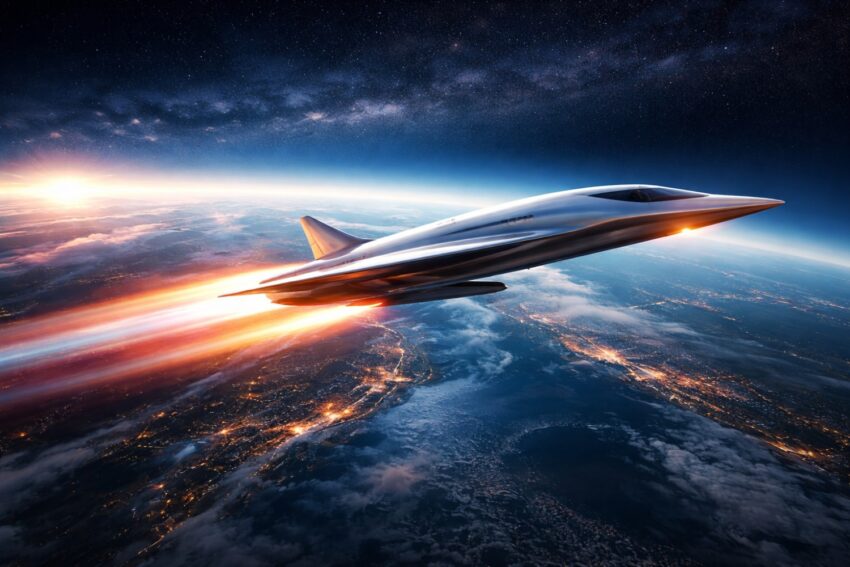
The United States Takes Bold Steps Toward a New Era in Aviation as Hypersonic Technology Promises Unmatched Speed and Convenience
The United States Takes Bold Steps Toward a New Era in Aviation as Hypersonic Technology Promises Unmatched Speed and Convenience
The hypersonic travel market is set to undergo a massive transformation, driven by both technological breakthroughs and growing demand for faster air travel. By 2030, the market is projected to soar to an impressive US $11.18 billion, growing at an annual rate of 18.6%. With hypersonic speeds reaching more than five times the speed of sound, the future of travel is accelerating, and it promises to change the way we think about time and distance. As aerospace technologies continue to advance, we’re entering a new era where flying across the globe in mere hours could become the norm.
Understanding Hypersonic Travel: What Does It Mean?
Hypersonic travel, defined as air travel exceeding Mach 5 or five times the speed of sound, offers an exciting glimpse into the future of transportation. Imagine crossing continental distances in a fraction of the time it currently takes. This technology, still in the developmental phase, is set to unlock travel times that could shrink flights from several hours to mere minutes, drastically changing global connectivity.
Achieving hypersonic speeds requires cutting-edge technologies, including scramjet engines, which allow an aircraft to fly at supersonic speeds, and high-temperature-resistant materials to withstand the extreme heat generated during high-speed flight. Advanced thermal management systems also play a key role in ensuring the aircraft’s structure can handle the intense aerodynamic forces and high temperatures associated with these speeds.
Global Demand for Faster Travel: Why Hypersonic is the Future
As the demand for faster, more efficient air travel grows, hypersonic technology is quickly becoming a priority. One of the key drivers behind this rapid development is the increasing demand for ultra-fast air travel. Professionals and businesses are increasingly seeking to reduce the time spent in transit, making hypersonic speeds an attractive prospect for those looking to travel internationally in record time.
The International Air Transport Association (IATA) reported a significant increase in global air traffic in 2024, with a 10.4% rise in total traffic compared to the previous year. This surge in demand for air travel highlights the pressing need for faster transportation methods. With the market’s expected compound annual growth rate (CAGR) of 18.7% between 2025 and 2026, the push for hypersonic capabilities will continue to rise as demand for speedier air travel intensifies.
Key Growth Drivers in the Hypersonic Travel Market
The main factors driving the hypersonic travel market are innovations in aerospace technology, government investments, and private sector interest. Many of the technologies currently being developed for military aerospace programs are finding their way into the commercial travel space. The desire for rapid global strike capabilities and faster defense modernization are fueling research into hypersonic speeds. Additionally, increased investments in space exploration are playing a significant role in advancing the technology behind hypersonic flight, making this an exciting time for both the military and commercial sectors.
Government-funded programs focused on space exploration and defense are accelerating advancements in these technologies. As these programs develop, they often translate into faster-than-sound travel methods that could eventually be used by civilians. Meanwhile, aerospace companies like SpaceX and Blue Origin are exploring the commercial potential of hypersonic travel, leading to unprecedented advancements in the field.
Geographic Outlook: Where Is Hypersonic Travel Poised to Take Off?
In 2025, North America is set to lead the hypersonic travel market, holding the largest share of global investments in the sector. The U.S. is a leader in aerospace technology development, and its partnerships with private companies like Boeing, Lockheed Martin, and Northrop Grumman are propelling the market forward. These partnerships, combined with government-funded initiatives, place North America in the driver’s seat for the development and testing of hypersonic flight.
However, it’s not just North America that stands to benefit. Asia-Pacific and Western Europe are also expected to see substantial growth in the hypersonic market due to their own investments in aerospace technologies and the rising demand for faster global connectivity. In particular, China and Russia are making significant strides in developing hypersonic missile systems, which could pave the way for civilian hypersonic travel in the near future.
Technological Innovations Driving Hypersonic Travel
Hypersonic travel relies on a range of technological advancements, including scramjet engines, thermal protection systems, and lightweight, high-strength materials. These technologies are designed to withstand the immense heat and pressure generated at speeds over Mach 5. Scramjets, for example, are engines that operate at supersonic speeds without the need for traditional turbine engines, allowing for much faster flight times.
In addition to these advancements, the development of new materials is also critical to making hypersonic travel a reality. Heat-resistant ceramics, advanced composites, and metal alloys will be essential in building the aircraft structures needed to endure the extreme conditions of hypersonic speeds. Advances in thermal management systems are also helping to ensure that these materials maintain their integrity under the harsh conditions of hypersonic flight.
The Future of Hypersonic Travel: What Lies Ahead?
Looking ahead, the hypersonic travel market shows no signs of slowing down. The continued global demand for faster travel options will likely keep driving innovation in the field, pushing the envelope on what is possible in aerospace. As new technologies are developed and tested, private aerospace companies and government agencies alike are working hard to bring these ideas into reality.
By 2030, the hypersonic market is forecasted to reach US $11.18 billion, with a projected CAGR of 18.6%. As aerospace technology continues to evolve, we can expect to see hypersonic flights available to consumers within the next decade, allowing travelers to experience global travel speeds like never before.
With military research, private aerospace initiatives, and space exploration all playing key roles in pushing the boundaries of what is possible, the future of hypersonic travel is set to change the world as we know it. Expect to see faster travel times, revolutionized logistics, and unprecedented global connectivity in the coming years, ushering in a new era of aerospace technology.
The hypersonic travel market is a rapidly developing sector that has the potential to revolutionize the way we think about air travel. With increasing investments from both governments and private companies, the technology to fly at speeds over Mach 5 is advancing quickly. As this market grows, expect to see significant changes in the speed and accessibility of global travel, making it easier and faster to travel long distances. The next decade is set to bring groundbreaking developments, and hypersonic travel may soon be the next frontier of human transportation.
The post The United States Takes Bold Steps Toward a New Era in Aviation as Hypersonic Technology Promises Unmatched Speed and Convenience appeared first on Travel And Tour World.
Source: travelandtourworld.com



Sorry, the comment form is closed at this time.