


These Six Canadian Hotels Are Offering Experiences So Rare, You May Need Government Permission to Join
These Six Canadian Hotels Are Offering Experiences So Rare, You May Need Government Permission to Join
In Canada, travel is beginning to feel different. It is no longer just about where you sleep — it is about what you are invited into. From the windswept shores of Newfoundland to the protected dunes of Nova Scotia and the alpine heights of British Columbia, a growing group of hotels is reshaping expectations by weaving local identity, conservation rules and curated access into the guest experience. These properties are not simply offering amenities. They are offering entry into place.
According to federal tourism development frameworks and Parks Canada guidelines, experiential travel must balance access with preservation. The six properties gaining attention across Canada operate within that balance — often aligning with regional tourism strategies and, in some cases, requiring compliance with national park regulations and visitor permits.
Fogo Island Inn — Newfoundland and Labrador
Community-Rooted Hospitality
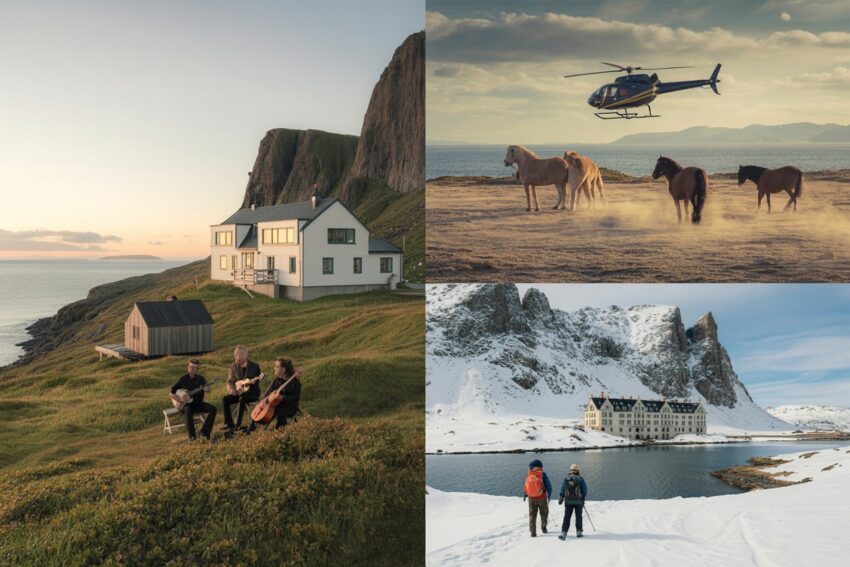
On the remote edge of Newfoundland, Fogo Island Inn has become a global reference point for community-based tourism. Instead of offering packaged sightseeing, the property integrates guests into island traditions — from music-filled shed gatherings to guided walks that interpret the history of fishing communities.
The inn operates within a social enterprise structure, reinvesting surpluses into local economic initiatives. This aligns with broader Canadian tourism strategies promoting sustainable regional development. Visitors are not spectators here; they participate in living culture that reflects the rhythms of a North Atlantic island shaped by resilience.
Muir, Halifax — Nova Scotia
Helicopter Access to Sable Island Under Federal Oversight
In Halifax, Muir Hotel has drawn attention for offering curated expeditions to Sable Island National Park Reserve. Sable Island, managed by Parks Canada, is a federally protected area known for its wild horses and fragile ecosystem.
Access to Sable Island requires prior authorization and adherence to strict conservation guidelines. Visitor numbers are regulated, and weather conditions frequently determine feasibility. Helicopter or charter access must comply with federal permit requirements and environmental safeguards.
This model reflects a growing trend: high-end experiential travel operating within structured conservation frameworks rather than bypassing them.
Four Seasons Hotel Montreal — Quebec
Urban Experiences With Elevated Perspective
In Montreal, experiential offerings lean urban but equally immersive. The Four Seasons Hotel Montreal curates experiences that combine culinary immersion with aerial perspectives, including hot-air balloon excursions and helicopter tours, subject to aviation regulations and weather conditions.
Such offerings complement Quebec’s tourism initiatives aimed at promoting cultural neighborhoods, culinary heritage and creative industries. The focus is not simply luxury — it is perspective. Guests explore markets, architecture and regional gastronomy in curated formats designed to deepen understanding of the city’s layered identity.
The Bruce Hotel — Stratford, Ontario
Farm-to-Table as Cultural Education
Stratford has long been associated with theatre, but culinary tourism is increasingly central to its identity. The Bruce Hotel positions itself within Ontario’s regional food movement by offering chef-led farm visits and seasonal tasting experiences.
These programs connect travelers to agricultural producers and reinforce provincial initiatives encouraging local supply chains within tourism. Rather than isolating guests in fine-dining environments, the hotel extends the table outward — toward fields, growers and artisans whose work shapes the region’s character.
Fairmont Chateau Whistler — British Columbia
Alpine Immersion in a Managed Wilderness
In British Columbia’s Coast Mountains, Fairmont Chateau Whistler integrates guided alpine hikes, snowshoe routes and e-bike lake excursions into its year-round programming. These activities operate within provincial park systems and established conservation policies that regulate trail access and environmental impact.
Whistler’s tourism model emphasizes dispersal — encouraging visitors to explore beyond high-traffic areas while respecting ecological boundaries. The hotel acts as a gateway to wilderness, but within structured stewardship frameworks designed to preserve mountain ecosystems.
Magnolia Hotel & Spa — Victoria, British Columbia
Coastal Foraging and Cultural Storytelling
In Victoria, Magnolia Hotel & Spa curates experiences that highlight Vancouver Island’s coastal identity. These include guided foraging walks, Indigenous-led harbor experiences and curated trail routes.
British Columbia’s tourism authorities continue to promote Indigenous-led initiatives and responsible coastal exploration. Programs are structured to ensure cultural authenticity while supporting local communities and environmental integrity.
Government Oversight and Sustainability Frameworks
Across these destinations, government oversight plays a quiet but significant role. Parks Canada regulates protected areas like Sable Island. Provincial tourism boards promote sustainable dispersal strategies. Aviation authorities govern airborne excursions. Agricultural tourism programs reinforce regional food systems.
Experiential travel in Canada is therefore not an unregulated expansion of luxury — it is increasingly integrated into policy structures that prioritize preservation, local benefit and managed growth.
Travelers considering these programs are advised to:
Confirm seasonal availability
Review permit requirements for protected areas
Anticipate weather-related adjustments
Book well in advance due to limited capacity
A Broader Shift in Canadian Tourism
The rise of immersive hotel programs signals something larger. Travelers are showing stronger interest in meaning over opulence. Government frameworks emphasize community involvement and ecological stewardship. Hotels are positioning themselves not just as accommodation providers, but as cultural intermediaries.
The balance remains delicate. Over-commercialization risks eroding authenticity. Excess demand could strain fragile ecosystems. But when managed responsibly, these experiences create economic circulation that benefits rural communities, agricultural producers and conservation programs alike.
Conclusion
From Newfoundland’s music-filled gatherings to helicopter landings on protected Atlantic dunes, from Ontario’s harvest tables to British Columbia’s alpine silence, these six Canadian hotels are reshaping how visitors connect with place. What emerges is not just a trend — it is a recalibration. The room may still be comfortable. The view may still be beautiful. But increasingly, what defines the stay is participation — stepping into a landscape, a community or a tradition that exists long before and long after checkout.
Canada’s evolving hospitality model suggests that the future of travel will not be measured by thread counts or lobby design, but by how responsibly and meaningfully visitors are invited into the story of a destination.
The post These Six Canadian Hotels Are Offering Experiences So Rare, You May Need Government Permission to Join appeared first on Travel And Tour World.
Source: travelandtourworld.com



Sorry, the comment form is closed at this time.