


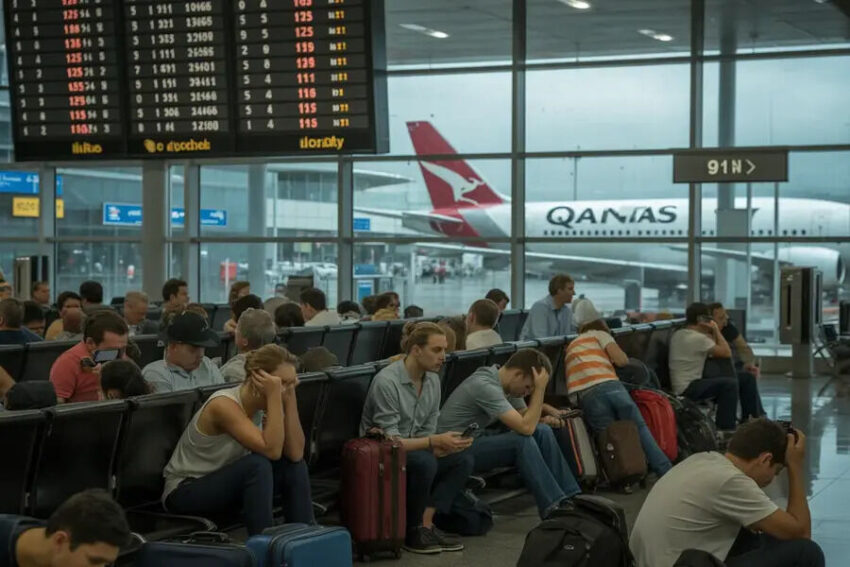
Thousands of Travellers Stranded at Melbourne, Sydney, and Brisbane Airports in Australia as 542 flights Are Delayed and 54 Cancelled Disrupting Qantas, Cathay Pacific, Emirates, and More Across New Zealand, United States, Singapore, Impacting Los Angeles, Auckland, Dubai, and Beyond
Thousands of Travellers Stranded at Melbourne, Sydney, and Brisbane Airports in Australia as 542 flights Are Delayed and 54 Cancelled Disrupting Qantas, Cathay Pacific, Emirates, and More Across New Zealand, United States, Singapore, Impacting Los Angeles, Auckland, Dubai, and Beyond
Thousands of travellers have been stranded at Melbourne, Sydney, and Brisbane airports in Australia after 542 flights were delayed and 54 cancelled, causing widespread disruption to major airlines like Qantas, Cathay Pacific, and Emirates. The chaos, which has impacted travel to key international destinations including Los Angeles, Auckland, and Dubai, is primarily due to a combination of severe weather conditions—such as heavy storms, high winds, and poor visibility—and operational challenges faced by airlines and airports. These disruptions have not only affected flights within Australia but also international connections, creating significant travel delays across New Zealand, the United States, Singapore, and beyond.
Travel disruptions have struck Australian airports, leaving thousands of travellers stranded in Melbourne, Sydney, and Brisbane as a massive storm and operational challenges caused widespread flight delays and cancellations. Airlines like Qantas, Cathay Pacific, Emirates, and Virgin Australia have been particularly affected, with flights to major global destinations such as Los Angeles, Auckland, and Dubai disrupted.
This chaos has created a ripple effect across not just Australia but international air travel, with major airports in New Zealand, the United States, and Singapore also feeling the pressure. The delays and cancellations were primarily caused by inclement weather conditions combined with operational challenges, leaving many passengers frustrated as they tried to make their way home or reach their destinations.
Why Are Flights Delayed and Cancelled Across Australia?
The primary cause of the delays and cancellations experienced at Melbourne, Sydney, and Brisbane airports is a combination of severe weather and operational challenges faced by airlines. Australia’s recent winter storms have created hazardous conditions at airports, including poor visibility, icy runways, and high winds, all of which make flying and airport operations particularly challenging.
In addition to weather, airlines have struggled with operational issues such as technical difficulties, staff shortages, and the management of airport traffic. With multiple airlines affected, it’s been a challenging time for travellers trying to navigate the chaos at these airports.
Key Airlines Affected by Delays and Cancellations
The flight disruptions heavily impacted major airlines operating out of Melbourne, Sydney, and Brisbane, including Qantas, Cathay Pacific, Emirates, Jetstar, and Virgin Australia. These airlines, along with others, were forced to either delay or cancel flights due to weather and operational issues.
The following table shows the details of cancellations and delays for major airlines:
AirlineCancellations (#)Cancellations (%)Delays (#)Delays (%)QantasLink96%4330%Virgin Australia42%5126%Jetstar42%4833%Qantas20%4017%Cathay Pacific111%333%Air Niugini00%1100%Air New Zealand00%318%British Airways00%150%China Airlines00%125%China Eastern00%19%XiamenAir00%150%Delta Air Lines00%250%Regional Express00%2033%Emirates00%436%United Airlines00%228%
As seen above, QantasLink had the highest cancellation rate at 6%, followed by Jetstar at 2%, with many airlines experiencing delays, especially QantasLink and Jetstar with 30% and 33% delays, respectively.
Airports Affected by the Disruptions
The following airports experienced significant flight cancellations and delays, creating a bottleneck effect for passengers trying to reach their destinations. Sydney, Melbourne, and Brisbane were the most affected, but smaller airports across Australia were also impacted.
The table below highlights the cancellations and delays by each airport:
AirportCancellations (#)Cancellations (%)Delays (#)Delays (%)Sydney (SYD)101%11320%Melbourne Tullamarine (MEL)71%11028%Brisbane (BNE)51%5011%Canberra International (CBR)27%517%Perth International (PER)16%541%Coffs Harbour (CFS)18%541%Hobart International (HBA)00%529%Adelaide International (ADL)116%728%Gold Coast (OOL)112%830%Auckland International (AKL)00%350%
These delays and cancellations impacted not just domestic travellers but also international flights, leading to massive disruptions across various international routes, particularly affecting connections to Los Angeles, Auckland, Dubai, and other destinations.
Impact on International Routes
As seen from the data above, several international airports were impacted by delays and cancellations, including Los Angeles International (LAX), Auckland International (AKL), Dubai International (DXB), Hong Kong International (HKG), and Singapore Changi (SIN). Flights bound for these destinations were either delayed or canceled, stranding passengers from Melbourne, Sydney, and Brisbane.
Here is a breakdown of the international routes and their respective disruptions:
Origin AirportDestination AirportCancellations (#)Delays (#)Sydney (SYD)Los Angeles Intl (LAX)128Melbourne (MEL)Auckland (AKL)112Brisbane (BNE)Singapore Changi (SIN)114Sydney (SYD)Dubai Int’l (DXB)03Brisbane (BNE)Hong Kong Int’l (HKG)15Sydney (SYD)Auckland (AKL)24
Passengers on flights from Sydney, Melbourne, and Brisbane to destinations like Los Angeles, Auckland, Dubai, Hong Kong, and Singapore have faced varying degrees of delays. These disruptions have forced many travellers to adjust their itineraries and search for alternative transport options, particularly on routes to major hubs like Los Angeles and Auckland.
Weather and Operational Challenges: The Culprits Behind the Chaos
The disruptions were caused by two primary factors: severe weather conditions and operational challenges. Weather events, including storms, high winds, and poor visibility, led to airport closures, delays in ground operations, and flight cancellations. This was exacerbated by limited staffing and resource allocation, resulting in delays to both arrivals and departures.
Furthermore, airlines faced operational challenges such as technical issues with aircraft, staff shortages, and increased demand due to unexpected operational constraints. This compounded the chaos, making it difficult for airlines to maintain flight schedules or manage logistics.
Tips for Travellers Affected by the Delays
For those affected by the disruptions, here are some tips to help navigate the chaos:
Stay Updated: Regularly check with your airline for real-time updates and rebooking options.
Seek Compensation: Airlines are often required to provide compensation or accommodation for passengers whose flights are delayed or cancelled.
Consider Alternative Routes: If possible, look for alternate flight routes or connections to your destination to avoid further delays.
Stay Patient and Prepared: Prepare for long waiting times and ensure you have snacks, drinks, and entertainment while at the airport.
The recent wave of disruptions at Melbourne, Sydney, and Brisbane airports has highlighted the vulnerabilities of air travel in the face of unpredictable weather and operational challenges. With thousands of passengers affected, it is clear that airlines must continue to invest in improving their contingency planning and resources to mitigate such disruptions in the future.
Thousands of travellers are stranded at Melbourne, Sydney, and Brisbane airports as 542 flights are delayed and 54 cancelled due to severe weather conditions and operational challenges, disrupting airlines like Qantas, Cathay Pacific, and Emirates, and impacting key international routes to Los Angeles, Auckland, and Dubai.
Travellers heading to or from Australia should expect continued delays and cancellations as airlines work to restore normal service. The key takeaway for passengers is to stay informed, remain flexible, and be prepared for potential delays. With summer approaching and travel demand increasing, airlines will need to find effective solutions to avoid a repeat of the chaos that has plagued Australian airports recently.
The post Thousands of Travellers Stranded at Melbourne, Sydney, and Brisbane Airports in Australia as 542 flights Are Delayed and 54 Cancelled Disrupting Qantas, Cathay Pacific, Emirates, and More Across New Zealand, United States, Singapore, Impacting Los Angeles, Auckland, Dubai, and Beyond appeared first on Travel And Tour World.
Source: travelandtourworld.com


Sorry, the comment form is closed at this time.