


Train Passenger Numbers Surge to Over Four Hundred Million in Jabodetabek, Indonesia: What New Updates You Need to Know
Train Passenger Numbers Surge to Over Four Hundred Million in Jabodetabek, Indonesia: What New Updates You Need to Know
The PT Kereta Api Indonesia (Persero) Group has transported over 442 million passengers in 2025, marking another new record for the company and demonstrating a growing trend in the use of rail transport in Indonesia for everyday travel as well as for more distant journeys. This also illustrates a growing demand for more efficient, easier, and cheaper means of travel, especially in urban and metropolitan areas.
Expansion of Rail Transport Services Offered
The KAI Group, providing rail transport services, experienced growth of 36 million more passengers carried as compared to the previous year. In 2024, 406 million passengers were transported, and a year later, the services achieved growth and transported over 442 million passengers. The increase in numbers is attributed to high movements of people, especially in the economically influential cities such as Jakarta, Bandung, Yogyakarta, Surabaya, Medan, and Palembang.
The need for more commuter services is in agreement with the report by Central (BPS), which noted the high concentration of productive people, who engage in work-related activities, and in the educational and service-providing structures, in the Indonesian cities, and are therefore frequent travelers.
The Overall Leader in Number of Commuters
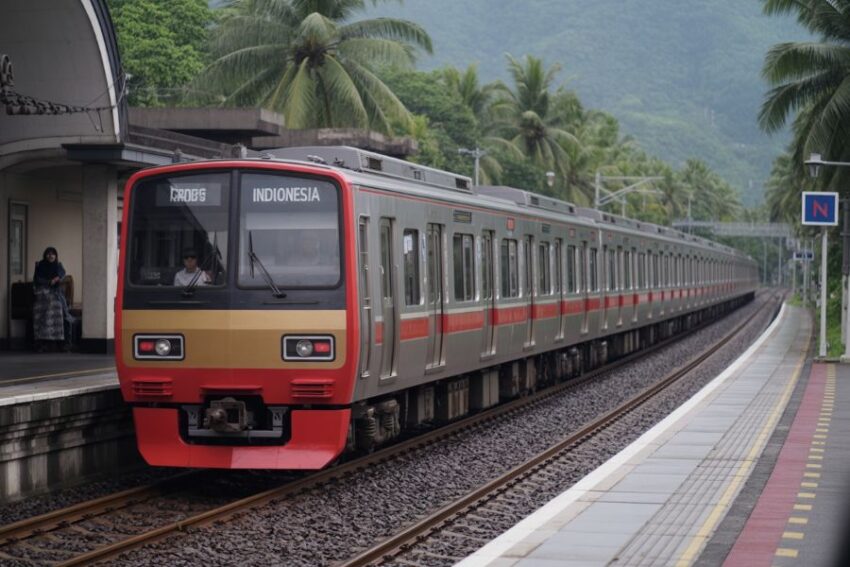
Jabodetabek (Jakarta, Bogor, Depok, Tangerang, and Bekasi) is the center of the rapid development of the railway industry in Indonesia. In the 2025 record, the Jabodetabek Commuter Line transported 349,311,251 passengers, showing how much people from Jakarta utilize commuter trains for their daily activities. KAI Commuter is proof of how effective public transportation is, as millions of people use the service to commute for work, school, and leisure activities.
In the West Java area, Commuter Line Area II Bandung recorded 18,727,643 passengers, proving its supporting role in the Greater Bandung area. In East Java, Commuter Line Area VIII Surabaya recorded 16,020,323 passengers due to the rapid growth of economic activities and urbanization in the region.
Increased Integration of Airport by Rail Services
Increased rail-based connectivity to airports is another trend observed in 2025. In 2025, the Soekarno-Hatta Airport Commuter Line recorded 2,346,934 passengers, thus proving the ease of accessing the Soekarno-Hatta International Airport from Jakarta. This service is vital in transporting both passengers and employees working at the airport.
The most recent example is the Yogyakarta International Airport, where there is strong demand for rail connections, with the Yogyakarta Airport Train servicing 2,865,729 passengers, which is a slight increase from last year, proving that rail services are essential for the access to the airport by international and domestic passengers.
Growing Favour of LRT and Regional Rail Services
The Jabodek LRT is not the only rail that receives significant patronage from the residents of Bekasi, Depok, and East Jakarta, commuter trains do too. This light rail transit (LRT) service is the first of its kind, and its first year of service (2025) is projected to have 28,816,787, indicating a significant increase in mobility in the urban areas of the Jakarta metropolitan area.
The Srilelawangsa train service in Medan also saw a significant increase in patronage, serving 4,115,680 passengers in 2025, a substantial increase from 3,085,294 in 2024. The service connects the city center with Kualanamu International Airport, and caters to the increasing regionally and airport travel in North Sumatra.
In Palembang, the South Sumatra LRT continued to serve its purpose by providing a vital link for the people moving between the central area of the city and the major transport hubs, with the service recording 4,626,481 passengers in 2025.
Support for Regional Mobility and Economic Growth
Batara Kresna train service is one of the newer, smaller, and convenient commuter services with about 179,697 passengers noted in 2025 and about 126,188 in 2024. Such services provide one of the most important means for the mobility of Central Java’s population and improved the mobility within the Solo Raya agglomeration.
Apart from domestic travel, travel using the Prameks train service which is located at the Yogyakarta-Solo corridor is now becoming crucial for medium-distance travel whether for work or holiday travel. The service recorded 1,113,023 passengers in 2025, which means that for the role of rail service in mobility and tourism of the region is increasingly important.
Conclusion: The Need for Further Rail Service Expansion
With the increasing commuter numbers and the need for services that connect to the airport, the KAI Group has been, and will continue to be, one of the most important players in the transport sector in this country. KAI’s commuter service will help improve economic growth, and provide more satisfactory services to the customers in the urban areas.
The expanding light rail transit (LRT) systems and airport train services show how rail transport is becoming more popular for economic development and national connections. Every day, millions of Indonesians enjoy efficient, sustainable, and accessible travel options.
The post Train Passenger Numbers Surge to Over Four Hundred Million in Jabodetabek, Indonesia: What New Updates You Need to Know appeared first on Travel And Tour World.
Source: travelandtourworld.com



Sorry, the comment form is closed at this time.