


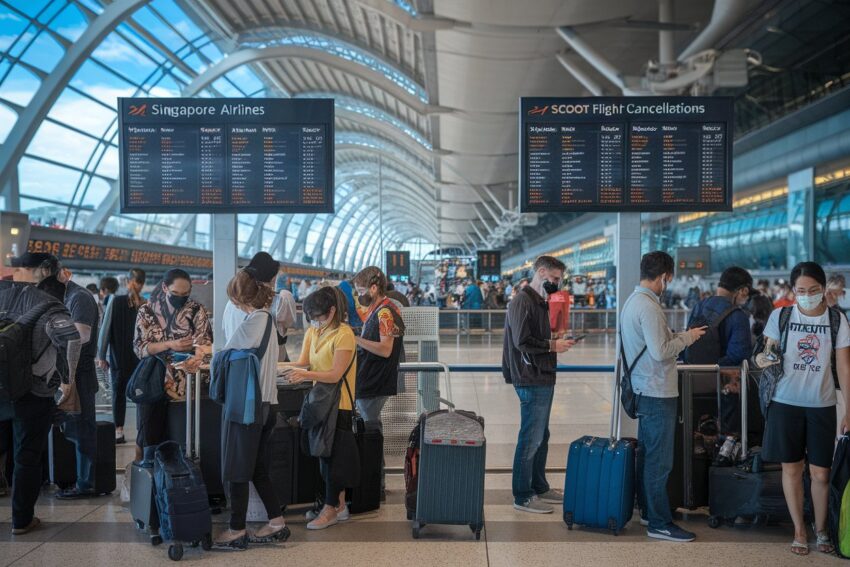
Travel CHAOS as Singapore Airlines & Scoot Halt Major Middle East Routes Amid Explosive Conflict – Dubai and Jeddah Flights CANCELLED Until March 15, What You Need to Know!
Travel CHAOS as Singapore Airlines & Scoot Halt Major Middle East Routes Amid Explosive Conflict – Dubai and Jeddah Flights CANCELLED Until March 15, What You Need to Know!
The sudden escalation of military conflict in the Middle East has turned routine air travel into unprecedented disruption for Singapore travellers and global passengers alike. In a clear sign of rising tensions, Singapore Airlines (SIA) and its low‑cost unit Scoot have announced extended cancellations of their flights to and from Dubai in the United Arab Emirates and Jeddah in Saudi Arabia. These actions are directly linked to heightened regional instability, prompting aviation authorities and governments to take precautionary measures to ensure passenger safety.
Strategic Safety as Airspace Closures Continue
Both airlines, operating from Singapore Changi Airport, confirmed that their services connecting Singapore with major Middle Eastern hubs will remain suspended until at least 15 March 2026. Singapore Airlines specified that flight SQ494 (Singapore–Dubai) and SQ495 (Dubai–Singapore) are cancelled under the directive tied to the current geopolitical situation. Scoot added that TR596 and TR597 services linking Singapore and Jeddah will also be grounded on scheduled March dates. Airlines emphasised the unpredictability of the conflict and stated that additional flights may be affected as developments unfold.
Government Advisories Underpin Decision
The cancellations mirror wider aviation warnings issued by international regulatory bodies. While Singapore’s Civil Aviation Authority has not directly mandated the suspensions, regulators globally — including the European Union Aviation Safety Agency (EASA) — have advised carriers to avoid airspace over many Middle Eastern regions due to ongoing strikes and military activity. These advisories reflect the risk posed by missile and drone strikes near civilian routes and have seen airlines worldwide rework schedules to steer clear of conflict zones for now.
Impact on Passengers and Rebooking Options
Affected travellers are facing sudden itinerary changes and uncertainty over their plans, with many flights cancelled without prior notice. Both Singapore Airlines and Scoot have pledged support: customers can either be re‑accommodated on alternate services or receive full refunds for unused segments of their bookings. Airlines have also urged customers to regularly check flight status pages and ensure their contact details are updated to receive timely notifications.
Repatriation Efforts Underway for Stranded Citizens
In parallel, government agencies have stepped in to assist citizens caught amid the travel chaos. Singapore’s Ministry of Foreign Affairs reported a significant number of Singaporeans seeking help to return from affected Middle Eastern nations. The ministry has been coordinating repatriation flights, including operations out of Muscat, Oman, to bring citizens home safely. Officials have communicated with students and long‑term residents across Saudi Arabia, Jordan and Egypt to assess their welfare as they navigate extended stays in the region.
Wider Aviation Turmoil Linked to Regional Airspace Shutdowns
The disruption facing Singapore’s carriers is part of a broader global aviation crisis. Across the Middle East, major hubs including Dubai International Airport and others in the United Arab Emirates and Qatar closed or severely limited operations after military strikes heightened the risk to civilian flights. Thousands of services were grounded or rerouted, leaving passengers around the world stranded and airlines scrambling to adjust planning.
Governments Escalate Travel Advisories
Several national authorities have reinforced warnings against travel to unstable regions. Some governments have issued advisories urging citizens to return home or avoid flying through Middle Eastern airspace altogether until tensions ease. Airlines from Europe, Asia and North America have responded with waivers that allow passengers flexibility to cancel or change bookings without penalties — a rare step outside of peak crisis scenarios such as pandemics or widespread natural disasters.
Economic Ripples Across International Air Routes
With major Gulf airline operators like Emirates and Etihad Airways also scaling back flights, the usual traffic flow between Asia and Europe has been significantly disrupted. This has not only affected leisure travel but also complicated global business connections over long‑haul corridors that traditionally depend on smooth passage through Middle Eastern skies. Some carriers have reallocated capacity to alternative routes linking Asia with Africa or directly with European hubs, in hopes of reducing operational strain.
Soaring Prices as Demand Outstrips Supply
The restricted availability of flights has triggered a sharp increase in ticket prices on remaining services between key long‑haul markets. Routes that historically relied on Middle Eastern transit hubs are now direct or significantly longer, pushing up operational costs and retail fares. For many travellers — including those returning home or adjusting urgent travel plans — these increased costs have added financial stress to an already fraught situation.
Emergency Support and Passenger Rights Emphasised
Regulators and consumer rights groups have emphasised that in circumstances influenced by conflict — classified by many insurance firms as acts of war — airlines treat passengers with varying levels of compensation and support. Many travellers have been encouraged to seek refunds or rebooking under the waivers provided, and continue to stay in contact with airline customer service teams or travel agents for personalised assistance.
Outlook: Cautious Optimism Amid Lingering Uncertainty
Although limited flights out of some Middle Eastern airports have begun operating under “safe corridor” frameworks, aviation experts urge caution. These arrangements allow a controlled number of daily flights, but full airspace reopening remains uncertain. With regional tensions unresolved, Singapore’s carriers and others continue to prioritise safety over schedule adherence, leaving many travellers in waiting mode as the situation stabilises.
Closing Paragraph (Humanized)
For passengers in Singapore and beyond, what began as routine travel has quickly turned into an emotional and logistical challenge. Stranded travellers face shifting schedules, uncertain return plans and rising concerns about when regular flight services will resume. While governments and airlines are working to bring people home and prevent further disruption, the overriding message remains one of safety above all. In these unpredictable times, every flight cancellation and route suspension is a stark reminder of how deeply global travel is connected to peace and stability
The post Travel CHAOS as Singapore Airlines & Scoot Halt Major Middle East Routes Amid Explosive Conflict – Dubai and Jeddah Flights CANCELLED Until March 15, What You Need to Know! appeared first on Travel And Tour World.
Source: travelandtourworld.com



Sorry, the comment form is closed at this time.