


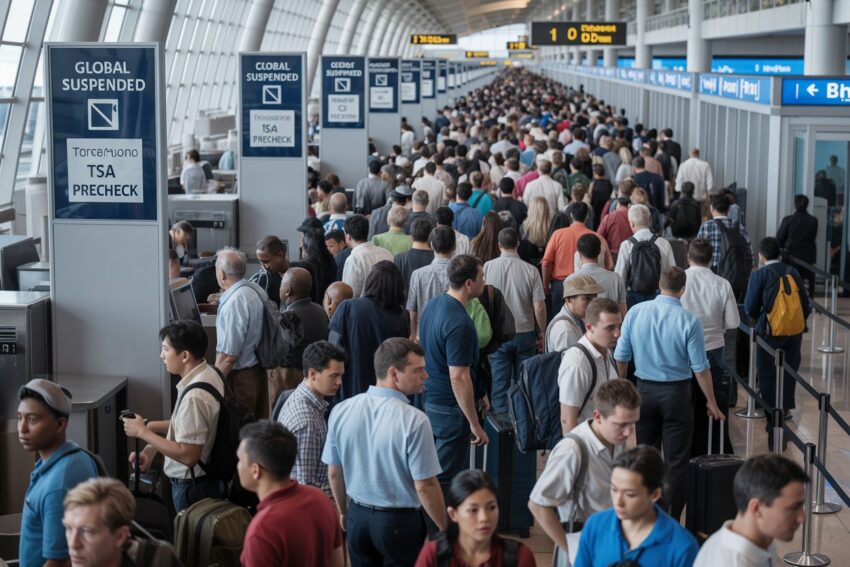
Travel Chaos Hits the US as Global Entry Suspended Amid Government Shutdown, Leaving Millions of Passengers Stranded in Airport Lines – Is Your Trip Affected?
Travel Chaos Hits the US as Global Entry Suspended Amid Government Shutdown, Leaving Millions of Passengers Stranded in Airport Lines – Is Your Trip Affected?
Millions of travellers arriving in and departing from the United States woke up to an unexpected travel disruption this week as the U.S. Department of Homeland Security (DHS) temporarily suspended the Global Entry programme amid an ongoing partial government shutdown that has halted full funding of the department’s operations. Global Entry, administered by U.S. Customs and Border Protection (CBP), is designed to speed up customs and immigration processing for pre‑approved, low‑risk international entrants. Its abrupt suspension on Sunday at 6 a.m. Eastern Time came as federal funding lapsed after lawmakers failed to agree on a budget for DHS earlier in February.
The shutdown has also triggered a political backlash in Washington and concern among travellers and industry stakeholders, with airlines warning of longer lines and less predictability at airports nationwide.
What Global Entry Suspension Means for Travellers
Global Entry users — including frequent flyers, business travellers, and international tourists — typically benefit from expedited kiosks that cut customs processing times dramatically. In normal circumstances, enrolled members may clear U.S. customs in as little as 5–10 minutes, compared with standard waits that can stretch half an hour or more. With the programme now suspended, global travellers will revert to regular queues at U.S. ports of entry. The decision is expected to ripple through major airports and border crossings nationwide, from New York’s JFK to Los Angeles International Airport and beyond.
Many travellers expressed frustration and confusion at the change, noting that the programme is funded largely through user fees and not direct taxpayer dollars, yet remains vulnerable to political deadlock.
TSA PreCheck: What’s Still Running
Initially, DHS also targeted the TSA PreCheck programme for suspension as part of emergency cost‑saving measures. PreCheck allows travellers to enjoy faster security lanes at domestic airport checkpoints. However, after intense pushback from industry leaders, lawmakers, and travel organisations, the Transportation Security Administration confirmed that TSA PreCheck will remain operational for now, though it may be adjusted in response to staffing constraints caused by the shutdown. Courtesy escort services for lawmakers and special privileges have been paused so staff can be redirected toward core screening duties.
Why This Is Happening: The Funding Standstill
The backdrop to this disruption is a partial shutdown of the Department of Homeland Security, triggered on 14 February 2026, when Congress failed to pass a full appropriations bill for the agency. Lawmakers remain at odds over immigration policy reforms, including oversight of enforcement practices and broader CBP operations, creating a sustained impasse that has put essential and non‑essential programmes alike in limbo.
Unlike some components of DHS that receive mandatory funding or alternative appropriations, programmes like Global Entry require annual appropriations and are thus particularly exposed during funding lapses.
Airport Security and Operational Impacts
Airport officials and security experts have warned that the suspension of trusted traveller programmes could lead to longer wait times, increased passenger congestion, and potential holiday‑season travel headaches.
Some airports reported that PreCheck lines remained open despite initial suspension notices, underscoring confusion about how the shutdown will play out at the ground level. TSA officials stated they will evaluate PreCheck lanes on a case‑by‑case basis as staffing levels evolve. Customs and Border Protection, meanwhile, is reallocating personnel to maintain basic immigration and security operations at border entries and international arrivals.
Political Tensions Escalate in Washington
The decision to pause Global Entry has not only unsettled travellers but sparked heated debate among lawmakers. Democratic members criticised the move as politicising airport security and placing undue burden on the American public amid routine travel seasons. Others framed the shutdown as a necessary leverage point to force reforms in immigration enforcement and accountability. Leaders of major U.S. airlines and the U.S. Travel Association demanded swift legislative action to restore full funding and reinstate suspended services, arguing that the travel ecosystem is a vital component of the nation’s economy and passenger confidence.
Voices from the Travel Industry
Industry representatives emphasised that trusted traveller programmes enhance both travel safety and efficiency, and that sudden suspension is disruptive, especially during already stressed peak travel windows.
“Trusted Traveller programs strengthen aviation security and improve screening efficiency,” said a senior travel industry executive, urging Congress to find a resolution swiftly.
Airlines have echoed this concern, warning that confusion around airport screening could amplify bottlenecks and fuel passenger frustration at a time when travel demand remains high.
What Travellers Should Do Now
For those planning trips to the United States in the coming days and weeks:
Expect slower processing times at customs and security if arriving internationally, as Global Entry kiosks remain offline until funding is restored.
Monitor official DHS and CBP announcements for updates, as the suspension could change if Congress reaches a budget agreement.
Allow extra time at airports, especially during busy travel days or peak hours.
CBP and DHS websites remain the official sources for up‑to‑date guidance on traveller requirements and programme status.
Looking Ahead: Outlook and Resolution
The future of Global Entry and other trusted traveller programmes remains tied to the broader political negotiations over Homeland Security funding. Unless lawmakers reach consensus on a spending bill or temporary continuing resolution, these services are likely to stay suspended, prolonging travel delays and uncertainty for millions.
The political stakes are high: travel advocates warn that prolonged suspension of these programmes could have ripple effects on tourism, international commerce, and confidence in U.S. travel infrastructure — especially with the peak spring break and summer travel seasons approaching.
For now, Global Entry’s pause serves as a stark signal of how political gridlock can swiftly impact global travellers and highlights the interconnectedness of governance and everyday mobility.
The post Travel Chaos Hits the US as Global Entry Suspended Amid Government Shutdown, Leaving Millions of Passengers Stranded in Airport Lines – Is Your Trip Affected? appeared first on Travel And Tour World.
Source: travelandtourworld.com



Sorry, the comment form is closed at this time.