



Travel Disruptions as Airline Stocks Fall Amid Middle East Conflict
Travel Disruptions as Airline Stocks Fall Amid Middle East Conflict
Due to the U.S.- Israel conflict with Iran, global airline stocks have been impacted negatively due to rising oil prices and the uncertainty of fuel costs for airlines. The rising fuel costs due to the continuing Middle East crisis are causing airline stock prices to drop considerably across Europe and Asia.
Airline Stocks See Decline Due to Fuel Price Hike
Airline stocks in Asia and Europe faced further declines, exacerbated by escalating tensions in the Middle East. As airlines struggle with the volatile fuel market, many have begun to reassess their pricing models and operational strategies. A major contributing factor to these stock losses is the sharp increase in oil prices, which have surged by 30% since the beginning of 2026. This price hike has had a direct impact on the cost of jet fuel, threatening the profitability of airlines that are heavily reliant on fuel.
For example, Qantas Airways, which had its fuel hedging strategy in place, saw its shares drop by 1.8% for the second consecutive day. Despite efforts to mitigate the impact, the airline’s CEO acknowledged the serious effects of rising fuel prices on the industry. Similarly, airlines in Asia, such as Japan Airlines, Korean Air, and Cathay Pacific, have seen significant drops in stock value as well, with Japan Airlines experiencing its largest drop since April 2025.
Airline Operational Challenges and Disruptions
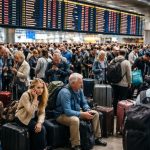
Beyond fuel costs, the closure of major Gulf hubs, including Dubai Airport, has further compounded the difficulties for airlines. These airports, which typically manage hundreds of flights per day, have remained closed for several days due to the ongoing conflict. As a result, tens of thousands of passengers have been stranded, with many flights canceled or rerouted. Experts are calling this situation the largest air travel shutdown since the COVID-19 pandemic.
Additionally, carriers are struggling to navigate the impact of the conflict on their cargo operations. With key air corridors over the Middle East closed, airlines are forced to reroute flights, which adds extra time and costs to their operations. The disruption to cargo services is also estimated to result in losses of hundreds of millions of dollars.
Impact on Major Airlines
Several major carriers in the Asia-Pacific region have been significantly affected by these disruptions. Korean Air Lines saw a sharp drop of 10.3% in stock value after resuming trading, marking its worst fall since March 2020. Other Asian carriers like Cathay Pacific and Air China also experienced similar declines in stock prices.
In Europe, airlines such as Wizz Air and British Airways owner IAG have seen their shares drop by around 5%. These losses are indicative of broader market reactions to the conflict, highlighting the interconnectedness of the global aviation industry.
Fuel Hedging as a Buffer
Fuel hedging, a common practice in the airline industry, has played a crucial role in protecting some airlines from the volatility of fuel prices. Qantas Airways has managed to hedge 81% of its fuel for the second half of its financial year, which has provided some protection against the rising fuel costs. However, the continued surge in oil prices is still expected to challenge airlines’ profitability.
Other carriers like Singapore Airlines and Cathay Pacific have also implemented fuel hedging strategies, but these measures can only do so much to mitigate the financial impact of soaring oil prices.
Surge in Bookings and Ticket Prices
As Gulf airlines are impacted by the conflict, some travelers have sought alternative routes, leading to a rise in bookings on airlines that are less affected by the Middle East crisis. Routes between Hong Kong and London, for example, have seen an uptick in demand, causing ticket prices to increase as well.
This shift in passenger behavior is likely to persist as travelers look for safer and more reliable alternatives to Middle Eastern carriers. While this could provide some short-term relief for affected airlines, the overall impact of the conflict is still expected to cause considerable uncertainty in the global aviation market.
Traveler Tips and Recommendations
For travelers planning to fly to or from regions affected by the ongoing Middle East conflict, it’s essential to stay informed and proactive. Here are some recommendations to navigate the current situation:
Check Flight Status Regularly: Airline schedules are subject to change, so it is essential to monitor flight statuses, especially for routes that pass through the Middle East or involve Gulf airlines.
Be Prepared for Cancellations or Delays: Due to ongoing disruptions, passengers should expect potential cancellations or significant delays, particularly at major hubs in the Middle East.
Consider Alternative Routes: Travelers may want to explore alternative flight routes that avoid airspace closures or disruptions. Airlines in Asia and Europe, such as Singapore Airlines, Qantas, and Lufthansa, may offer more stable travel options.
Flexible Travel Plans: With uncertainty surrounding the situation, consider booking flexible tickets that allow for easy rebooking or cancellations in case of sudden changes to your itinerary.
Long-Term Implications for the Aviation Industry
Affects on the Middle East conflict will likely be long term for the aviation industry. Some airlines will be better off due to fuel hedging strategies, others will still be negatively impacted by the conflict, rising fuel prices, and the overall financial impact on the global airline industry.
Investors will need to watch the Middle East and airline financies. Depending on the airline network, hedging strategies, and proximity to the region, airlines will be impacted to different extents.
The post Travel Disruptions as Airline Stocks Fall Amid Middle East Conflict appeared first on Travel And Tour World.
Source: travelandtourworld.com


Sorry, the comment form is closed at this time.